The Drug-Control Order under Attack
16th November, 2022
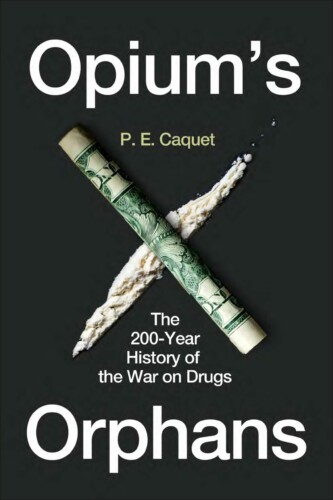
Is the Drug-Control Order under attack? In this blog, P.E. Caquet explores the impact of legalizations and policy changes in America.
***
In October 2022, President Joe Biden pardoned all federal marijuana possession offenses in the US, a first step towards user decriminalization and, possibly, the drug’s federal legalization. If that happens, it would only be the latest blow to an international drug-control system that is increasingly coming under attack.
President Biden, after all, was only taking stock of the reality that is sweeping marijuana legalization at state level. A full nineteen US states have fully legalized already, including for recreational use, and another seventeen have authorized the leaf for medical use. Neither is legal under the drug-control treaties. At least the American states themselves are not treaty signatories; the same cannot be said of Uruguay and Canada, which fully legalized cannabis in 2013 and 2018 respectively.
The 1961 UN Single Convention on Narcotic Drugs and its successor treaties are the keystone to global drug control. They govern the trade in essential pharmaceutical inputs. They commit states world-wide to cooperate in combating drug trafficking, and they form the legal basis for the war on drugs. They possess colossal normative power, binding their signatories to enact and maintain punitive domestic legislation on a range of narcotics. The Single Convention lists marijuana, alongside heroin, as a drug not allowed for any use, even medical and let alone recreational. States that violate this provision are in contravention plain and simple. They send the signal that they consider drug prohibition’s strictures optional, its obligations a menu to choose from rather than a set of legally binding rules. There is no way around it: Canada and Uruguay are in direct violation of their treaty commitments. If one believes prime minister Olaf Scholtz, Germany may soon follow. Germany has already authorized medical marijuana and is host to production facilities owned by Canadian cannabis companies. If it legalizes, it could well be imitated by other EU countries, with the Netherlands a prime candidate. Outside Europe, Jamaica and South Africa, having decriminalization possession, are likewise contenders for legalization. Yet marijuana legalization is but one of three major challenges the anti-narcotics system faces.
That system already finds itself at threat from the increasingly numerous new psychoactive substances or NPS, in the jargon. Synthetic substances designed to mimic the effects of established drugs such as hallucinogens or cocaine, the NPS are hard to control because their chemical compositions constantly change. Drug control works on the basis of scheduling, a slow legal process involving medical committees and deliberation by relevant authorities – namely the World Health Organization (WHO) and the Commission on Narcotic Drugs (CND), at the international level. Listing cannot keep up with the NPS as a group, whose composition keeps shifting. In 2020, authorities around the world reported the existence of 548 different NPS, of which 77 had been identified for the first time that year. Since 2017, 193 previously circulating NPS had disappeared. Whereas a decade ago, moreover, most NPS were hallucinogens of the cannabis type, an increasing number now belong to the far more lethal category of the opioids. An unreformed drug-control system will continue to struggle with the NPS, a challenge it is poorly equipped to face.
Finally, there are the Latin American statesmen. They, or some of them at least, are increasingly tired of the war on drugs. At the stormy 2016 UN special session on drug control, several of them voiced their anger, including Mexican president Enrique Peña Nieto and Colombian president Juan Manuel Santos Calderón. Calderón openly called time on the war on drugs. The Uruguayan delegate, Milton Romani Gerner, was similarly defiant. In large swaths of Latin America, the war on drugs nurtures cartels that undermine the state and kill thousands. These states have much lower rates of cocaine use than the US, where the end problem resides. Their leaders feel they are unfairly paying the price. The newly elected Colombian president Gustavo Petro reiterated the same protest at the UN last month.
Treaty revision is unlikely. Even if the US were to support it, a large number of key states, especially Asian, would be sure to block it. The UN-led drug-control order will not collapse, in the coming years, nor is it likely to undergo wholesale reform. But it faces the comparable danger of hollowing out. The termite work done by marijuana legalization, the ballooning traffic in NPS, and foot-dragging by key Latin American states in the fight against the cocaine traffic may not bring the anti-narcotics system down just yet. But it may well leave the structure standing as little more than a façade.
– P.E. Caquet
P. E. Caquet is an Associate at Hughes Hall, University of Cambridge. His books include The Orient, the Liberal Movement, and the Eastern Crisis of 1839–41 (2016) and The Bell of Treason: The 1938 Munich Agreement in Czechoslovakia (2018).
To read more about the impact of the War on Drugs and other policies, pick up a copy of Opium’s Orphans: The 200-Year History of the War on Drugs today.