A Tribute to Smell
13th July, 2026
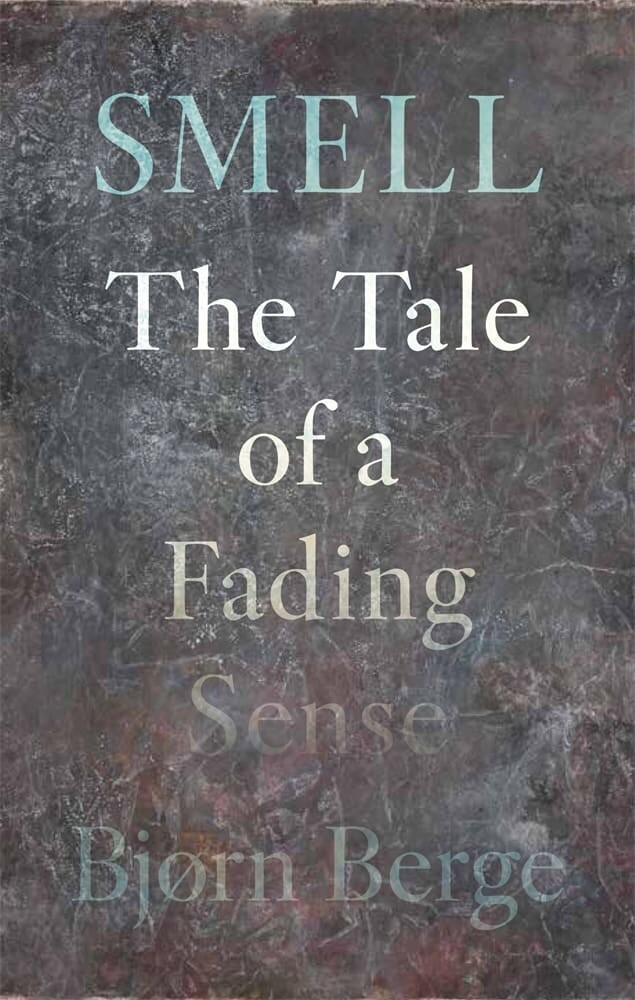
In this blog, author Bjørn Berge dedicates his time to a fading sense: smell. Based on his new book, Smell: The Tale of a Fading Sense, he explains why smell is so important and why, despite that, it is dying out.
***
I have been an architect for nearly four decades, designing buildings of every scale and purpose. Yet some of my most vivid memories are not of the structures themselves, but of the way they smelled. As a child, visiting friends’ homes was like stepping into a world of its own smell—an invisible fingerprint made up of food, bodies, and the lingering essence of everything that had happened there. I could tell where I was without opening my eyes.
That ability has followed me through life, but in recent years I’ve noticed something unsettling: those smells are fading. Not just in homes, but in public buildings too. Of course, age dulls the senses, but I know I’m not alone in this observation. The air around us is becoming neutral, stripped of the odours that once surrounded us.
For centuries, the sense of smell has been treated with suspicion. In the West, it was linked to the unruly, the erotic, the primitive—qualities that modernity sought to tame. Since the Enlightenment, thinkers from Immanuel Kant to Sigmund Freud championed the reduction of odours. Smell was too subjective, too personal to be measured or controlled. What one person found pleasant, another might find repulsive. For the emerging sciences, this was a problem. For those in power, it was a matter of control.
Today, our built environments are designed to be scentless. We spend over 90% of our lives indoors, and ventilation systems are engineered to scrub the air clean. In the process, we’ve lost something essential: the ability to smell each other. That loss is more profound than it sounds. Human scent carries information—about identity, mood, even health. Fear or stress sweat smells entirely different from the sweat of physical exertion. Also illnesses have their own olfactory signatures: urinary infections like caramel, kidney disease like old hay, diabetic breath like lemon and overripe apples. Without realizing it, we once read these cues and adjusted our interactions accordingly.
Places, too, have their own scents. The Norwegian neuroscientists May-Britt and Edvard Moser, whose work earned them the Nobel Prize, showed that smell plays a role in spatial navigation. It also warns us of danger—smoke, gas leaks—and tells us if food is safe. And more than any other sense, it can transport us instantly to another time. A whiff of shellfish in a market, the aroma of fresh bread in a bakery, and suddenly you are decades younger, standing barefoot in your grandmother’s garden or on a summer beach, the sun shimmering on the waves, the air alive with laughter and the cries of gulls.
Smell is part of the sensory web that connects us to the world. In an age when we are bombarded with information, it is still our senses we trust most. And unlike sight or sound, smell cannot yet be digitized. That makes it, in some ways, the most reliable sense we have. Yet we are erasing it from our daily lives.
In the late 20th century philosophers wrote about the rise of “ocularcentrism”—the dominance of the eye. Today, vision rules. In much of Western culture, appearance matters more than function, whether in a building, a cake, or a person. For younger generations, life itself can feel like an endless catwalk.
My book is a tribute to the free, untamed sense of smell—in all its beauty and disgust. It begins with the basics of how smell works, then travels through its history: from ancient civilizations, through the plagues of the Middle Ages, the Industrial Revolution, and into our sterile present. It is both a lament for what we are losing and a call to breathe deeply again, to reclaim the scents that make us human.
– Bjørn Berge
Bjørn Berge is an architect and author. His books include The Ecology of Building Materials (2000) and Nowherelands: An Atlas of Vanished Countries 1840–1975 (2017).
You can buy Smell: The Tale of a Fading Sense from our online shop now.