Mango Memories and Culinary Nostalgia in Literature
2nd October, 2024
In this blog, author Constance L. Kirker discusses the culinary nostalgia in literature around mangoes.
***
“Happiness is a mango!” writes Indian American author Amulya Malladi in her novel The Mango Season.
Within every culture, there are certain foods that people associate with their identity and heritage. When they emigrate to another country, they sometimes find themselves yearning for that food and all its associated memories. Indian mothers miss quieting their babies with mango pacifiers.
The luscious mango is one such food that is often used as a culinary metaphor in literature written by diaspora authors from various regions of the world, such as South Asia, Philippines, Africa, and the Caribbean, and other places where mangoes flourish and are much adored. Whether appearing in novels, children’s books, or culinary memoirs, the image of the mango is a powerful reminder of “home,” and a symbol of immigrant identity and cohesion.
Many of these authors write nostalgically about the messy tactile experience of eating a mango as much as they do about the “exotic” quality of the fruit as emblematic of their home country and what makes it unique. In what has been labeled as “sari-mango” literature, writers from places where mangoes grow may write about their childhood experiences of eating messy mangoes as an act of rebellion against their parents’ notions of neatness. They may write about stealing mangoes from a neighbor’s tree, or about the simple enjoyment of getting messy.
In recent criticism of “sari-mango” literature by eminent author Salman Rushdie cites the mango image as being a cliché, a lazy attempt to make exotic to Western readers what is commonplace in parts of the world where mango is grown. In a 2022 on-stage conversation with Amitava Kumar in New York City, award-winning Rushdi offered this advice to aspiring Asian diaspora writers: “There must be no tropical fruits in the title. No mangoes. No guavas. . . avoid that shit.” While Rushdi suggested that mango is used to sentimentalize these regions, most notably South Asia, it is worth noting that Rushdie himself used ‘mango’ more than twenty times in his award-winning book Midnight’s Children.
With today’s rapidly evolving food technology mangoes have become more familiar and readily available in Europe and America. From smoothies and baby food to dried fruit snacks and, of course, as fresh fruit, mangoes are no longer seen as an exotic food. As a result, the meaning associated with the imagery of mangoes in diaspora literature evolves for writers and readers as well. While that image may still hold personal memories for a writer and are what inspires the writer’s story, the mango no longer carries the exotic cachet it formerly held, and readers are not as readily intrigued by the simple mention of mango in a book’s title.
So, while “sari-mango” literature may be an outdated trope, the good news is that mango the fruit has emerged from the “exotic” and is now enjoyed worldwide.
– Constance L. Kirker
Constance L. Kirker is a retired Pennsylvania State University Professor of Art History, and an avid gardener and foodie. She is co-author of Edible Flowers and Coconut (‘Edible’ series) and Cherry (‘Botanical’ series), all published by Reaktion Books.
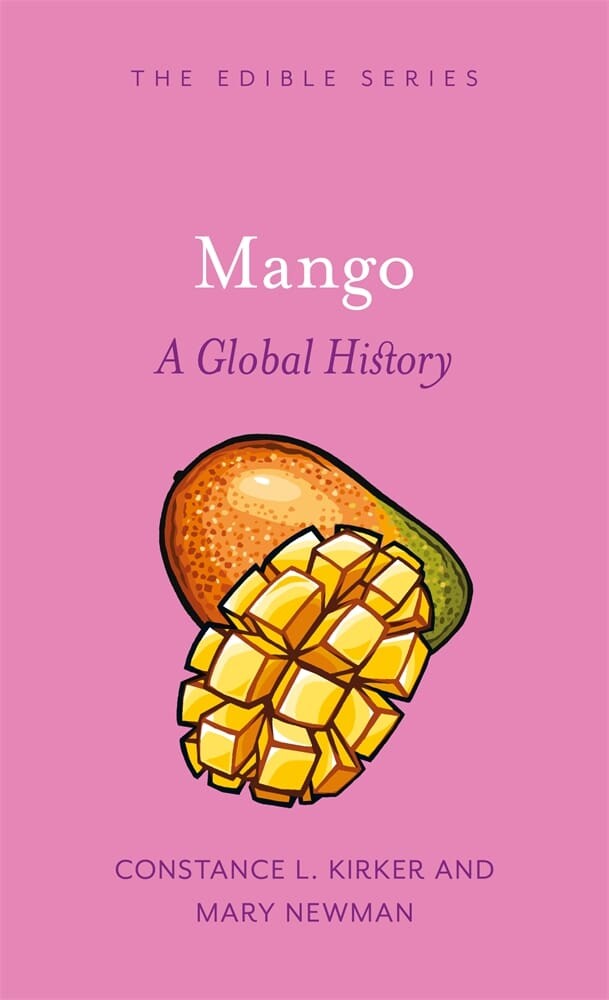
You can buy Mango: A Global History from our online shop.