


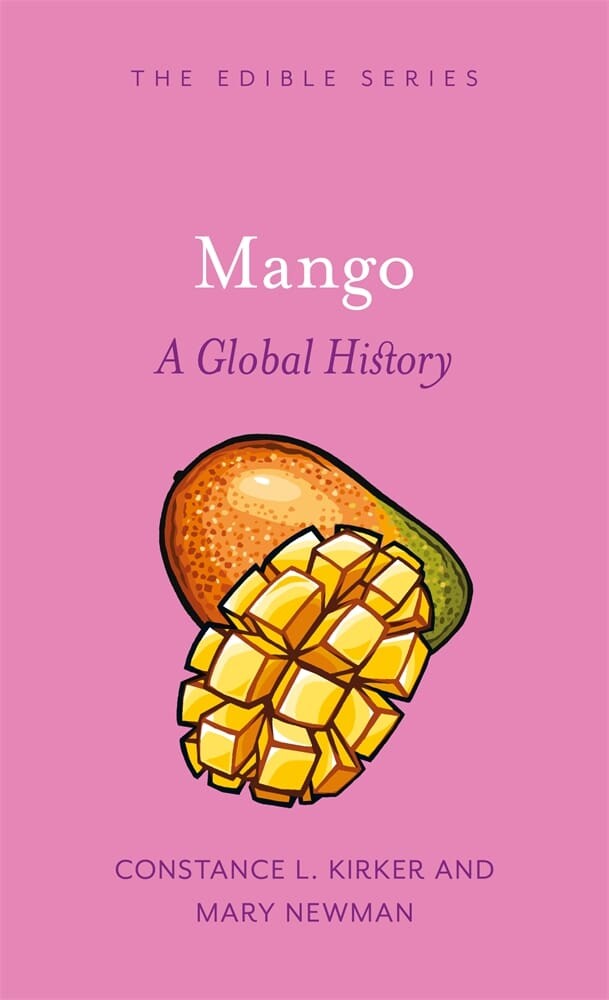
Mango
A Global History
Constance L. Kirker, Mary NewmanA beautifully illustrated tour through the rich world of mangoes.
This beautifully illustrated book takes us on a tour through the rich world of mangoes, which inspire fervent devotion across the world. In South Asia, mangoes boast a history steeped in Hindu and Buddhist mythology, even earning a mention in the Kama Sutra. Beyond myth, mangoes hold literary significance as a potent metaphor. While mango-flavoured smoothies grace Western shelves, the true essence of sweet, juicy mangoes or tangy, unripe varieties is a rarity: supermarket offerings often prioritize shelf-life over taste. True mango aficionados savour the sensory delight of over a thousand vibrant varieties, relishing diverse colours, flavours from sweet to sour, textures and fragrances.
A beautifully illustrated tour through the rich world of mangoes.
This beautifully illustrated book takes us on a tour through the rich world of mangoes, which inspire fervent devotion across the world. In South Asia, mangoes boast a history steeped in Hindu and Buddhist mythology, even earning a mention in the Kama Sutra. Beyond myth, mangoes hold literary significance as a potent metaphor. While mango-flavoured smoothies grace Western shelves, the true essence of sweet, juicy mangoes or tangy, unripe varieties is a rarity: supermarket offerings often prioritize shelf-life over taste. True mango aficionados savour the sensory delight of over a thousand vibrant varieties, relishing diverse colours, flavours from sweet to sour, textures and fragrances.
-
'
Mango-lovers contend that to enjoy this tropical fruit you have to embrace its drippy, sticky essence. The scholars Constance L. Kirker and Mary Newman embrace this perspective in Mango: A Global History, arguing that ‘the total experience of smell, touch, taste and texture is the very point of a mango’ . . . Those looking to enjoy Mango fully might be advised to treat the history like the fruit itself: Sink your teeth in and embrace the mess.
'Wall Street Journal
-
'
Mango excels in its historical depth and visual appeal, providing a treasure trove of global narratives for food historians, cultural enthusiasts and anyone curious about the intersection of food and history. It’s a delightful read that will leave you with a newfound appreciation for this beloved fruit.
'Aramco World
-
'
Kirker and Newman’s exhaustive research turns up plenty that informs and entertains . . . readers with a taste for trivia will eat this up.
'Publishers Weekly
-
'
Kirker and Newman weave a beautiful narrative around one of South East Asia’s most prized and glorious possessions – the mango.
'Sonal Ved, author of Tiffin and Whose Samosa Is It Anyway?
Introduction
1 Magnificent Mango: Botany, Production and Health
2 Mango Movement
3 Mughals and Mangoes
4 British and European Connections to Mango
5 Mao, Mangoes and the East
6 Sugary Sweet to Sharply Sour: Philippines, Southeast Asia, Australia and South Pacific
7 Mangoes, Metaphors and Meanings
8 Mango Miracle: Future Potential of Mangoes
Recipes
References
Select Bibliography
Websites and Associations
Acknowledgements
Photo Acknowledgements
Index
Constance L. Kirker (Author)
Constance L. Kirker is a retired Pennsylvania State University Professor of Art History, and an avid gardener and foodie. She is co-author of Edible Flowers and Coconut (‘Edible’ series) and Cherry (‘Botanical’ series), all published by Reaktion Books.
Mary Newman (Author)
Mary Newman has taught environmental health at Ohio University and the University of Malta. She is co-author of Edible Flowers and Coconut (‘Edible’ series) and Cherry (‘Botanical’ series), all published by Reaktion Books.
Related news, events and blog
Mango Memories and Culinary Nostalgia in Literature
2nd October, 2024
In this blog, author Constance L. Kirker discusses the culinary nostalgia in literature around mangoes. *** “Happiness is a mango!” writes Indian American author Amulya Malladi in her novel The Mango Season. Within every culture, there are certain fo…