Tracing Britain’s Lost Species
7th September, 2026
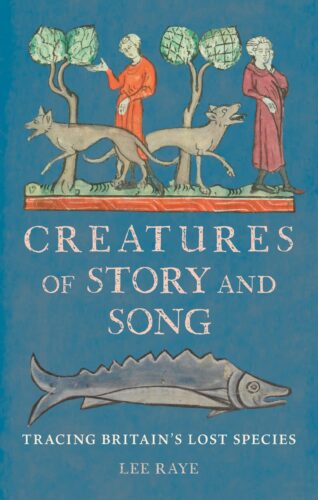
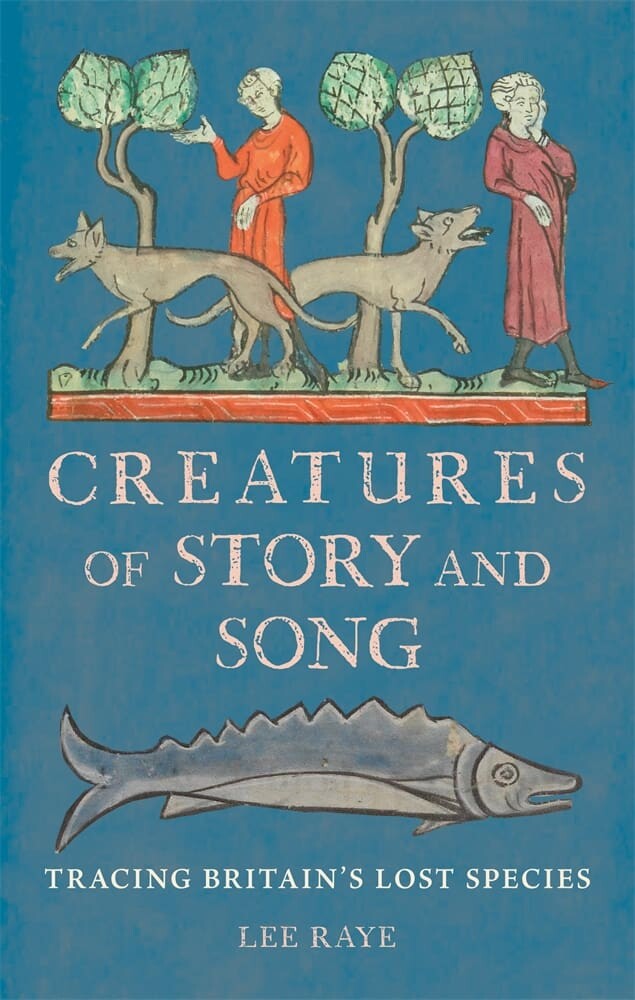
In this blog, author Lee Raye explains what brought them to writing Creatures of Story and Song, and brings to life some of the lost species of Britain
***
‘Britain’s lost species?’ People often say when I tell them about my new book. ‘Isn’t that a sad topic!’ Sometimes it can be. When you read about the many (oh so many!) campaigns launched against the wolf by the medieval English royal court, it’s easy to come away with the idea of a scrappy underdog being harassed for centuries in waves of persecution. But there are moments of excitement too. In the Chronicle of the Kings of England (1125-34 CE) William of Malmesbury, a terrible bootlicker, proclaimed to his readers that the wolf had been exterminated by the Welsh, under the power and justice of the great Edgar, King of England. For those of us who find a secret thrill in stories of wolves this could be a poignant, melancholy moment in history. The story was repeated for centuries by England’s historians and early naturalists. But William’s story is not true. I’ve found evidence the wolf was around in England and Wales for centuries after Edgar. There is a fantastic Welsh poem cursing the wolf from around 1300 CE, written in language which you would not want to repeat in church. I am, probably much to the disgust of William of Malmesbury, very much on Team Animal, so I enjoy this poem as a little act of rebellion on the part of the much-persecuted wolf.
I’ve found lots of stories like this, where wild boar, eagles and great whales burst from the page to remind us that animals are not just the hobbies, tools, meat and machinery of humanity. That’s why Creatures of Story and Song is not just a depressing book of obituaries. When you write about species that went extinct it’s easy to fixate on the moment of death and miss what happened before that. But it’s often more interesting to look at the time before local extinction when the creatures were alive and living alongside us. What was it like to share the streets of London with red kites? Apparently, they could be a menace. According to the enthusiastic sixteenth-century naturalist William Turner, red kites would swoop down and steal bread and fishes from people’s hands, or hats from their heads. More little acts of rebellion. And just as those of us on Team Animal might enjoy watching a gull steal a packet of Doritos today, I think many Londoners might have had a secret pride in their red kites. Turner describes London’s birds as ‘daring’ and boasts about them being much larger than German black kites.
In sharing these little acts of rebellion, I don’t mean to suggest that animals had the power to resist humans in a meaningful way. The British exterminated wolves wherever they could reach them and only tolerated red kites because they were aware that their presence in London helped with street hygiene. Other animals were driven to extinction without a second thought. A good example of this is the great auk, a bird which until 200 years ago used to regularly visit some of the Scottish islands but is now globally extinct. In Gaelic the great auk was called the ‘gearrbhall’, and in Scots the ‘gare-fowl’. The bird was commonly eaten by islanders and thought to be exceptionally healthy. There is a song called the ‘Iorram Hirteach’ or ‘St Kilda Lilt’ which seems to describe a great auk caught by fowlers being given as a courtship gift in the eighteenth century. Meanwhile, in England the bird was considered an exotic marvel. It was commonly called the ‘penguin’, confusing it with the Magellanic penguin known to travellers from the coasts of the Argentine Sea. Among the naturalists of Europe there was a great demand for this bird to complete taxidermy collections in natural history museums. Because of their popularity and rarity, great auks and their eggs commanded great prestige as collection items and the hunt for the last great auks of Britain was just as relentless as the hunt for the last wolves. These sorts of stories are depressing but I think they’re important to put those little acts of rebellion into context. Science has brought humans great prosperity but if we look at it for from an animal’s point of view, it has historically been a greedy, extractive process.
I’ve been researching the history of animals in Britain for a long time now, but I still sometimes find sources that surprise me. Here’s one last example. Many years ago, I described a sixteenth-century letter written by Jan Boner the younger of Kraków to the great naturalist Conrad Gessner. This letter says that the best lynx skins come from Scotland and Sweden. At the time I took this to mean that people were importing raw lynx skins to Scotland to work them and prepare them for re-exportation as textiles. But a few years later I found something startling. According to the travelogue of the rambling bishop, Richard Pococke of Ossory in 1760, the old county of Kirkcudbrightshire, south west Scotland, was home to a troublesome population of wild ginger big cats (three times larger than common cats) with white breasts and sides that catch lambs and chickens and give birth in trees to litters of two kittens. He adds that the county has to pay £20 a year to a hunter to control the cats and foxes. This source seems to give corroborating evidence for the presence of wild lynxes in Scotland. But it is such a very late date for them to be present, and Kirkcudbrightshire was a county of heathland and isolated farms, not dense woodland! So one of the last things I did while writing my book was to travel to Dumfries this last icy January to visit the Ewart Library. The library holds the public spending accounts of the Commissioners of Supply for the Stewartry of Kirkcudbright. These records are, for the most part, as painfully dull as they sound. But amongst these records I found evidence that Kirkcudbrightshire did in fact keep a professional hunter for pest control. This was a huge expense, one fifth of the county’s total expenditure on salaries. John Howat was hired into this position in 1728, and in 1760 when Pococke visited he was training his son, Peter Howat, as his replacement. His salary was, exactly as Pococke described about £20, sometimes paid as £20 and sometimes as 400 Scots merk which was a little more. This again corroborates a small part of Pococke’s story. There is always more to find!
– Lee Raye
Lee Raye is an Associate Lecturer at the Open University, a Research Officer at Bangor University and a Fellow of the Linnean Society. They are the author of The Atlas of Early Modern Wildlife (2023).
You can buy Creatures of Story and Song: Tracing Britains Lost Species from our online shop now.