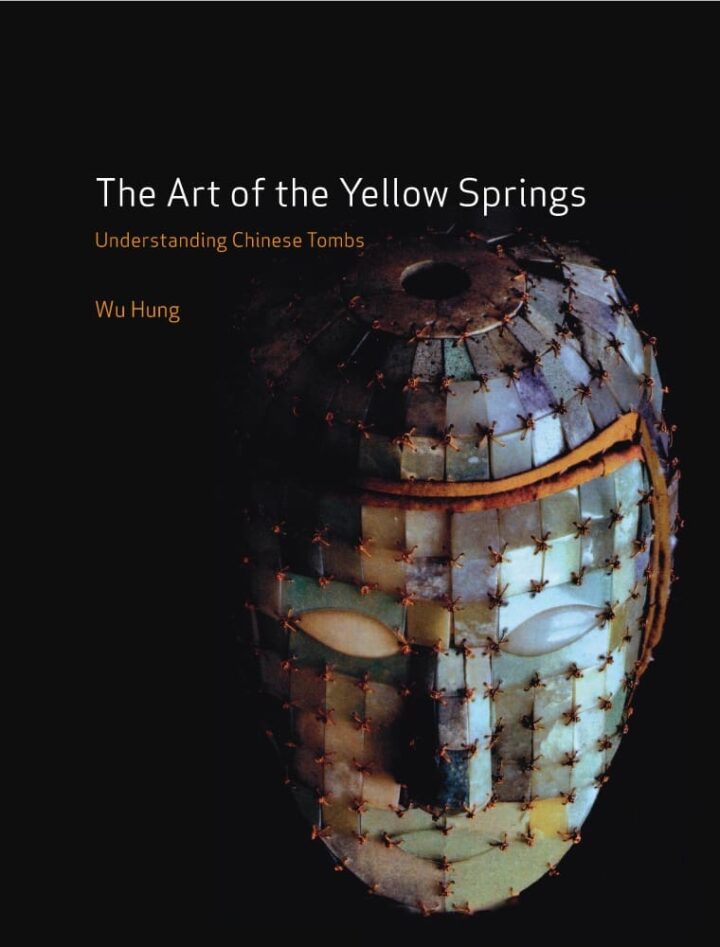
The Art of the Yellow Springs
Understanding Chinese Tombs
Wu HungWu Hung's significant, ground-breaking reassessment of ancient Chinese tombs, which were filled with exquisite art objects and images, now available in paperback. Hung looks at the implications presented by an entire burial site, rather than the individial works of art contained within them.
No other civilization in the pre-modern world was more obsessed with creating underground burial structures than the Chinese. For at least five thousand years, from the fourth millennium BCE to the early twentieth century, Chinese people devoted an extraordinary amount of wealth and labour to building tombs and furnishing them with exquisite objects and images.
In art history these ancient burial sites have mainly been appreciated as ‘treasure troves’ of exciting and often previously unknown works of art. New trends in Chinese art history are challenging this way of studying funerary art: now an entire memorial site – rather than any of its individual components – has become the focus of both observation and interpretation. The Art of the Yellow Springs expands on this scholarship by making interpretative methods the direct subject of consideration. It argues that to achieve a genuine understanding of Chinese tombs we need to reconsider a host of art-historical concepts, including visuality, viewership, space, formal analysis, function and context.
Profusely illustrated with many outstanding works of art, this ground-breaking new assessment, now available in paperback, demonstrates the amazing richness of arguably the longest and most persistent tradition in the entirety of Chinese art.
Wu Hung's significant, ground-breaking reassessment of ancient Chinese tombs, which were filled with exquisite art objects and images, now available in paperback. Hung looks at the implications presented by an entire burial site, rather than the individial works of art contained within them.
No other civilization in the pre-modern world was more obsessed with creating underground burial structures than the Chinese. For at least five thousand years, from the fourth millennium BCE to the early twentieth century, Chinese people devoted an extraordinary amount of wealth and labour to building tombs and furnishing them with exquisite objects and images.
In art history these ancient burial sites have mainly been appreciated as ‘treasure troves’ of exciting and often previously unknown works of art. New trends in Chinese art history are challenging this way of studying funerary art: now an entire memorial site – rather than any of its individual components – has become the focus of both observation and interpretation. The Art of the Yellow Springs expands on this scholarship by making interpretative methods the direct subject of consideration. It argues that to achieve a genuine understanding of Chinese tombs we need to reconsider a host of art-historical concepts, including visuality, viewership, space, formal analysis, function and context.
Profusely illustrated with many outstanding works of art, this ground-breaking new assessment, now available in paperback, demonstrates the amazing richness of arguably the longest and most persistent tradition in the entirety of Chinese art.
Wu Hung's significant, ground-breaking reassessment of ancient Chinese tombs, which were filled with exquisite art objects and images, now available in paperback. Hung looks at the implications presented by an entire burial site, rather than the individial works of art contained within them.
No other civilization in the pre-modern world was more obsessed with creating underground burial structures than the Chinese. For at least five thousand years, from the fourth millennium BCE to the early twentieth century, Chinese people devoted an extraordinary amount of wealth and labour to building tombs and furnishing them with exquisite objects and images.
In art history these ancient burial sites have mainly been appreciated as ‘treasure troves’ of exciting and often previously unknown works of art. New trends in Chinese art history are challenging this way of studying funerary art: now an entire memorial site – rather than any of its individual components – has become the focus of both observation and interpretation. The Art of the Yellow Springs expands on this scholarship by making interpretative methods the direct subject of consideration. It argues that to achieve a genuine understanding of Chinese tombs we need to reconsider a host of art-historical concepts, including visuality, viewership, space, formal analysis, function and context.
Profusely illustrated with many outstanding works of art, this ground-breaking new assessment, now available in paperback, demonstrates the amazing richness of arguably the longest and most persistent tradition in the entirety of Chinese art.
-
'
This brilliant synthesis is stimulating. Intended for a large audience, it is written in a pleasant style, and is very well and profusely illustrated. The numerous notes refer to the excavation reports or to the works used by the author. The documentation brought into play is rich and rather complete.
'Journal of Chinese Studies
-
'
Most informative and innovative . . . written in a lucid style that should appeal to both engaged and general readers. Wu Hung has again proven himself to be a ground-breaker of Chinese art history
'David D. W. Wang, Henderson Professor of Chinese Literature, Harvard University
Introduction
1. Spatiality
From Casket Grave to Chamber Grave
A Tripartite Universe
Representing the Soul
2. Materiality
Spirit Articles
Tomb Figurines and the Medium of Representation
The Body: Preservation and Transformation
3. Temporality
Cosmic/Mythic Time
‘Lived Objects’
Historical Narratives
Journey
Coda: Portraying Chinese Tombs
References
Works Cited
Acknowledgements Index
Wu Hung is Harrie A. Vanderstappen Distinguished Service Professor of Art History at the University of Chicago. His many books include A Story of Ruins: Presence and Absence in Chinese Art and Visual Culture (Reaktion, 2011) and Zooming In: Histories of Photography in China (Reaktion, 2016).