Unworking
31st August, 2022
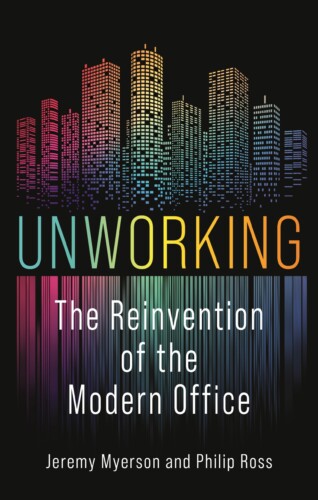
In this blog from the authors of Unworking: The Reinvention of the Modern Office, they muse on what working and workplaces will look like in the future.
***
In the annals of the modern workplace, the year 2022 will surely have a special place.
This year we have seen millions of workers around the world mandated back to the office by their employers after the global pandemic, but resist doing so in huge numbers. In the UK, senior government ministers have left unsubtle calling cards on the desks of work-and-home civil servants, demanding they return to Whitehall as soon as possible.
Companies have invested heavily in all types of smart technology, including VR headsets, video suites and even the metaverse, as they to try to find ways to enable a remote workforce to collaborate more effectively in a ‘hybrid’ model. Employers have started paying unprecedented attention to the mental wellbeing of their workers, not just their physical safety. And designers have started remodelling office space with a focus on hospitality, socialising and ‘customer’ experience.
Jump back exactly 100 years and the picture was very different. The early 1920s were goldrush years for the modern office as tall buildings sprung up amid rapid urbanization and the rise of a set of dominant industrial technologies, including the telephone, writer, elevator and electric light. These vast work towers were staffed by identikit armies of office clerks, overwhelmingly white, male and able-bodied, a far cry from today’s more diverse workforces.
To experience office life in 1922 was to be part of a machine – to be a cog in a mechanical system with the office building as the fixed, immoveable point in this time-and-motion universe. To experience office life in 2022 is to spend a large chunk of the week avoiding it altogether, working at home instead, or in a café or coworking lounge, using a new dominant set of digital technologies to contribute and communicate.
How we went from the stern, scientifically managed office, derived from the industrial factory floor and firmly rooted in time and space, to the currently model of working anyhow, anytime and anywhere is the subject our new book, Unworking: The Reinvention of the Modern Office. We have reached such a different place in the evolution of the modern office – physically, conceptually and philosophically – that a new way of thinking is required to grasp the scale of the transition currently underway.
We describe the term ‘unworking’ as unravelling how we work, unbundling the assumptions that are baked into the modern office, and unlearning the habits, management styles and workplace cultures that have traditionally defined our behaviour at work. The purpose of ‘unworking’ is to reimagine what the future workplace could be like, but this is no easy task.
Taylorist ideas about office design, organization and productivity are deeply ingrained – the effect of a century of management indoctrination, a spell only broken by the public health crisis of the pandemic which put the office itself out of bounds just long enough for a total rethink to get underway. Even the current binary debate about hybrid working – which is better, office or home? – clings to past. It speaks to an old model of office boundaries when changing social attitudes and technological innovations suggest a boundaryless workplace.
The front cover of Unworking has a graphic evoking a skyline of office towers passing down through a shredder and emerging as software code. This is a fitting metaphor for the office becoming a software solution in the 21st century as opposed to being all about physical hardware and place, a 20th century obsession. The book charts the evolution of the office from the age of efficiency through the social democratic ideals of the community-based workplace to the rise of the network. It is centrally preoccupied with what comes next as our organizations, experiences, spaces, technologies, design processes, even our cities, are subject to radical change.
No longer the all-powerful setting for work, Unworking explores how the modern office is morphing into something else: We predict it will become more sentient, social, elastic and personalized, a magnetizing response to people having a choice about whether or not to come to the office whereas before there was simply no alternative.
– Jeremy Myerson and Philip Ross
To read more about this fascinating subject, order Unworking: The Reinvention of the Modern Office from our online shop now.
Jeremy Myerson is a design writer and Professor Emeritus in the Helen Hamlyn Centre for Design at the Royal College of Art. He co-founded Worktech with Philip Ross in 2003 and in 2016 they created the Worktech Academy, an online knowledge platform and network on the future of work and the workplace.
Philip Ross is a futurist, commentator and advisor specializing on the impact of emerging technology on people and their ways of working. He founded Worktech in 2003 with Jeremy Myerson and in 2016 they created the Worktech Academy, an online knowledge platform and network on the future of work and the workplace.