Strange Times
6th February, 2024
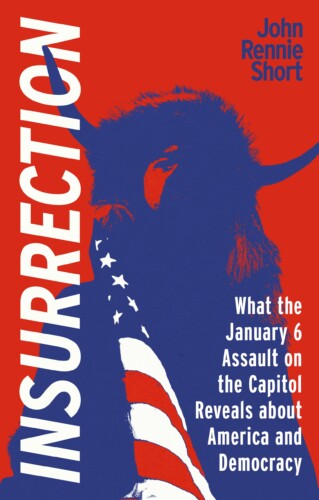
The run for president in the United States has always been something to behold. Now, even more so. John Rennie Short, author of Insurrection: What the January 6th Assault on America Reveals about America and Democracy, takes a look at these strange times and what it might mean …
***
Strange times in the USA.
At the same time as Donald Trump seems to be marching inevitably towards obtaining the Republican Party’s nomination as presidential candidate, he is also facing a series of legal challenges. His days are spent shuffling between campaign and court appearances.
Trump easily won the Republican Party presidential nomination in Iowa knocking out DeSantis, who initially seemed to be a credible alternative to Trump but whose flawed campaign and personal awkwardness doomed his chances. After Iowa, only Nikki Haley could effectively compete in New Hampshire. Her defeat, though only by 11 percentage points, was significant as New Hampshire was her best chance at continuing relevancy. Her defeat does not bode well for her success in other states where the Republican base is less liberal and even more pro Trump. She may not run out of energy and commitment but, failing a minor miracle, she will soon run out of money.
At the same time as Trump continues his triumphant and soon uncontested march to the formal Republican nomination, he is mired in ongoing legal woes. He is facing 91 felony counts in state courts and federal districts, all of which raise the possibility, if found guilty of significant prison time. In New York State he faces a civil suit alleging fraud in property assessments. The judge in the case has already ruled against Trump and so the only issue left is how much damages he may have to pay and the consequences for his business in New York State. The state is requesting penalties of $370 million. In March 2023 he was charged by the Manhattan District Attorney with felony charges of falsifying business records to pay hush money to women claiming that they had sexual relationships with trump. The case is set to go to trial in late March 2024. Then there is the case brought by the US Justice Department of 37 felonies related to the removal of top-secret documents from the White House. The trial is set for May 2024. In Fulton County Georgia the District Attorney has brought a racketeering case against Trump that he and eighteen others conspired to steal the 2020 election. In a court in Washington DC the Department of Justice has charged Trump with felonies involved in trying to remain in power after losing the 2020 election. The trial is scheduled to begin in March 2024. Most of the court cases will unfold and perhaps be decided upon during a presidential election year.
While he has won state primaries, he continues to lose court cases. In May 2023, a jury found him guilty of sexual assault and defamation against E. Jean Carroll. He was fined $5 million. Trump’s subsequent remarks led to a second defamation trial that began on January 16th 2024, the day after he won Iowa and ended on January 26 with the jury ordering him to pay damages to Carroll of $83.3 million
It is an unprecedent presidential election scenario: a presidential candidate marching to an easy victory for his party’s nomination at the same time as he faces a barrage of legal challenges. All of this was unimaginable just ten years ago. But Trump has generated more norm busting, rule breaking and the upending of established practiced than any previous president.
In my forthcoming book, Insurrection: What the January 6th Assault on America Reveals about America and Democracy, I try to make sense of the chaos and disorder of this unique period in the US. I consider longer term trends including the squeezing of the middle class, the growing legitimation crisis, the declining trust in government and the rise of populism that have created a combustible political atmosphere. I show how the more recent crises of policing, COVID lockdowns and Trump’s incendiary rhetoric energized violent right wing movements and led to the assault on the Capitol. I explain why conspiracy theories have long been an element of US political culture but in recent years- magnified by new media platforms and a Republican Party desperately trying to stay in touch with its conspiracy addled base- have moved from the margins to the center of political discourse undermining the cohesion of the nation and the rationality of political discussions. A significant majority of Republicans still believe that the 2020 election was stolen, and that Trump should wreak revenge on the ‘deep state’ when he becomes President. Trump is popular and has a solid bedrock of support who see all his legal trials as an attempt by the deep state to undermine his candidacy. But his ceiling of support is at no more than 45 % of the electorate. That makes for an explosive situation as his supporters will never accept his political defeat as anything more than a stitch up while his detractors see him as a clear and present danger to the immediate and long-term health of the Republic.
Strange times indeed.
– John Rennie Short
John Rennie Short is Emeritus Professor at the School of Public Policy, University of Maryland, Baltimore County. His many books include The Urban Now: Living in an Age of Urban Globalism (2023).
You can buy Insurrection from our online shop now.