New Age Prophet: Aldous Huxley and Alternative Therapies
16th June, 2021
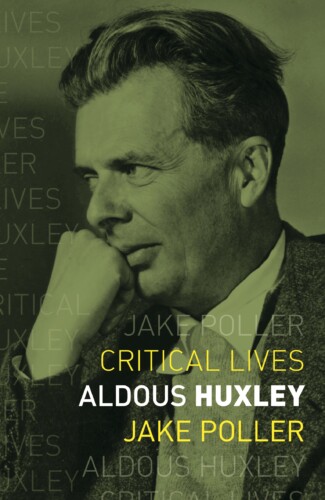
In this blog, the author of Aldous Huxley shows just how the great author was a forerunner of the New Age.
***
On the face of it, Aldous Huxley would seem an unlikely prophet or forerunner of the New Age culture that began to crystallise at the end of the 1970s. Surely the author of Brave New World had little or nothing in common with the hotchpotch of alternative practices and traditions that comprise the New Age, such as yoga, meditation, Asian religions, homeopathy, acupuncture and hypnosis. But Huxley either wrote about or personally practiced all these things during the course of his career. In my Critical Life of Aldous Huxley, I examine Huxley’s protean spiritual interests, but in this blog I shall briefly explore a few of his New Age enthusiasms.
Despite the scientific legacy of his grandfather T. H. Huxley (who coined the word agnostic and was nicknamed Darwin’s bulldog), Aldous began to practice yoga in 1934. Nowadays, yoga has come to be primarily associated with the postures or asanas (downward-facing dog, headstand, triangle and so on), but the latter were originally intended to prepare the yogi to sit comfortably in the lotus pose (padmasana) during meditation. In fact, Huxley would practice postural yoga with his friend Jiddu Krishnamurti – an Indian sage who had been the pupil of B.K.S. Iyengar for twenty years – while they were both living in the small town of Wrightwood, CA, in the summer of 1948. But in the mid-1930s, Huxley was concentrating on other aspects of yoga, namely pranayama (controlled breathing exercises) and meditation. At the time, Huxley was struggling to finish a big ambitious novel, Eyeless in Gaza, and had begun to suffer from insomnia and depression. The aim of his yoga practice, then, wasn’t enlightenment (or what Patanjali termed kaivalya) but a good night’s sleep. Indeed, Huxley was admirably open-minded when it came to alternative therapies, and assented to colonic irrigation and a vegetarian diet, and took lessons in the Alexander technique from its inventor F. M. Alexander. As a result, Huxley emerged from his depression in 1936 and made these therapies part of the spiritual rebirth of Anthony Beavis (the protagonist of Eyeless in Gaza).
After moving to America a few years later, Huxley adopted another alternative therapy for his failing eyesight: the Bates method. Dr W. H. Bates was a New York ophthalmologist who, as Huxley put it in The Art of Seeing, held that ‘the great majority of visual defects were functional and due to faulty habits of use’. This chimed with the teaching of F. M. Alexander, which stressed the importance of the physical means used to achieve various ends (such as speaking, sitting, standing and so on). Huxley noted that for long-sighted people like himself, the strain involved in trying to focus the eyes impairs the vision, thereby creating a negative feedback loop, with worse vision leading to ever-greater strain. This is what Alexander termed ‘end-gaining’, concentrating solely on the end (better vision) and ignoring the ‘means-whereby’ that end is to be achieved. A key part of the Bates method was learning to relax the eye and freeing the mind to interpret the visual data it received. Due to his diligent practice of the Bates method, Huxley was able to see without glasses and to read without the fatigue and strain that had afflicted him in the past.
Huxley began to practise hypnotism in the late 1940s, and used ‘magnetic passes’ on his first wife Maria to alleviate a number of different ailments. He had long been an admirer of the Scottish surgeon James Esdaile, who used magnetic passes to induce anaesthesia for his patients in Calcutta in the 1840s, and his experience inspired the character of Dr Andrew in Island. In 1950, Huxley tried dianetics, which was a self-help psychology created by the sci-fi writer L. Ron Hubbard, and which would later be incorporated into Scientology. In a letter, Huxley reports that he was ‘completely resistant’ to the auditing process and describes Hubbard as ‘curiously repellent physically’ and ‘a very queer fellow – very clever, rather immature and in some ways rather pathetic’.
In addition to his fervour for alternative therapies, Huxley’s later work also anticipated many aspects of New Age culture. For example, his attempts to reconcile science and spirituality in Island would be taken up by later New Age authors, such as Fritjof Capra in The Tao of Physics and Gary Zukav in The Dancing Wu Li Masters. Huxley’s promotion of the Perennial Philosophy as a highest common factor that united the world religions struck a receptive chord in the New Age, whose proponents rejected institutional religion but adopted certain doctrines, such as karma and reincarnation, from the so-called spiritual supermarket. This eclectic attitude to spirituality is exemplified in Island, in which the inhabitants of Pala pick and choose their beliefs and practices from different religious traditions, rather than subscribing to one. Indeed, they are taught to mistrust dogma and to form their own subjective experiential spirituality through the sacramental use of maithuna (the yoga of love) and the moksha-medicine (magic or psilocybin mushrooms). The New Age derived its name from the astrological Age of Aquarius that had been identified by various writers, such as Alice Bailey, as inaugurating a new era of spiritual harmony and universality. Huxley was always ahead of his time, and almost two decades after his death in 1963 the New Age author Marilyn Ferguson named Huxley as one of the most influential thinkers for the new Age of Aquarius, along with Carl Jung, Abraham Maslow and Teilhard de Chardin.
– Jake Poller
To read more about Huxley, you can order Aldous Huxley from our online shop now.
Jake Poller teaches in the English department at Queen Mary, University of London. He is the author of Aldous Huxley and Alternative Spirituality (2019) and the editor of Altered Consciousness in the Twentieth Century (2019).