Fashionable Underwear
5th August, 2024
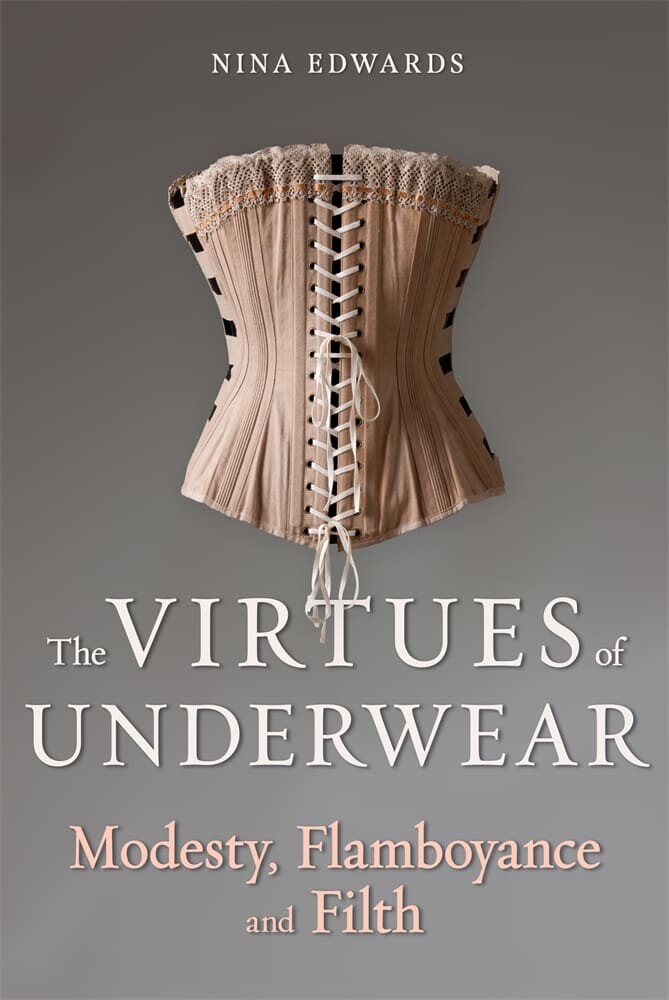
In this blog, author of The Virtues of Underwear, Nina Edwards, discusses the fashionable nature of underwear…
***
We all tend to wear underwear: it protects our modesty, it’s practical, usually comfortable and saves on laundry, protecting outer clothing from the emanations of the body, and our tenderest parts from the rub of rough outer fabrics. The idea of fashionable underwear is a curious one, when generally it’s worn beneath other clothing, and fashion is something that needs to be seen, and envied. There are those who hide their designer labelled, high end underwear beneath a more humdrum, less obtrusive outer layer. Are they shy, or do they simply prefer to be unobtrusive? Are they waiting for some imagined future intimacy? It pays to be prepared not only in case of a traffic accident but also, for the romantically inclined, for an unexpected tryst.
So-called foundation garments are capable of transforming the silhouette into the shape of the moment. A slave in ancient Egypt might wear a loincloth to protect his genitals as he worked, but so too might a pharaoh wear a similar item, but now made out of the finest most translucent linen, a fabric so prized that it became a form of currency. An Elizabethan courtier is portrayed with broad chest and narrow hips, goose-bellied and sporting perhaps a jewelled codpiece which is outwardly evidence of wealth, but within it served as a pocket, holding small items or perhaps a venereal poultice; women of means are more tightly corseted, a stiff farthingale petticoat impeding all but the most courtly movement appropriate to their status. Corsetry goes largely unseen, but the way it transforms the body often meant that its presence was apparent for all to see, and confirmed that they did not engage in physical work. Later fashions changed, society was shocked and thrilled all over again, with women in transparent muslin shifts, the previous chemise now brought to the surface; men in pale proto-trousers mimicking the nakedness of ancient statuary, and requiring the finest knitted silk underpants to avoid spoiling their elegant line. Such close-fitting trousers were to travel underneath again, as long-johns. Women’s flimsy early nineteenth century dresses similarly became the nightdress and the petticoat.
Underwear has seldom been entirely discreet. What we wear and why we choose to wear it depends on contemporary tastes. For clothing that is defined by its private nature as a largely hidden item of dress, it can betray individual character. Might a quiet dresser sometimes conceal the most up-to-the-minute underpinnings beneath her/his shapeless unisex joggers? Does the fashionably-minded attend to their underwear more closely than those who profess not to care about their clothing as long as it fits the purpose and is ordinary enough not to embarrass them? Could it be that hidden beneath an elegantly fashionable surface lurk aspects of cosy comfort and nostalgia, lucky old stained underpants or a saggy bra? In today’s sports’ bra and boxer shorts’ affluent world, where Lycra allows us to deceive ourselves about our body shape and size. Might the practically uniformed firefighter or paramedic, say, indulge in a private inner barrier of sumptuous underpinnings to gird themselves against the stresses of their work? Some underwear is raunchy, some singularly expensive but much is relatively cheap and machine-washable. When it is difficult to tell apart a high end item from a Primark one, then other means have to be found to express luxury. A fashion of 2023, for example, had women of means in cashmere bras – beneath a matching cardigan designed to fall away and expose – its singular impracticality heightening the wearer’s status by the necessity of dry-cleaning.
Is it a peculiarly British quality that has many reacting with coy embarrassment to even the mention of underwear – nudge-nudge, wink wink? We all have to consider what to wear beneath our outer clothing from time to time, but our choices reveal how we think about ourselves and our envisaged relation to others. Men, post the Great Male Renunciation of fashion and colour at the end of the eighteenth century, may now be able to talk about their clothing more freely, but never – well hardly ever – about their underwear. There may well be supra-confident people who have no need whatsoever of the reassurance that clothing can bring, but they are rare, and likely judged eccentric. Women’s status has been more concerned with how they are seen, despite greater acceptance of non-gendered possibilities. And yet our bodies allow questions about masculinity and femininity to remain, bolstered by underwear, or the lack of it, whether it is clean or dirty, discreet or demanding notice. In 2023 a craze for black stockings and suspenders became street fashion for younger women. Worn with shorts they cut a dash, but worn with a micro-mini most wearers kept checking whether or not her crotch was covered. Fashion alone could not quite outweigh the embarrassment of flashing your underpants.
– Nina Edwards
Nina Edwards is a freelance writer based in London. Her books include Darkness: A Cultural History (2018) and Pazazz: The Impact and Resonance of White Clothing (2023), both published by Reaktion Books.
You can buy The Virtues of Underwear: Modesty, Flamboyance and Filth from our online shop now.