Excerpt: The Illuminated Window
7th December, 2023
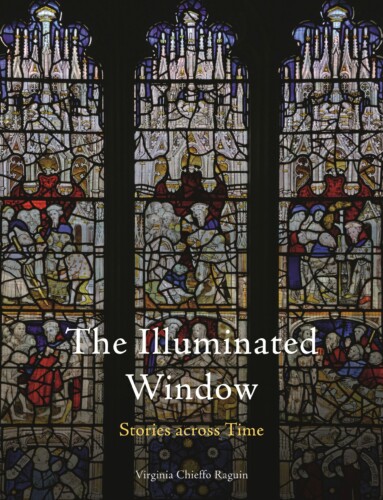
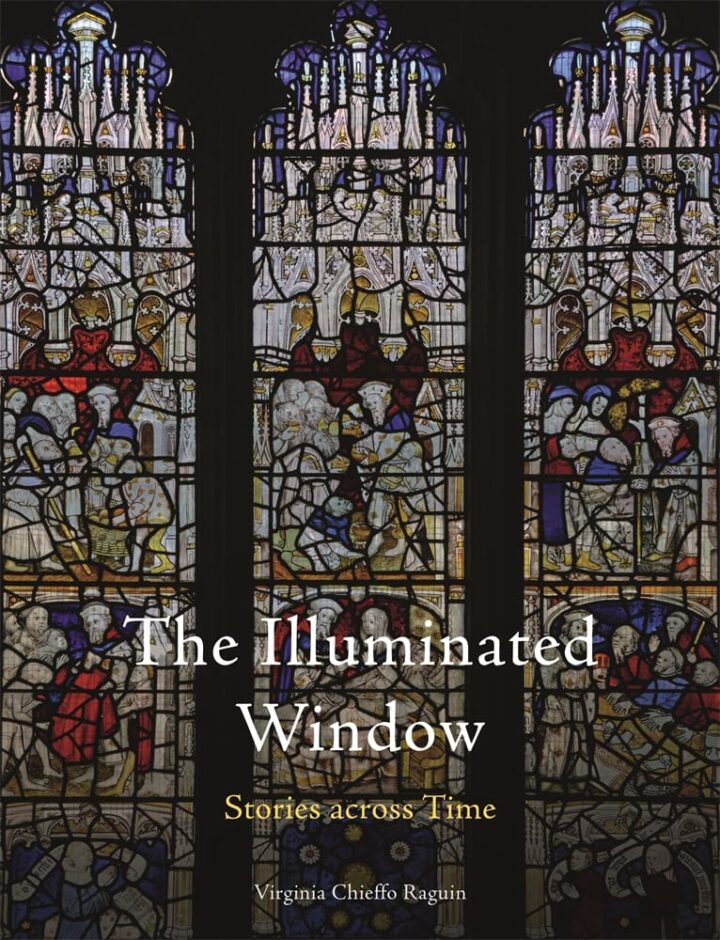
In this short extract, Virginia Chieffo Raguin describes her intention for The Illuminated Window: Stories Across Time, and what inspired her to write the book.
***
The Illuminated Window focuses on selected monuments, enabling the viewer to become engaged in the moment of their creation and the motivations of their patrons. Unlike viewing art in museums, stained glass is almost always encountered in its original setting. Our experience of the window is very different from perusing a collection of isolated paintings silhouetted against a neutral space, a situation where we often struggle to reconstruct the context within which these works first achieved meaning. We, of course, bring our own contemporary sensibilities to every encounter.
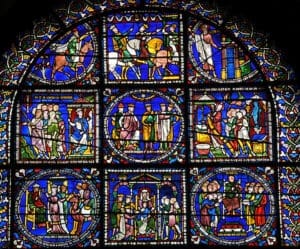
When we enter a building, such as the cathedrals of Cologne or Chartres, or the parish church of Fairford, the architecture is a frame, not only for the windows but for our own bodies as they move through space. We become keenly aware, for example in the cathedral at Canterbury, how the first viewers experienced the evocation of the power of the martyred bishop, Thomas. In vignette after vignette, they saw his healing actions, aiding villagers, heads of state, the professed religious, foreign visitors, children, elders and males and females equally.
A window is created not only by the artist, but through the collaborative tension between the physical site, the programme desired by the patron, the concern for its legibility for the spectator, the technological possibilities of the medium and the prevailing style of the era. We see the donor panel develop in Switzerland, responding to the Swiss desire for an object to commemorate reciprocal dependencies. Of small size, these windows were ubiquitous in town halls, law courts and guild halls, as well as sites of worship. They were an art of exchange, proclaiming friendships and obligations. In the modern era, Harvard University erected a multi-use hall, dining room, lecture hall and passageway to commemorate the sacrifice of so many in the American Civil War. Harvard’s programme is self-reflective, commemorating, as well, a privileged education, depicting past heroes in science, art, exploration, religion and government, made accessible to the present.
In many ways, the experience of windows evokes the ethos of much contemporary art. Many artists work collaboratively and engage in site-specific installations. They frequently emphasize the distinct nature of materials. We need only turn to the popularity of installation art or ‘environments’ pioneered by Kurt Schwitters’s Merzbau from the 1930s. Christo and Jeanne-Claude’s ability to engage others in both constructing and experiencing large-scale, if temporary, environmental change, is paralleled by the buildings in this study. The spectator’s experience changes over time with variations of light and movement through space, and with the activities/spectacles designed for these spaces.
I hope that this series of studies will encourage the reader to peruse the book in any order, starting with what first engages attention, as something new, or something familiar. References to works in other chapters and their concepts are interspersed through the text, encouraging the reader to review, compare and contemplate.
– Virginia Chieffo Raguin
Virginia Chieffo Raguin is Distinguished Professor of Humanities Emeritus, College of the Holy Cross. She has published widely on medieval and early modern art and spirituality as well as contemporary artists in stained glass. She is the author of Stained Glass: From Its Origins to the Present (2003).
You can buy The Illuminated Window directly from our shop.