Dressing Up for the Camera
25th August, 2022
In this blog, author Verity Wilson reflects on what it means to dress up.
***
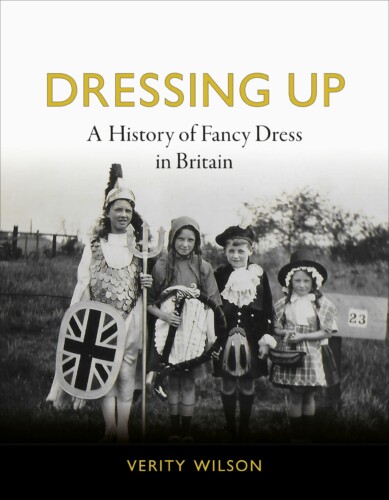
If I were to come up with a list of the top ten things I love most in life it would include clothes and old photographs. The two come together in Dressing Up: A History of Fancy Dress in Britain. The book follows the story of fancy dress from Queen Victoria’s accession to that of her great-great granddaughter, Elizabeth II. Queen Elizabeth’s coronation in 1953 is one of my enduring childhood memories and queenly clothes have contributed many characters to the fancy dress pantheon. Queen of the Fairies, Queen of the May, Queen of the Night, American Indian Queen, the Queen of Palmyra, the Queen of Sheba, the Queen of Hearts and many more all regularly made an appearance at balls and parties, carnivals and fetes. Playing the part of someone you could never be in real life is what dressing up is all about. And photography capitalised on this transient moment of fancy dress make-believe by seemingly bestowing permanence to a character.
The period of fancy dress’s popularity considered in Dressing Up is concurrent with photography’s trajectory from experimental wonder to technological marvel. Moreover, it proved to be a technique that incrementally overflowed class barriers, just like fancy dress. You could move up or down the social scale by way of clothing and you could memorialize your character in a studio portrait taken by a society photographer or a snapshot taken by your Dad at home. Today, our understanding of earlier fancy dress is transmitted primarily through photographic images rather than figurative language. That is why there are so many images in my book and why their context is important.
One of these contexts is captured by the endearing portrait of Harriet Follett dressed as ‘ La Figlia de Reggimento’ (The Daughter of the Regiment) in a hand-tinted photograph by Owen Angel in 1873. Harriet wore this outfit to the Exeter Juvenile Ball, a distinctive genre of civic function widespread in London and provincial cities until well after the First World War. Images of each costumed child who attended the Exeter ball were pasted into a keep-sake album, a ritual that was enacted all across Britain and the empire with remarkably little variation.
.jpg)
In the period covered by my book, character costume came to dominate fancy dress. Revellers dressed as someone or even as something. Harriet Follet in 1873 was immediately identifiable as the regimental daughter from Donizetti’s hugely popular opera. At the same time, it was obvious to family and friends that the sitter was Harriet. So, total disguise, a feature of eighteenth-century masked masquerade as well as of folk rituals, was a fading element from the time of Victoria’s reign and, from the mid-nineteenth century, deception was not usually the intention of fancy dress.
But there are exceptions and one of these stirred my initial interest in the whole genre of fancy dress when I visited Shetland for a knitting conference in my role as co-editor of the dress studies journal, Costume. But it wasn’t Shetland knitwear, justifiably renowned the world over, that aroused my curiosity in the delightfully absorbing Shetland Museum in Lerwick. It was the displays of old photographs of men in costume. Although on occasion men have to be persuaded to dress up, the evidence of these photographs suggested that many had a burning compulsion to do so. The men were participating in the Shetland fire festival known as Up Helly Aa, a spectacle which continues all but unchanged to this day. Groups of men unblushingly dress up and record their participation in the event by lining up for the camera in their unorthodox apparel every January. Masking retains its allure in Shetland as in the squad of frogs from 1911. When the festival participants take up their positions to be photographed, some groups pose twice, first masked and then unmasked, revealing their identities.
.jpg)
.jpg)
Dressing Up in all its many different manifestations was a crucial ingredient of peoples’ lives in Britain and its overseas empire. My book is a celebration of this practice but it also engages with the troubling and contentious aspects of fancy dress with its transgressive crossings of class, gender and racial boundaries.
– Verity Wilson
To read more about this fascinating subject, order Dressing Up: A History of Fancy Dress in Britain from our online shop now.
Verity Wilson worked at the Victoria and Albert Museum in London for 25 years. She is the author of Chinese Dress (1986) and Chinese Textiles (2004), and lives in Oxford.