Crimea and the Crimean Tatars cannot be Russian
5th June, 2025
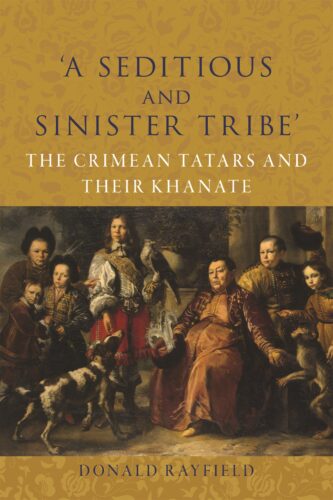
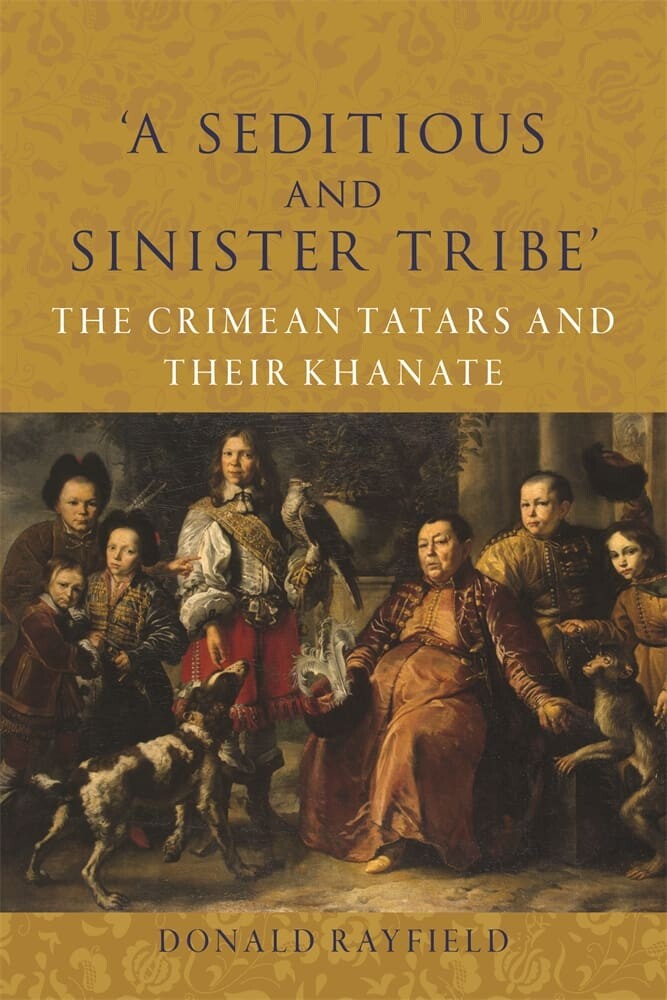
In this blog, author Donald Rayfield explains why Crimea cannot be part of Russia. His book, ‘A Seditious and Sinister Tribe’, has been shortlisted for the Pushkin House Book Prize 2025.
***
Handing Crimea over to Russia would be like forcing a victim to marry her rapist. It is not just the Ukrainian constitution (and the great powers who ‘guaranteed’ its territorial integrity in 1991 and 1994) that make the surrender of Crimea to Russia unconscionable. The last internationally recognised legal change to Crimea’s status was in 1774, when the Treaty of Küçük Kainarca between the Ottoman and Russian empires recognised the Crimean Khanate as an independent state with which Russia or the Ottoman Empire had no right to interfere. Since then, Russia and the USSR have flagrantly ignored the treaty by ethnic cleansing and genocide. Catherine the Great imposed a puppet khan and a Russian ‘resident’ to cause chaos and bankruptcy, then had the Armenian and Greek communities, the backbone of Crimea’s manufacturing and trade, removed to today’s Mariupol, where some 40,000 starved or froze to death. In 1783 Catherine annexed Crimea and began driving Tatars out to Thrace or Anatolia and importing Christian settlers — Greeks, Germans, Bulgarians —, handing over Tatar farms and forests to Russian civil servants and army officers.
Cultural destruction followed: in 1833 Tsar Nicolas I had all Crimean-Tatar books and manuscripts destroyed; after the Crimean War Tatars were accused of treachery and further encouraged to leave. There was a respite at the end of the 19th century, and in the 1917–1919 Civil War Crimean Tatars set up a democratic state: Bolshevik sailors murdered the entire Crimean Tatar government. In summer 1944, Stalin deported the Crimean Tatar nation, ostensibly for collaboration with the Nazis, to Central Asia: half of them died, without food or water or ventilation, in cattle wagons. Only in the 1990s could they return, having to camp or, if they had money, to buy back their old houses.
For the next twenty years the Crimean Tatars showed extraordinary dynamism, establishing a university, publishing houses, a TV station in yet another resurrection from near extermination. In 2014 Putin’s ‘green men’ resumed the process of ridding Crimea of its indigenous population by force and fraud.
The Crimean Tatars have few defenders. When the French burned Moscow in 1812, they were soon forgiven, but the Crimean Tatars have never been forgiven for burning Moscow in 1571. Ever since it ceded Crimea, Turkey has adopted a ‘hands-off’ position, preferring to keep the peace with Russia to defending the Crimean Tatars, whose energetic armies for three centuries enabled the Ottomans conquer and dominate the Balkans.
The Crimean Tatar heritage is largely ignored: their 20th century novelist Cengiz Dağcı, a Solzhenitsyn to his nation, spent the last 60 years of his life working in a restaurant in Dalston, writing at night. Ignored in the west, he is printed and read only in Turkey.
If Jews have the right to settle in Israel, should not some of the four million descendants of expelled Crimean Tatars living in Turkey be allowed to return to Crimea? Perhaps the question should not be whether Crimea is handed back to Ukraine or to Russia, but whether the Crimean Khanate or 1917-1919 Republic should reclaim their independence. In an ideal world Crimea could be like Andorra, independent, but discretely overseen by its powerful neighbours. In the real world, however, we can only insist that Crimea remains part of Ukraine, a country with which Crimean Tatars feel a historic bond.
– Donald Rayfield
Donald Rayfield is Emeritus Professor of Russian and Georgian at Queen Mary University of London. His books include Anton Chekhov: A Life (1997, 2021), and Edge of Empires: A History of Georgia (Reaktion Books, 2012), which was translated into Russian and Georgian.
You can buy ‘A Seditious and Sinister Tribe’ from our online shop now