Weeds
Nina EdwardsA scientific and cultural history of weeds, from unwanted intruder to beautiful ornament.
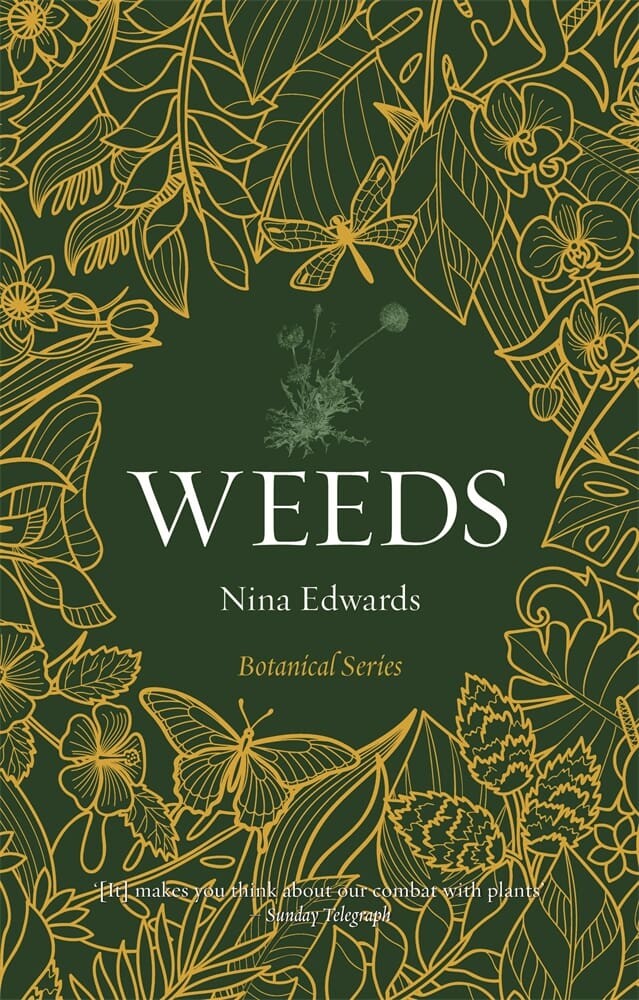
To most of us, weeds can seem nothing more than intruders in gardens, farms and city streets. But the idea of the weed is a slippery one, constantly changing according to different needs, fashions and contexts. In a well-ordered field of corn, a scarlet poppy is a bright red intruder, but in other parts of the world it is an important cultural symbol, a potent and lucrative pharmaceutical source, or simply a beautiful ornament. Fat hen, which today we consider a pest, was in Neolithic times a staple crop, its seeds an important source of nutrition. Weeds sketches the history of the fashions and attitudes that have shaped our fields and gardens, showing that what we keep out of them is just as fascinating as what we put in.
A scientific and cultural history of weeds, from unwanted intruder to beautiful ornament.
To most of us, weeds can seem nothing more than intruders in gardens, farms and city streets. But the idea of the weed is a slippery one, constantly changing according to different needs, fashions and contexts. In a well-ordered field of corn, a scarlet poppy is a bright red intruder, but in other parts of the world it is an important cultural symbol, a potent and lucrative pharmaceutical source, or simply a beautiful ornament. Fat hen, which today we consider a pest, was in Neolithic times a staple crop, its seeds an important source of nutrition. Weeds sketches the history of the fashions and attitudes that have shaped our fields and gardens, showing that what we keep out of them is just as fascinating as what we put in.
A scientific and cultural history of weeds, from unwanted intruder to beautiful ornament.
To most of us, weeds can seem nothing more than intruders in gardens, farms and city streets. But the idea of the weed is a slippery one, constantly changing according to different needs, fashions and contexts. In a well-ordered field of corn, a scarlet poppy is a bright red intruder, but in other parts of the world it is an important cultural symbol, a potent and lucrative pharmaceutical source, or simply a beautiful ornament. Fat hen, which today we consider a pest, was in Neolithic times a staple crop, its seeds an important source of nutrition. Weeds sketches the history of the fashions and attitudes that have shaped our fields and gardens, showing that what we keep out of them is just as fascinating as what we put in.
-
'
What is a weed? Now Ive read this charming little book, I feel confident that I could have a solid debate about this with the best of them. Whod have thought the topic of weeds could be so interesting and thought-provoking? Even non-gardeners would enjoy this book, as weeds are presented as part of everyday life, from cookery to medicine to art . . . This is an unexpectedly great read, which leaves you with the thought What would the world be without weeds?
'The English Garden
-
'
The very word has gardeners bristling with hostility, but this book regards those tenacious members of the plant family discerningly.
'Gardens Illustrated, 'Books of the Year'
-
'
This latest in Reaktions Botanical series, which is an engaging amalgam of natural and cultural history, is well suited to such treatment because it focuses on plants that have been our companions since our species first began to leave its mark on the planet, such as goosegrass and darnel (thetares mentioned in the Bible). Reading Nina Edwards entertaining account of their place in our fields, cities, art and even diet gave me a new respect for these resilient plants.
'BBC Wildlife Magazine
-
'
Is it a weed? Good question. Nina Edwards main point in this well-written book is that it all depends on what you mean . . . There is plenty more of this food for thought here and, indeed, some food for eating. Recipes are given for ground-elder quiche and dandelion fritters . . . all this dense discussion is thought-provoking
'Country Life
-
'
Edwards takes the reader through the history of weeds, and their history in art . . . the book is copiously illustrated with paintings and prints . . . the narrative creeps through husbandry, gardening, poetry, food, medicine and apocalypse . . . From the Bible to Shakespeare, weeds manifest failure, weakness, sexuality, romanticism, freedom, lack of freedom, equality you name it . . . Weeds makes you think about our combat with plants, always one step ahead, without sentiment.
'Sunday Telegraph
-
'
Cow parsley in a flower arrangement, nettle soup, dandelion and burdock to drink, tansy for a cough or convolvulus strangling the plants in our borders, burrs sticking to our clothes, thistles scratching our legs on a public footpath . . . ? Weeds are, to put it mildly, controversial. In Weeds Nina Edwards has considered all these and many, many more aspects of weeds in a detailed examination of the outcasts of the plant world. While I enjoy nothing more than a good gardening book, it had never occurred to me that weeds could be the subject of such a beautiful and fascinating volume.
'Methodist Recorder
Introduction
One: The Idea of Weeds
Two: The Background
Three: Image and Allegory
Four: Unnatural Selection: The War on Weeds
Five: Useful Weeds
Six: In Our Diet
Seven: A Wild and Weedy Garden
Afterword
Timeline
Glossary
References
Further Reading
Associations and Websites
Acknowledgements
Photo Acknowledgements
Index
Nina Edwards is a freelance writer based in London. Her books include On the Button: The Significance of an Ordinary Item (2011) and Darkness: A Cultural History (Reaktion, 2018).