The Reformation of the Image
Joseph Leo KoernerExamines the images used in Protestant church services during the period of their definition by Martin Luther. This title locates the conflict between verbal and visual communication in the emergence of a state-supported, state-supporting faith.
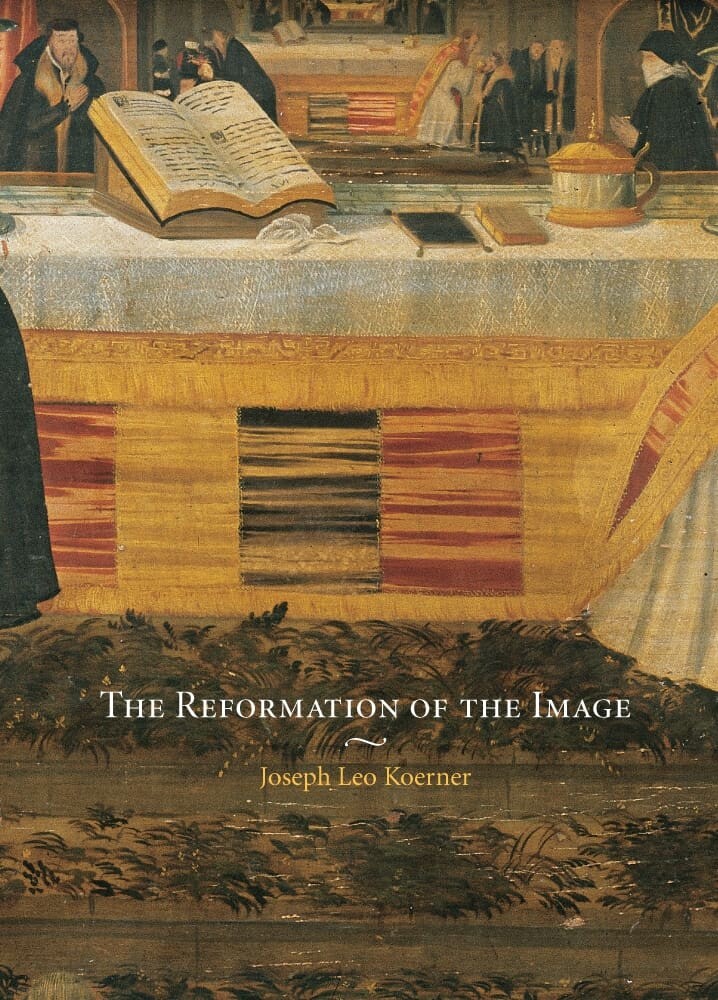
In The Reformation of the Image, Joseph Leo Koerner examines the images used in Protestant church services during the period of their definition by Martin Luther. Focusing on Lucas Cranach the Elder's famous altarpiece for the City Church in Wittenberg, and drawing on a mass of other Lutheran images - some of which have never been published before - he elucidates a founding moment in European history when words were made the model for all communication. In determining why images persisted despite their repudiation as empty idols, Koerner locates the conflict between verbal and visual communication in the emergence of a state-supported, state-supporting faith. Examining the images made for Luther’s new religion of inward belief, he shows the process by which, through an interplay between pictures and words, subjects were trained to believe what someone else believed.
This ground-breaking study of a decisive but little-known episode in the history of art explores how, by re-describing arguments made against them, visual images persist.
Examines the images used in Protestant church services during the period of their definition by Martin Luther. This title locates the conflict between verbal and visual communication in the emergence of a state-supported, state-supporting faith.
In The Reformation of the Image, Joseph Leo Koerner examines the images used in Protestant church services during the period of their definition by Martin Luther. Focusing on Lucas Cranach the Elder's famous altarpiece for the City Church in Wittenberg, and drawing on a mass of other Lutheran images - some of which have never been published before - he elucidates a founding moment in European history when words were made the model for all communication. In determining why images persisted despite their repudiation as empty idols, Koerner locates the conflict between verbal and visual communication in the emergence of a state-supported, state-supporting faith. Examining the images made for Luther’s new religion of inward belief, he shows the process by which, through an interplay between pictures and words, subjects were trained to believe what someone else believed.
This ground-breaking study of a decisive but little-known episode in the history of art explores how, by re-describing arguments made against them, visual images persist.
-
'
Winner of the ACE International Book Award
'Award
-
'
A brilliant book.
'Peter Schjeldahl, New Yorker
-
'
Koerner's readings of Cranach's art are unfailingly arresting and inventive . . . it is a long time since a work of art history has kept me so consistently reaching for a pencil to register ardent appreciation or violent dissent.
'Eamon Duffy, London Review of Books
-
'
A learned and penetrating inquiry into a central theme in Europe's art history.
'TLS
-
'
[An] extraordinary study . . . it is a stupendous and persuasive piece of scholarship . . . Nearly every page has some fresh insight, some novel information, some striking argument or surprising formulation.
'Artforum
-
'
Felicitous prose and subtle readings. Sixteenth-century Lutheran art and the iconoclastic momentum from which it emerged have found a fine interpreter in a work which sits happily on the cusp between the historical and the art historical.
'Margaret, Apollo
-
'
The most exciting book of art history I have read since Hans Belting's magisterial 1993 study of religious icons in European culture, Likeness and Presence. What [Koerner] has accomplished in this marvelous book is to bring that religion to life again, and in the process make vivid the art that emerged from the critique of images that launched the Reformation.
'Arthur C. Danto, The Nation
-
'
Joseph Lee Koerner, arguably . . . the most thoughtful and informed art historian specializing in German art, has taken a step back . . . in order to become a champion of Lutheranism. In relic-crushing detail, Koerner seeks to persuade his readers that most of them need to rethink the Reformation.
'Bruce Krajewski, Renaissance Quarterly
-
'
Brilliantly structured, Keroner's scholarship is all-encompassing … This is essential reading for all those interested in the history of religion, art and society in early modern Germany.
'Scotland on Sunday
-
'
Those who have read [Koerner's previous] volumes will not be surprised by the scholarship and sweeping scope of the current volume, a work that marks him as second to none in Reformation history.
'John Dillenberger, Canadian Historical Review
-
'
Most art-historical writing is framed either as interpretation, in search of meanings, or as explanation. . . . The Reformation of the Image is remarkable for using the interpretive mood for a case that might seem to invite explanation. And the outcome is resonant.
'Michael Baxandall, Common Knowledge
-
'
Koerner has brought to academe an inestimably deeper understanding of Lutheran imagery, its genesis, complexity of purpose, and larger contribution to an emergent modern world of art. . . . Fundamental questions about the nature of art, about Reformation art, the end of art, the beginning of modern art, are found throughout this text and make for an inspiringly complex presentation of ideas.
'The Art Book
-
'
One of the most important and brilliant studies ever written of the impact of Protestantism on art production and reception . . . Koerners book will immediately become essential reading, and not only for specialists in German art
'Stephen Greenblatt, Harvard University.
-
'
The Reformation of the Image is a tour de force
'Christopher Wood, Yale University
Joseph Leo Koerner is Victor S. Thomas Professor of History of Art and Architecture at Harvard University. His books include The Moment of Self-Portraiture in German Renaissance Art (1993), Caspar David Friedrich and the Subject of Landscape (Reaktion, 1st edn 1993, 2nd edn 2009) and Reformation of the Image (Reaktion, 2004).