Caspar David Friedrich
and the Subject of Landscape
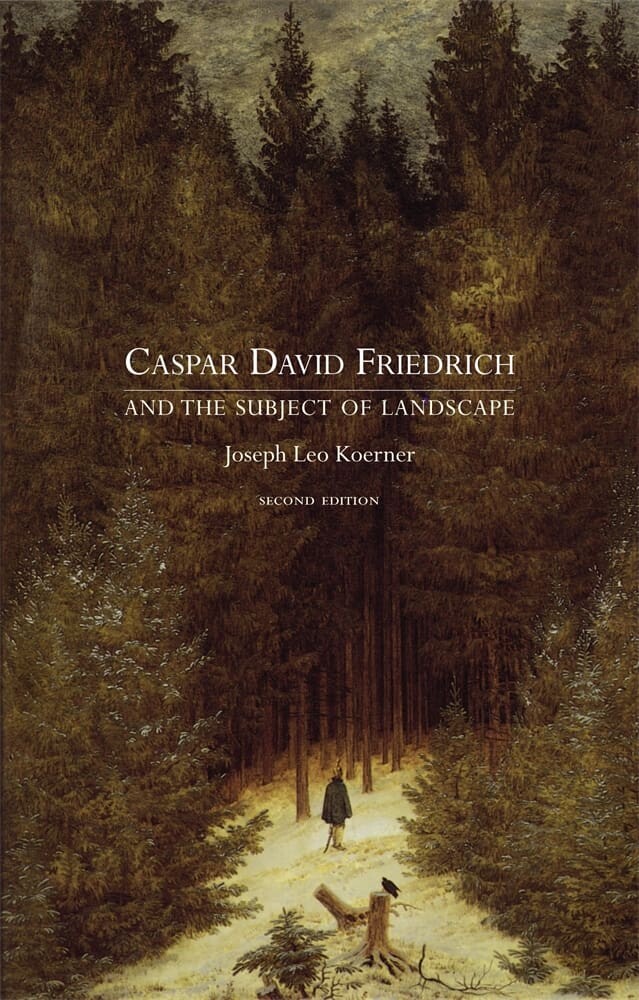
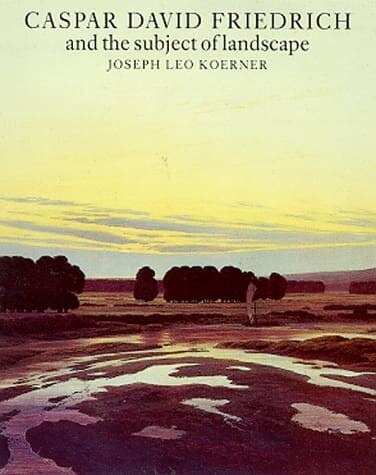
Joseph Leo KoernerCaspar David Friedrich (1774-1840), the greatest painter of the Romantic movement in Germany, was perhaps Europe’s first truly modern artist. His melancholy landscapes, often peopled by lonely wanderers, represent experiments towards a radically subjective art, one in which, as Friedrich wrote, the painter depicts not ‘what he sees before him, but what he sees within him.’ Yet in their awesome power to capture the individuality of visible forms Friedrich’s pictures also accept and express the irredeemable otherness of Nature.
Winner of the 1992 Mitchell Prize for the History of Art, this compelling, highly original and beautifully illustrated book is the most comprehensive account ever published in English on this most fascinating of nineteenth-century masters.
Caspar David Friedrich (1774-1840), the greatest painter of the Romantic movement in Germany, was perhaps Europe’s first truly modern artist. His melancholy landscapes, often peopled by lonely wanderers, represent experiments towards a radically subjective art, one in which, as Friedrich wrote, the painter depicts not ‘what he sees before him, but what he sees within him.’ Yet in their awesome power to capture the individuality of visible forms Friedrich’s pictures also accept and express the irredeemable otherness of Nature.
Winner of the 1992 Mitchell Prize for the History of Art, this compelling, highly original and beautifully illustrated book is the most comprehensive account ever published in English on this most fascinating of nineteenth-century masters.
Joseph Leo Koerner is Victor S. Thomas Professor of History of Art and Architecture at Harvard University. His books include The Moment of Self-Portraiture in German Renaissance Art (1993), Caspar David Friedrich and the Subject of Landscape (Reaktion, 1st edn 1993, 2nd edn 2009) and Reformation of the Image (Reaktion, 2004).