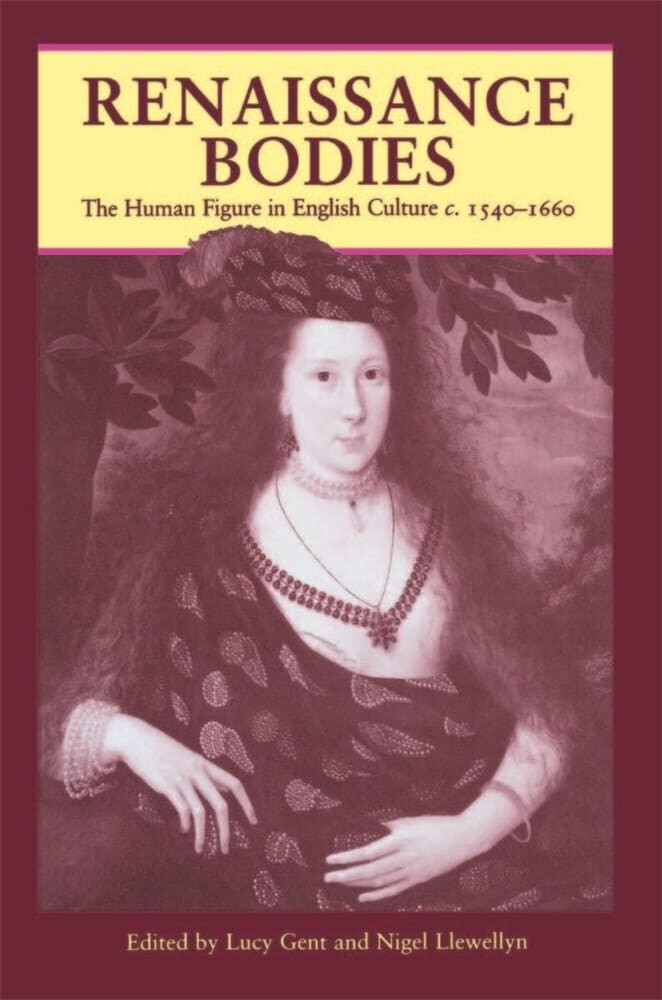
Renaissance Bodies
The Human Figure in English Culture c.1540–1660
Nigel Llewellyn, Lucy GentWith essays by John Peacock, Elizabeth Honig, Andrew and Catherine Belsey, Jonathan Sawday, Susan Wiseman, Ellen Chirelstein, Tamsyn Williams, Anna Bryson, Maurice Howard and Nigel Llewellyn.
Renaissance Bodies is a unique collection of views on the ways in which the human image has been represented in the arts and literature of English Renaissance society. The subjects discussed range from high art to popular culture - from portraits of Elizabeth I to polemical prints mocking religious fanaticism - and include miniatures, manners, anatomy, drama and architectural patronage. The authors, art historians and literary critics, reflect diverse critical viewpoints, and the 78 illustrations present a fascinating exhibition of the often strange and haunting images of the period.
With essays by John Peacock, Elizabeth Honig, Andrew and Catherine Belsey, Jonathan Sawday, Susan Wiseman, Ellen Chirelstein, Tamsyn Williams, Anna Bryson, Maurice Howard and Nigel Llewellyn.
Renaissance Bodies is a unique collection of views on the ways in which the human image has been represented in the arts and literature of English Renaissance society. The subjects discussed range from high art to popular culture - from portraits of Elizabeth I to polemical prints mocking religious fanaticism - and include miniatures, manners, anatomy, drama and architectural patronage. The authors, art historians and literary critics, reflect diverse critical viewpoints, and the 78 illustrations present a fascinating exhibition of the often strange and haunting images of the period.
With essays by John Peacock, Elizabeth Honig, Andrew and Catherine Belsey, Jonathan Sawday, Susan Wiseman, Ellen Chirelstein, Tamsyn Williams, Anna Bryson, Maurice Howard and Nigel Llewellyn.
Renaissance Bodies is a unique collection of views on the ways in which the human image has been represented in the arts and literature of English Renaissance society. The subjects discussed range from high art to popular culture - from portraits of Elizabeth I to polemical prints mocking religious fanaticism - and include miniatures, manners, anatomy, drama and architectural patronage. The authors, art historians and literary critics, reflect diverse critical viewpoints, and the 78 illustrations present a fascinating exhibition of the often strange and haunting images of the period.
-
'
The whole book . . . presents a mirror of contemporary concerns with power, the merits and demerits of individualism, sex-roles, selves, the meaning of community and (even) conspicuous consumption
'The Observer
Photographic Acknowledgements
Notes on the Editors and Contributors
Introduction – Lucy Gent and Nigel Llewellyn
1. Icons of Divinity: Portraits of Elizabeth I – Andrew Belsey and Catherine Belsey
2. Lady Elizabeth Pope: The Heraldic Body – Ellen Chirelstein
3. In Memory: Lady Dacre and Pairing by Hans Eworth – Elizabeth Honig
4. 'Magnetic Figures': Polemical Prints of the English Revolution – Tamsyn Williams
5. The Fate of Marsyas: Dissecting the Renaissance Body – Jonathan Sawday
6. The Rhetoric of Status: Gesture, Demeanour and the Image of the Gentleman in Sixteenth- and Seventeenth-Century England – Anna Bryson
7. Inigo Jones as a Figurative Artist – John Peacock
8. 'Tis Pity She's a Whore: Representing the Incestuous Body – Susan J. Wiseman
9. Self-Fashioning and the Classical Moment in Mid-Sixteenth-Century English Architecture – Maurice Howard
10. The Royal Body: Monuments to the Dead, For the Living – Nigel Llewellyn
References
Select Bibliography
Index
Nigel Llewellyn (Anthology Editor)
Nigel Llewellyn is a lecturer in the History of Art at the University of Sussex. He has published numerous essays and reviews on English Renaissance art, as well as on Virgil and Ovid.
Lucy Gent (Anthology Editor)
Lucy Gent was Senior Lecturer in English at the Polytechnic of North London from 1976 to 1988. Her Picture and Poetry, 1560-1620 was published in 1981, and her articles have appeared in Modern Language Review, Renaissance Quarterly, English, Essays and Studies, Renaissance Studies and elsewhere. Since 1988 she has been studying landscape design.