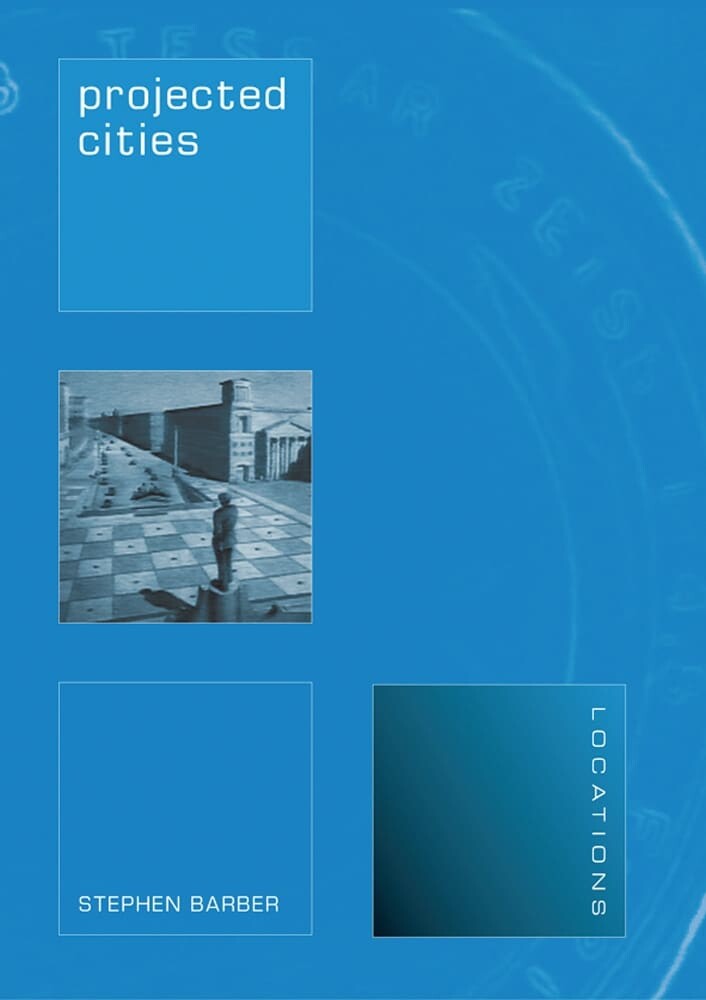
Projected Cities
Cinema and Urban Space
Stephen BarberIn Projected Cities, Stephen Barber explores the use of urban images in film from early to contemporary cinema.
In this illuminating and provocative survey, Stephen Barber examines the historical relationship between film and the urban landscape. Projected Cities looks with particular focus at the cinema of Europe and Japan, two closely linked cinematic cultures which have been foremost in the use of urban imagery, to reveal elements of culture, architecture and history. By examining this imagery, especially at moments of turmoil and experimentation, the author reveals how cinema has used images of cities to influence our perception of everything from history to the human body, and how cinematic images of cities have been fundamental to the ways in which the city has been imagined, formulated and remembered. The book goes on to assess the impact of media culture on the status of film and cinema spaces, and concludes by considering digital renderings of the modern city. Projected Cities will appeal to all readers engaged with the city, film and contemporary culture.
In Projected Cities, Stephen Barber explores the use of urban images in film from early to contemporary cinema.
In this illuminating and provocative survey, Stephen Barber examines the historical relationship between film and the urban landscape. Projected Cities looks with particular focus at the cinema of Europe and Japan, two closely linked cinematic cultures which have been foremost in the use of urban imagery, to reveal elements of culture, architecture and history. By examining this imagery, especially at moments of turmoil and experimentation, the author reveals how cinema has used images of cities to influence our perception of everything from history to the human body, and how cinematic images of cities have been fundamental to the ways in which the city has been imagined, formulated and remembered. The book goes on to assess the impact of media culture on the status of film and cinema spaces, and concludes by considering digital renderings of the modern city. Projected Cities will appeal to all readers engaged with the city, film and contemporary culture.
-
'
very readable . . . A great starting point for thinking about what the city you are fabricating might mean
'RIBA Journal
Introduction
1. The Origins of the Film City
2. Urban Space in European Cinema
3. Japan: The Image of the City
4. The Digital City and Cinema
References
Acknowledgements
Index
Stephen Barber is Professor in the Faculty of Art, Design and Architecture at Kingston University, Surrey. His books include Fragments of the European City (Reaktion, 1995), Projected Cities: Cinema and Urban Space (Reaktion, 2000), Tokyo Vertigo (2001), Extreme Europe (2001), The Art of Destruction: The Films of the Vienna Action Group (2004), Jean Genet (Reaktion, 2005), Abandoned Images: Film and Film's End (2011) and Performance Projections (2014). The Times has praised his work as ‘brilliant and profound’.