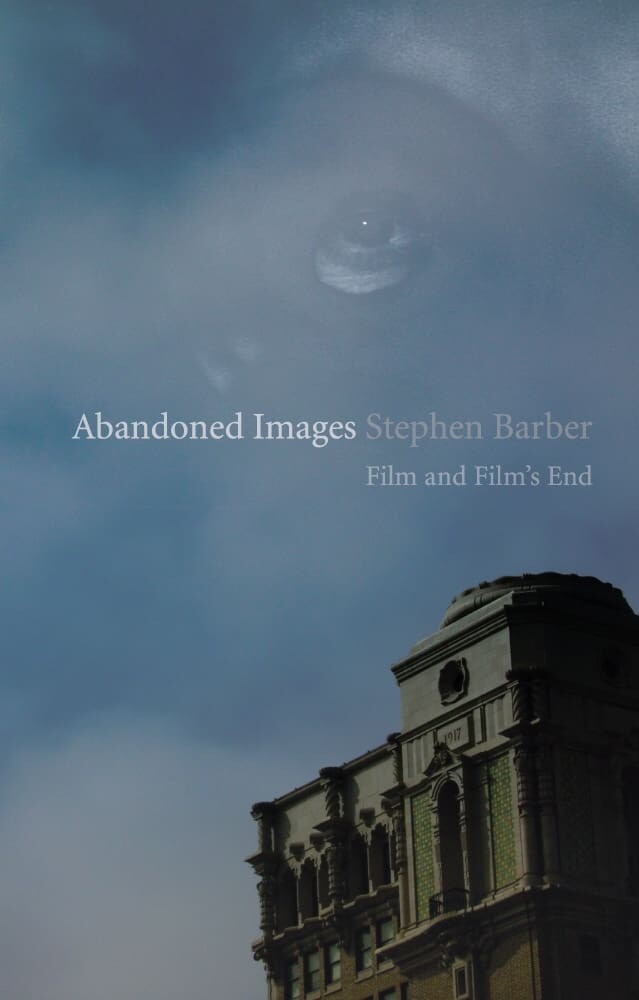
Abandoned Images
Film and Film’s End
Stephen BarberExamines the profound transformation taking place in the way we experience film, from the abandonment of traditional venues, to the rise of digital media.
Broadway Avenue in downtown Los Angeles contains an extraordinary collection of twelve abandoned movie theatres, all built between 1910 and 1931. In most cities worldwide, such a concentration of old film palaces would have been demolished long ago, but in a city whose identity is inseparable from the film industry, the buildings have survived mainly intact, some with interiors that are dilapidated or gutted, while others have been transformed and re-imagined as churches or nightclubs. Stephen Barber’s Abandoned Images takes us inside these remarkable places on a quest to understand the birth and death of film as both a medium and a social event.
Due to the rise in digital filmmaking and straight-to-DVD and on-demand distribution, the film industry is presently undergoing a process of profound transformation in both how movies are made and how they are watched. Barber explores what this means for the cinematic experience: are movies losing some essential element of their identity and purpose, and can the distinctive aura of film survive when film’s showplaces have been redesigned to serve other ends or altogether erased? Barber also forecasts the future of film, revealing how its distinctive and flexible nature will be vital to its survival.
Featuring many evocative images alongside insightful reflections on the role of film and its viewing in a global culture, Abandoned Images will be of interest to all those engaged in contemporary developments in film, visual media and digital arts.
Examines the profound transformation taking place in the way we experience film, from the abandonment of traditional venues, to the rise of digital media.
Broadway Avenue in downtown Los Angeles contains an extraordinary collection of twelve abandoned movie theatres, all built between 1910 and 1931. In most cities worldwide, such a concentration of old film palaces would have been demolished long ago, but in a city whose identity is inseparable from the film industry, the buildings have survived mainly intact, some with interiors that are dilapidated or gutted, while others have been transformed and re-imagined as churches or nightclubs. Stephen Barber’s Abandoned Images takes us inside these remarkable places on a quest to understand the birth and death of film as both a medium and a social event.
Due to the rise in digital filmmaking and straight-to-DVD and on-demand distribution, the film industry is presently undergoing a process of profound transformation in both how movies are made and how they are watched. Barber explores what this means for the cinematic experience: are movies losing some essential element of their identity and purpose, and can the distinctive aura of film survive when film’s showplaces have been redesigned to serve other ends or altogether erased? Barber also forecasts the future of film, revealing how its distinctive and flexible nature will be vital to its survival.
Featuring many evocative images alongside insightful reflections on the role of film and its viewing in a global culture, Abandoned Images will be of interest to all those engaged in contemporary developments in film, visual media and digital arts.
-
'
beautifully illustrated . . . Barber is interested in both the technological era of motion pictures, and the passing of its culture, its buildings, habits and attractions.
'TLS
-
'
Stephen Barber’s Abandoned Images parallels the derelict Broadway motion picture theatres in Los Angeles to an essential trauma of memory, at a pivotal moment in the history of film. The shift from analogue to digital instigates a fundamental transmutation of not only the medium of film and the entire film industry, but also of the nature of memory . . . Barber’s monograph is a welcome addition to a category of works that is mainly made up of coffee-table photography books.
'Historical Journal of Film, Radio and Television
-
'
The scope of Abandoned Images is wide-ranging, as Barber elegantly structures his book to not only read the architecture of the abandoned Los Angeles theatres in depth but also perform brief textual analyses of film sequences from mainstream, art and experimental cinema in order to apply his insights to global viewing culture . . . contributes many new insights into the idea of the death of cinema in the digital age as well as the role of architecture in how audiences perceive film by investigating the parallel between the medium and its viewing spaces.
'The Canadian Journal of Film Studies
Introduction
Part 1
Film and The End
Part 2
Abandoned Images
Part 3
Abandoned Eyes
Part 4
Film and Film's End: Resuscitated Images
References
Acknowledgements
Stephen Barber is Professor in the Faculty of Art, Design and Architecture at Kingston University, Surrey. His books include Fragments of the European City (Reaktion, 1995), Projected Cities: Cinema and Urban Space (Reaktion, 2000), Tokyo Vertigo (2001), Extreme Europe (2001), The Art of Destruction: The Films of the Vienna Action Group (2004), Jean Genet (Reaktion, 2005), Abandoned Images: Film and Film's End (2011) and Performance Projections (2014). The Times has praised his work as ‘brilliant and profound’.