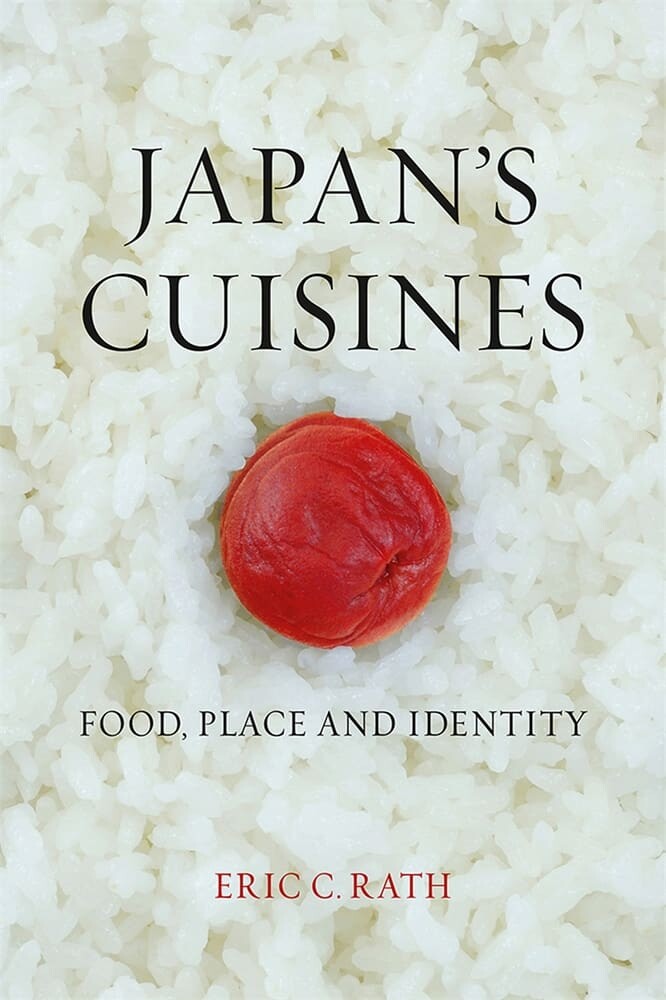
Japan’s Cuisines
Food, Place and Identity
Eric C. RathIn 2013 ‘traditional Japanese dietary culture’ (washoku) was added to UNESCO’s Intangible Cultural Heritage list. Washoku’s predecessor was ‘national people’s cuisine’, an attempt during the Second World War to create a uniform diet for all citizens. Japan’s Cuisines reveals the diversity of Japanese cuisine and explains how Japan’s modern food culture arose through the direction of private and public institutions. Readers will discover how tea came to be portrayed as the origin of Japanese cuisine, how lunch became a gourmet meal and how regions on Japan’s periphery are reasserting their distinct food cultures.
This is a fascinating book that reveals how the cuisine from the land of the rising sun shapes national, local and personal identity.
In 2013 ‘traditional Japanese dietary culture’ (washoku) was added to UNESCO’s Intangible Cultural Heritage list. Washoku’s predecessor was ‘national people’s cuisine’, an attempt during the Second World War to create a uniform diet for all citizens. Japan’s Cuisines reveals the diversity of Japanese cuisine and explains how Japan’s modern food culture arose through the direction of private and public institutions. Readers will discover how tea came to be portrayed as the origin of Japanese cuisine, how lunch became a gourmet meal and how regions on Japan’s periphery are reasserting their distinct food cultures.
This is a fascinating book that reveals how the cuisine from the land of the rising sun shapes national, local and personal identity.
-
'
In Japan's Cuisines, Eric C. Rath argues that, by focusing on ceremonial and festival foods, and the typical white-rice dinners of today's middle class and the past's elites, Japanese culinary history is inaccurately portrayed . . . Rath laments how contemporary definitions of Japanese cuisine only demonstrate "a fraction of Japan's diverse culinary heritage".
'Times Literary Supplement
-
'
Japan's Cuisines is an examination of the ideology of a nation's food and it ties to cultural identity. Rath does an exceptional job exposing the realities of contemporary Japanese foodways versus national Japanese cuisine, and the conceptual evolution of what constitutes Japanese food . . . This is an enlightening and engaging read that will alter widely held ideas of Japanese food . . . Highly recommended.
'Choice
-
'
A well-informed and lucid critique.
'Huffington Post
-
'
This wise and richly documented study provides an important corrective to the many misconceptions about Japanese food culture. Rath moves skillfully between high cuisine and the great diversity of local foodways to reveal how class cultures, national institutions, and economic change have shaped what Japanese eat and what most people think of as typical Japanese cuisine.
'Professor Jordan Sand, Professor of Japanese History, Georgetown University
-
'
Rath challenges commonly held views of traditional Japanese cuisine, advocating an expanded definition that represents the true complexity of the country’s food . . . The author manages to draw links between past and present that enliven the text . . . Rath’s book is engaging and thoroughly researched . . . This volume makes a worthy contribution to our understanding of Japanese society, the diversity of its cuisines, and how the development of both are unavoidably intertwined
'Asian Affairs
-
'
Japan’s Cuisines is a fascinating look at the ideological underpinnings of washoku in its various historical and contemporary forms. Rath draws on history, folklore and literature to emphasis his arguments . . . he has written a much needed book on Japan’s food culture . . . Japan’s Cuisines is comprehensive, well written and informative
'New Books Asia
NOTE ON TRANSLATION
Introduction
1 What is Traditional Japanese Food?
2 Tea Cuisine and the Origins of Japanese Cuisine
3 Rice and its Identities
4 The Making of the Modern Boxed Lunch
5 National People’s Cuisine
6 When Local Food Became Local Cuisine
7 Local Food Cultures in Saga, Kōchi and Hida
Conclusion
REFERENCES
BIBLIOGRAPHY
ACKNOWLEDGEMENTS
PHOTO ACKNOWLEDGEMENTS
INDEX
Eric C. Rath is Professor of History at the University of Kansas. His books include Oishii: The History of Sushi (Reaktion Books, 2021).