


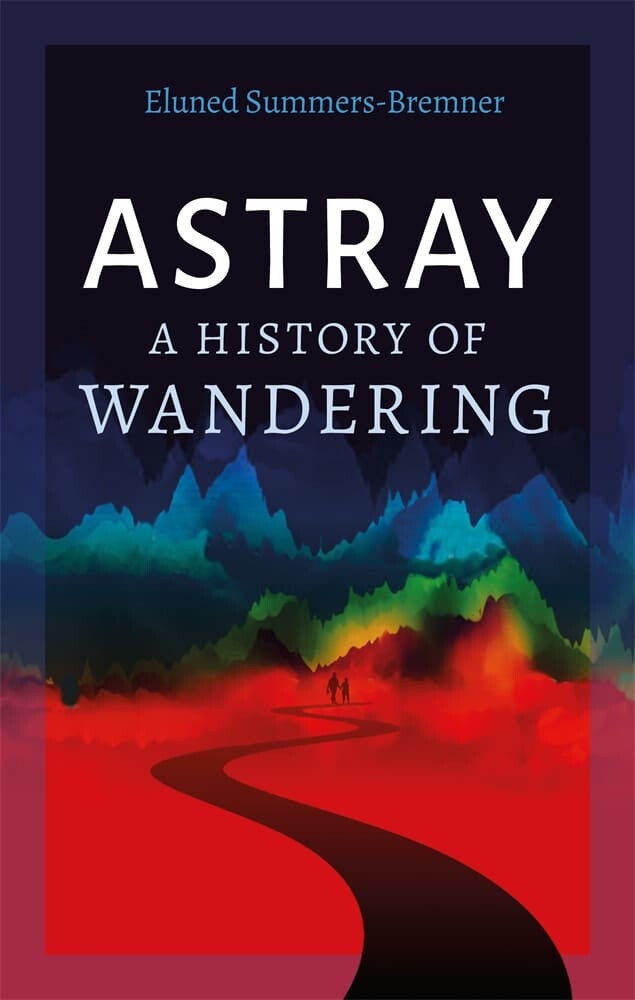
Astray
A History of Wandering
Eluned Summers-BremnerAn enthralling look at wandering, belonging, alienation and hope throughout history.
This book explores how, far from being limited to deviation from known pathways or desirable plans of action, wandering is an abundant source of meaning, as intimately involved in the history of our universe as it will be in the future of our planet. In ancient Australian Aboriginal cosmology, in works about the origins of democracy and surviving disasters in ancient Greece, in Eurasian steppe nomadic culture, in the lifeways of the Rom, in the movements of today’s refugees and in our attempts to preserve spaces of untracked online freedom, wandering is the means by which creativity and skills of adaptation are preserved in the interests of ongoing life. Astray is an enthralling look at belonging, and at notions of alienation and hope.
An enthralling look at wandering, belonging, alienation and hope throughout history.
This book explores how, far from being limited to deviation from known pathways or desirable plans of action, wandering is an abundant source of meaning, as intimately involved in the history of our universe as it will be in the future of our planet. In ancient Australian Aboriginal cosmology, in works about the origins of democracy and surviving disasters in ancient Greece, in Eurasian steppe nomadic culture, in the lifeways of the Rom, in the movements of today’s refugees and in our attempts to preserve spaces of untracked online freedom, wandering is the means by which creativity and skills of adaptation are preserved in the interests of ongoing life. Astray is an enthralling look at belonging, and at notions of alienation and hope.
-
'
Moving from the Ancient Aboriginal cosmology and Eurasian steppe nomadic culture to the Romany peoples and the movements of today’s refugees, this alluring-sounding history examines ideas of belonging, alienation and hope.
'The Bookseller
-
'
Eluned Summers-Bremner’s delightfully distracted cultural history of wandering, Astray, endeavors to teach us the value and meaning of errancy in the warming worlds of late capitalist technocracy . . . Summers-Bremner’s history of wandering seeks not to romanticise anarchy or formalise chaos, but to quietly and rationally defend our abiding need for democracy, sanctuary, origin, errancy, and meaning . . . the nomadic germ that Astray excavates across a dazzling range of materials emerges instead as the essence of an older, richer, and potentially life-saving form or feeling of community – routed through ancient democracy – that we will do well to reacquaint ourselves with in the tumultuous times to come.
'ASAP Journal
-
'
With a delinquently hobo eye, Eluned Summers-Bremner tracks a winding way through the wayward lives of those of no fixed abode: exiles, fugitives, nomads, the restless, the renegade, the vagrant, and defectors of every kind from settlement. Keeping a wary distance from the longing for belonging, Summers-Bremner shows elatingly how often displacement is, more than a predicament, an alertly styled way of life, and so a vital resource for an uncertain future.
'Steven Connor, Professor of English Emeritus in the University of Cambridge and author of The Madness of Knowledge
Eluned Summers-Bremner is a writer and editor. She is the author of Insomnia: A Cultural History (Reaktion, 2007) and Ian McEwan: Sex, Death, and History.
More books by Eluned Summers-Bremner
Related news, events and blog
Our Nomadic Future
3rd May, 2023
In this blog, author Eluned Summers-Bremner reflects on how our future looks nomadic, and how our lifestyle is changing even today. *** Not long after finishing Astray, I was researching how nomadic lifeways are threatened by human-introduced climati…