


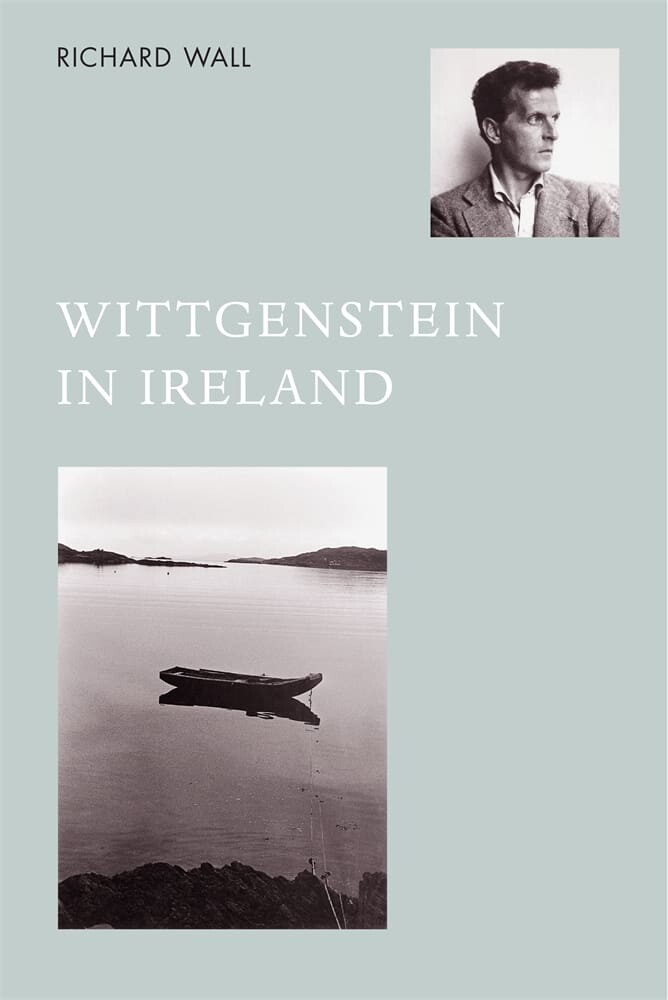
Wittgenstein in Ireland
Richard WallThis work sets out to place philosopher Ludwig Wittgenstein's time in Ireland in its historical context. The author plays a good deal of attention to the representation of the Irish landscape in which the Austrian philosopher found himself able to work.
Having visited Ireland regularly during the 1930s, Ludwig Wittgenstein resigned his Cambridge philosophy professorship in 1947 and moved there, living in a fishing village on the Atlantic coast and hotels in Dublin and the Wicklow Mountains. Although Wittgenstein spent some time out of the country, Ireland was effectively his base for three very productive years during which he worked on what would become one of his key books, the posthumously published Philosophical Investigations.
Wittgenstein in Ireland represents the first sustained account of Wittgenstein's time in Ireland, placing it in its historical context. Wall pays a good deal of attention to the representation of the Irish landscape in which the Austrian philosopher found himself able to work; a large part of his writings were produced in the bleak landscapes of Ireland and Norway.
-
'
As Richard Walls enchanting and perceptive record makes clear, Wittgensteins actual visits had a context of intimacies . . . Wall provides an unforgettable understanding of Irish Wittgenstein. It is a discreet jewel.
'George Steiner, The Observer
-
'
Wittgenstein in Ireland is written in a gentle, elegiac tone, and, as one would expect from the result of a pilgrimage, hagiography and travel writing are combined in it.
'John Hyman, Times Literary Supplement
Foreword
Drury's Ireland
In Kilpatrick House, Redcross, Co. Wicklow
Rosroe, Déjà vu,. As Sole Inhabitant of the House by the Quay
At Ross's Hotel, Dublin
Finis
References
Chronology
Bibliography
Acknowledgements
Richard Wall is a writer, painter, designer and photographer based in Austria. His most recent publication is HerzAsphaltörderGrubenRhapsodie (1997).