


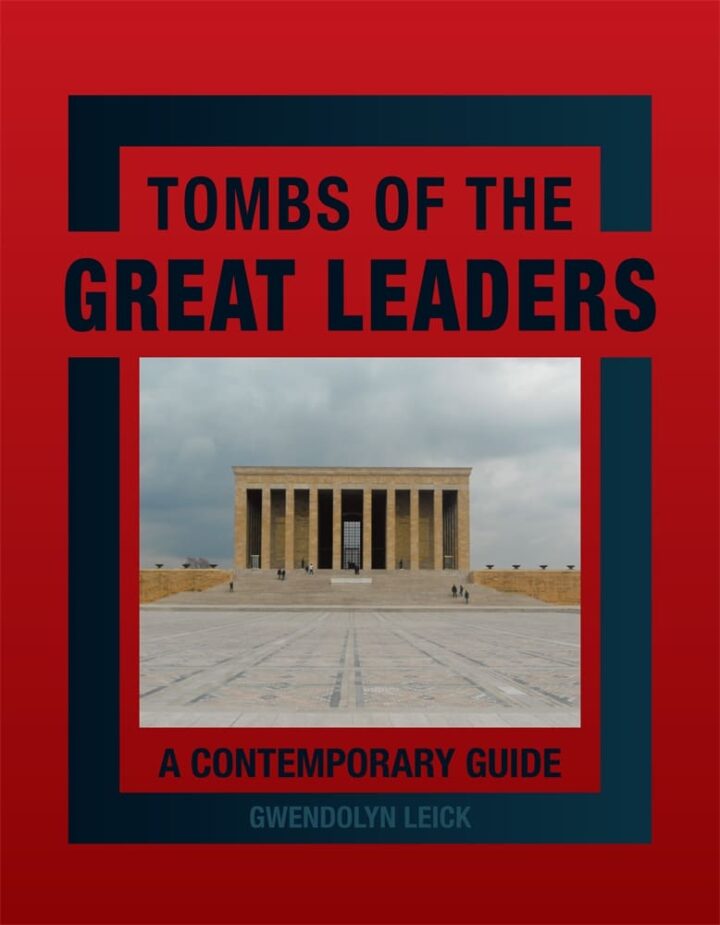
Tombs of the Great Leaders
A Contemporary Guide
Gwendolyn LeickSince ancient times, tombs and mausolea have been built to ensure that exceptional individuals remain in the collective memory. Memorializing those who have changed the course of history, such sites enable real deeds to become the stuff of legend and consolidate a leader’s repute; but these sites of memory also serve the political needs both of the time and of subsequent regimes. How is politics played out, and history commemorated, in these locations? Why do they become pilgrimage sites? How do these structures convey meaning, and can they safeguard a leader’s immortality, particularly in the context of changing political conditions?
Tombs of the Great Leaders traces the development of the political tomb since the Bronze Age to today, focusing on 20th-century memorials housing communist leaders, from Lenin in Moscow to Mao Zedong in Beijing, to Ho Chi Minh in Hanoi, and Kim Il-Sung in Pyongyang. It also looks at the attempts by fascist rulers Franco and Mussolini to immortalize their memories. It explores the grand monuments erected for the founders of new nation states, including Kemal Ataturk in Ankara, Ziaur Rahman in Dhaka, Mohammed Ali Jinnah in Karachi, and the Sun Yat-sen on Purple Mountain.
Leick shows how these mausoleums and tombs have become sites of pilgrimage, and describes the actual experience of visiting the sites, the responses they elicit and the context in which they are viewed today. This book is a fascinating and revealing study of the self-perpetuation of politicians and leaders, despots and dictators.
Tombs of the Great Leaders has been reviewed by www.gdcinteriors.com. To read the review click here.
Since ancient times, tombs and mausolea have been built to ensure that exceptional individuals remain in the collective memory. Memorializing those who have changed the course of history, such sites enable real deeds to become the stuff of legend and consolidate a leader’s repute; but these sites of memory also serve the political needs both of the time and of subsequent regimes. How is politics played out, and history commemorated, in these locations? Why do they become pilgrimage sites? How do these structures convey meaning, and can they safeguard a leader’s immortality, particularly in the context of changing political conditions?
Tombs of the Great Leaders traces the development of the political tomb since the Bronze Age to today, focusing on 20th-century memorials housing communist leaders, from Lenin in Moscow to Mao Zedong in Beijing, to Ho Chi Minh in Hanoi, and Kim Il-Sung in Pyongyang. It also looks at the attempts by fascist rulers Franco and Mussolini to immortalize their memories. It explores the grand monuments erected for the founders of new nation states, including Kemal Ataturk in Ankara, Ziaur Rahman in Dhaka, Mohammed Ali Jinnah in Karachi, and the Sun Yat-sen on Purple Mountain.
Leick shows how these mausoleums and tombs have become sites of pilgrimage, and describes the actual experience of visiting the sites, the responses they elicit and the context in which they are viewed today. This book is a fascinating and revealing study of the self-perpetuation of politicians and leaders, despots and dictators.
Tombs of the Great Leaders has been reviewed by www.gdcinteriors.com. To read the review click here.
-
'
a fascinating window into the history, design and use of the resting places and mausoleums of some twenty 20th-century world leaders . . . Well-written and presented, this excellent volume combines both long-view background and on-the-ground description. The photographs, especially those in color, are quite striking. Highly recommended.
'Choice
-
'
Visiting a remarkable amount of (mostly, if not exclusively) dictators resting places worldwide, she photographs and describes them and the careers of the bodies they contain. It sounds morbid, but isnt the result is fascinating, funny and ingenious.
'Icon Magazine
-
'
Tombs of the Great Leaders is a well-written, richly illustrated and well-researched study of the resting places of those men who sought to address the violence of colonialism, oppression and inequality with another form of violence, often with tragic consequences, or of those less idealistic rogues who simply traded in violence, power and money for their own sake.
'Church Monuments
-
'
Leicks detailed account . . . both fascinates and appals. This book provides a funerary history of the twentieth century that is unique it its scope, and it is particularly stimulating because it is neither a Euro-centric nor an Anglo-American view of our times but a genuinely global reading . . . laced with humour and surrealism.
'The Fortnightly Review
Preface
1. Enduring Signification: Mounds, Monuments, and Mausolea
Stone Age Burials
Bronze Age Elite Tombs
Hellenistic Eclecticism and the Invention of the Mausoleum
Roman Imperial Tombs
Royal Burials of Christian Monarchs in the Middle Ages
The Impact of the French Revolution
Napoleon’s Tomb
Lincoln’s Tomb in Springfield, Illinois
2. Safeguarding the Immortality of Revolutionary Leaders: Mausolea in Communist Countries
Lenin’s Tomb
The Mausoleum of Ho Chi Minh
Mao Zedong Memorial Hall
Kumsusan Memorial Hall, ‘The Scared Temple of the Juche’
Destroyed Communist Mausolea
3. Fantasy and Reality: The Burial Places of Fascist Leaders
Mussolini’s Crypt in Predappio
Franco and the Righteous Fallen in Santa Cruz del Valle de los Caídos
4. New Nations, New Monuments: Mausolea for Fathers of the Nation
Sun Yat-sen’s Mausoleum (Lingmu) on Purple Mountain
Anıtkabir: The Memorial Tomb of Mustafa Kemal Atatürk
Mazar-e-Quaid-e-Azam, ‘The Mausoleum of the Great Leader’, Muhammad Ali Jinnah, in Karachi
The Mausoleum of Shaheed President Ziaur Rahman in Dhaka
5. Not the Final Resting Place: Temporary Mausolea
Chiang Kai-shek at Chihu, Taiwan
Yasser Arafat at Ramallah
6. Appropriate Traditions
Sukarno and Suharto in Java
The Mausoleum of Ayatollah Khomeini in Tehran
7. Political Mausolea in Africa
North African Mausolea
Sub-Saharan Mausolea
Dr. Kwame Nkrumah Memorial Park in Accra
The Mausoleum of M’zee Laurent-Désiré Kabila in Kinshasa
The Mausoleum of Hastings Kamuzu Banda in Lilongwe, Malawi
The Tomb of Dr John Garang de Mabior, Juba, South Sudan
Reinventing the Political Tomb in Africa
References
Chronological List of Tombs and Mausolea
Bibliographies
Acknowledgements
Illustration Acknowledgements
Index
Gwendolyn Leick is Senior Lecturer at Chelsea College of Art and Design, London. Her publications include Mesopotamia: The Invention of the City (2000) and The Babylonians: An Introduction (2002).