


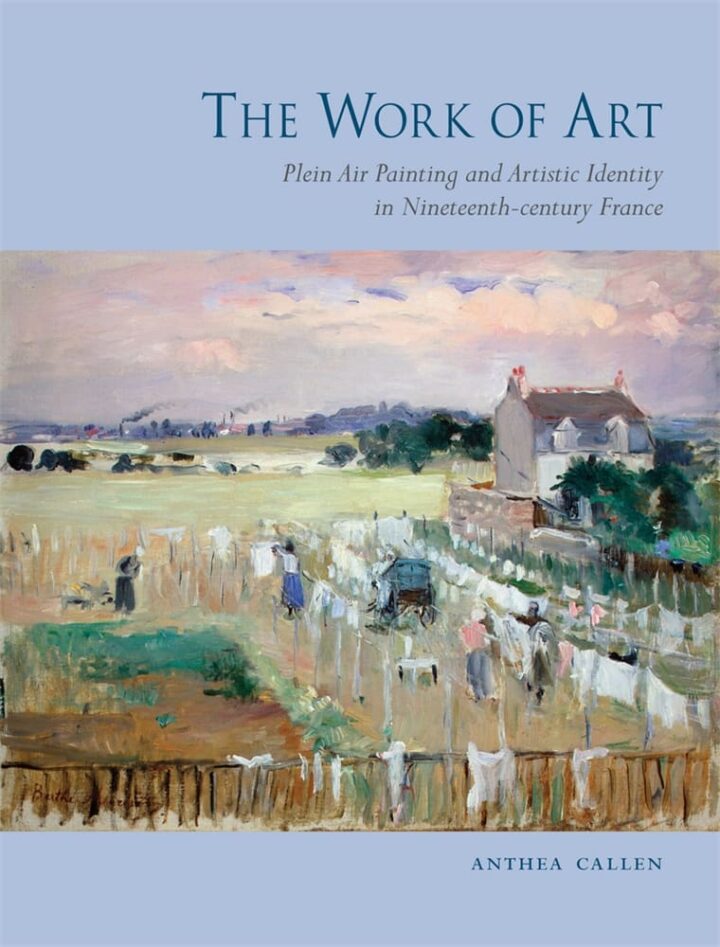
The Work of Art
Plein Air Painting and Artistic Identity in Nineteenth-century France
Anthea CallenThe Work of Art looks closely at pieces from nineteenth-century French landscape painters including Courbet, Cézanne and Pissarro, as well as their precursors and followers. The book examines their modes of self-representation and painting methods to explore the formation of avant-garde art and modern artistic identity, while paying particular attention to the painters’ touches and mark making.
In this beautifully illustrated, highly readable volume, The Work of Art offers fresh insights into the development of avant-garde French painting and the concept of the modern artist, delving deeper into the topic than any before.
Plein-air painting became standard practice for French landscape artists early in the nineteenth century, and by the 1850s landscape was the most popular artistic genre. Landscape painting in general, Anthea Callen argues, and the ‘plein air’ oil sketch in particular were the key drivers of change in artistic practice in the nineteenth century – which led ultimately to the Impressionist revolution and beyond. In The Work of Art, Callen explores the emergence of new concepts of ‘the artist’ – modern artistic identity and its relation to the idea of creative ‘work’ – through analyzing painters’ self-portraits, studies of fellow artists, photographs, caricatures and prints.
The work of artists under the microscope includes landscapes by the Barbizon School, Gustave Courbet, Paul Cézanne, Camille Pissarro, Claude Monet, Gustave Caillebotte, Berthe Morisot, Georges Seurat and Vincent van Gogh. Callen examines artists’ methods and modes of self-presentation, paying particular attention to painters’ personal touch, paint matter and mark-making in oil on paper and canvas. Referring to contemporary treatises on landscape painting theory and practice, and to colour-merchants’ novel paints and specialized equipment for landscape painting, she provides new ways of understanding material practice at this historical moment and the cultural meanings it generates. Richly illustrated, The Work of Art offers fresh insights into the development of avant-garde French painting and the predominantly masculine concept of the modern artist.
The Work of Art looks closely at pieces from nineteenth-century French landscape painters including Courbet, Cézanne and Pissarro, as well as their precursors and followers. The book examines their modes of self-representation and painting methods to explore the formation of avant-garde art and modern artistic identity, while paying particular attention to the painters’ touches and mark making.
In this beautifully illustrated, highly readable volume, The Work of Art offers fresh insights into the development of avant-garde French painting and the concept of the modern artist, delving deeper into the topic than any before.
Plein-air painting became standard practice for French landscape artists early in the nineteenth century, and by the 1850s landscape was the most popular artistic genre. Landscape painting in general, Anthea Callen argues, and the ‘plein air’ oil sketch in particular were the key drivers of change in artistic practice in the nineteenth century – which led ultimately to the Impressionist revolution and beyond. In The Work of Art, Callen explores the emergence of new concepts of ‘the artist’ – modern artistic identity and its relation to the idea of creative ‘work’ – through analyzing painters’ self-portraits, studies of fellow artists, photographs, caricatures and prints.
The work of artists under the microscope includes landscapes by the Barbizon School, Gustave Courbet, Paul Cézanne, Camille Pissarro, Claude Monet, Gustave Caillebotte, Berthe Morisot, Georges Seurat and Vincent van Gogh. Callen examines artists’ methods and modes of self-presentation, paying particular attention to painters’ personal touch, paint matter and mark-making in oil on paper and canvas. Referring to contemporary treatises on landscape painting theory and practice, and to colour-merchants’ novel paints and specialized equipment for landscape painting, she provides new ways of understanding material practice at this historical moment and the cultural meanings it generates. Richly illustrated, The Work of Art offers fresh insights into the development of avant-garde French painting and the predominantly masculine concept of the modern artist.
-
'
The rise of painting en plein air was a key change in French artistic practice in the 19th century. This study examines how this new approach informed the avant garde, leading to the Impressionist revolution.
'Apollo Magazine
Introduction
1. The Origins of Plein-air Painting to 1850
2. Maître Courbet: The Worker—Painter
3. Cézanne, Pissarro and Knife Painting
4. Colour: The Material and the Ephemeral
References
Bibliography
Acknowledgements
Photo Acknowledgements
Index
Anthea Callen is Professor of Art (Practice-led Research) at the Australian National University School of Art, Canberra, and Professor Emeritus of Visual Culture at the University of Nottingham. She is an internationally renowned specialist on the history of artists’ materials and techniques whose publications include The Art of Impressionism: Painting Technique and the Making of Modernity (2000) and Art, Sex and Eugenics: Corpus Delecti (2008, co-edited with Fae Brauer).