


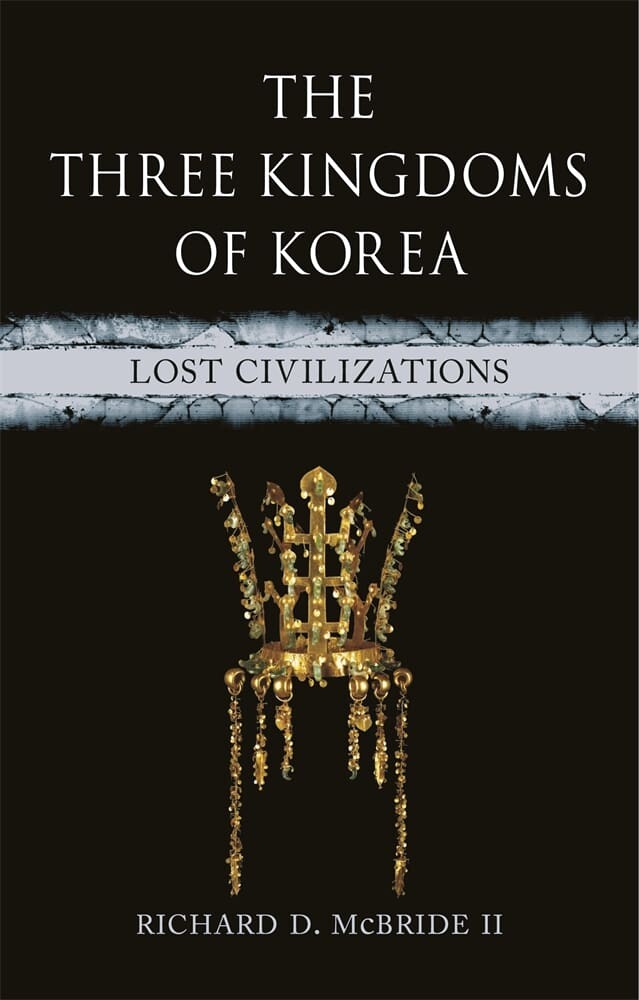
The Three Kingdoms of Korea
Lost Civilizations
Richard D. McBride IISheds new light on the history and legacy of Korea’s Three Kingdoms period.
Korea’s Three Kingdoms period is a genuine ‘lost civilization’, during which ancient realms vied for supremacy during the first millennium CE. Nobles from this period’s feuding states adopted and adapted Buddhism and Confucianism through interactions with early medieval Chinese dynasties. In the mid-seventh century, with the assistance of the mighty Chinese Tang empire, the aristocratic Silla state ultimately unified the Three Kingdoms by conquering the militaristic northern kingdom of Koguryŏ and the culturally sophisticated state of Paekche.
Weaving together legends of founding kings, tales of wars and political intrigue and narratives of fascinating individuals – including flower boys, wise monks, loyal scholars and virtuous women – this exploration sheds new light on a foundational period that continues to shape Korean identity today.
Sheds new light on the history and legacy of Korea’s Three Kingdoms period.
Korea’s Three Kingdoms period is a genuine ‘lost civilization’, during which ancient realms vied for supremacy during the first millennium CE. Nobles from this period’s feuding states adopted and adapted Buddhism and Confucianism through interactions with early medieval Chinese dynasties. In the mid-seventh century, with the assistance of the mighty Chinese Tang empire, the aristocratic Silla state ultimately unified the Three Kingdoms by conquering the militaristic northern kingdom of Koguryŏ and the culturally sophisticated state of Paekche.
Weaving together legends of founding kings, tales of wars and political intrigue and narratives of fascinating individuals – including flower boys, wise monks, loyal scholars and virtuous women – this exploration sheds new light on a foundational period that continues to shape Korean identity today.
-
'
This is a much-needed monographic work treating early Korean history in a comprehensive yet very readable manner. Covering mythic foundations as well as current understandings of the origins of the earliest states in Korean history, this narrative describes the rise and decline of polities, their societies and cultures and their relations with neighbouring polities, ending with the fall of the Silla kingdom in 935 and the rise of the state of Koryŏ. This book covers over a millennium of Korean history concisely and clearly and should be required reading for anyone interested in Korea’s early history and cultures.
'Mark E. Byington, founder and director of the Early Korea Project at the Korea Institute, Harvard University
-
'
Richard D. McBride II, the leading historian of this period in North America, guides readers on an entertaining romp through the histories and cultures of the various countries on the Korean Peninsula from earliest times up to the tenth century. He gives readers a chance to look at the broad sweep of the early history on the peninsula while also stopping where appropriate for a close look at interesting details of wars as well as social, political, and religious developments.
'Don Baker, Professor in Korean History and Civilization, University of British Columbia
Chronology
Introduction
1 Legends and Origins of Korea’s Three Kingdoms
2 Koguryŏ and Paekche
3 Kaya and Early Silla
4 Religion and Culture in the Early Three Kingdoms
5 Greater Silla and Parhae
6 The Flourishing of Buddhism and Confucianism in Greater Silla
7 The Good, the Bad and the Ugly in the Later Three Kingdoms
Epilogue
REFERENCES
BIBLIOGRAPHY
PHOTO ACKNOWLEDGEMENTS
INDEX
Richard D. McBride II is Professor and Chair of the Asian and Near Eastern Languages Department at Brigham Young University. His many publications include Aspiring to Enlightenment: Pure Land Buddhism in Silla Korea (2020).