


The Thief, the Cross and the Wheel
Pain and the Spectacle of Punishment in Medieval and Renaissance Europe
Mitchell B. MerbackWhen spectators in the Middle Ages examined images of Christ's crucifixion on Mount Calvary, did they ever consider them as representations of capital punishment? This book traces out the extraordinary connections between religious devotion, bodily pain, criminal justice and judicial spectatorship to explain why this was so.
When spectators in the Middle Ages examined images of Christ's crucifixion on Mount Calvary, did they ever consider them as representations of capital punishment? In The Thief, the Cross and the Wheel Mitchell Merback contends that they did, and traces out the extraordinary connections between religious devotion, bodily pain, criminal justice and judicial spectatorship to explain why this was so.
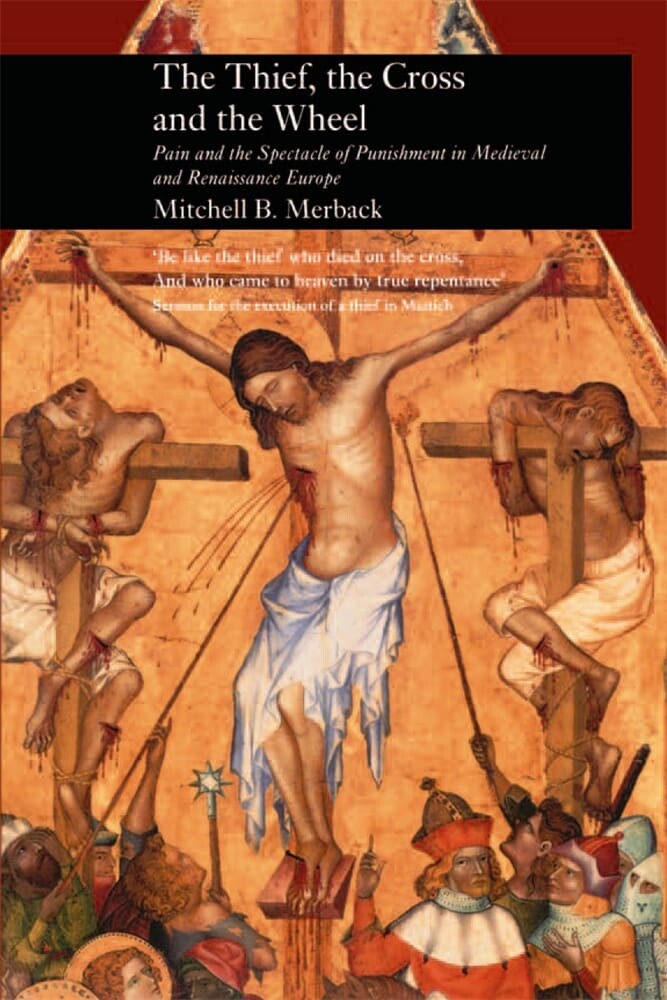
The author’s focus is not on the crucified Christ as he was represented in altarpieces during the late medieval and Renaissance eras, but on his criminal counterparts, the Two Thieves of the Gospels. Artists in Germany and elsewhere were constrained by Church doctrine as to how they could represent Christ's Passion, but were free to explore the most abject of cruelties when they turned to the Thieves. The frequently shocking images of torture and death they depicted - notably the horrific process of breaking on the wheel - were the preferred means of executing contemporary malefactors.
In this politically informed and historically provocative book, Merback insists that pain as spectacle was central to the European experience, and warns of its contemporary re-emergence in the public sphere.
When spectators in the Middle Ages examined images of Christ's crucifixion on Mount Calvary, did they ever consider them as representations of capital punishment? This book traces out the extraordinary connections between religious devotion, bodily pain, criminal justice and judicial spectatorship to explain why this was so.
When spectators in the Middle Ages examined images of Christ's crucifixion on Mount Calvary, did they ever consider them as representations of capital punishment? In The Thief, the Cross and the Wheel Mitchell Merback contends that they did, and traces out the extraordinary connections between religious devotion, bodily pain, criminal justice and judicial spectatorship to explain why this was so.
The author’s focus is not on the crucified Christ as he was represented in altarpieces during the late medieval and Renaissance eras, but on his criminal counterparts, the Two Thieves of the Gospels. Artists in Germany and elsewhere were constrained by Church doctrine as to how they could represent Christ's Passion, but were free to explore the most abject of cruelties when they turned to the Thieves. The frequently shocking images of torture and death they depicted - notably the horrific process of breaking on the wheel - were the preferred means of executing contemporary malefactors.
In this politically informed and historically provocative book, Merback insists that pain as spectacle was central to the European experience, and warns of its contemporary re-emergence in the public sphere.
When spectators in the Middle Ages examined images of Christ's crucifixion on Mount Calvary, did they ever consider them as representations of capital punishment? This book traces out the extraordinary connections between religious devotion, bodily pain, criminal justice and judicial spectatorship to explain why this was so.
When spectators in the Middle Ages examined images of Christ's crucifixion on Mount Calvary, did they ever consider them as representations of capital punishment? In The Thief, the Cross and the Wheel Mitchell Merback contends that they did, and traces out the extraordinary connections between religious devotion, bodily pain, criminal justice and judicial spectatorship to explain why this was so.
The author’s focus is not on the crucified Christ as he was represented in altarpieces during the late medieval and Renaissance eras, but on his criminal counterparts, the Two Thieves of the Gospels. Artists in Germany and elsewhere were constrained by Church doctrine as to how they could represent Christ's Passion, but were free to explore the most abject of cruelties when they turned to the Thieves. The frequently shocking images of torture and death they depicted - notably the horrific process of breaking on the wheel - were the preferred means of executing contemporary malefactors.
In this politically informed and historically provocative book, Merback insists that pain as spectacle was central to the European experience, and warns of its contemporary re-emergence in the public sphere.
Mitchell Merback is Assistant Professor of Art History at Depauw University, Indiana.