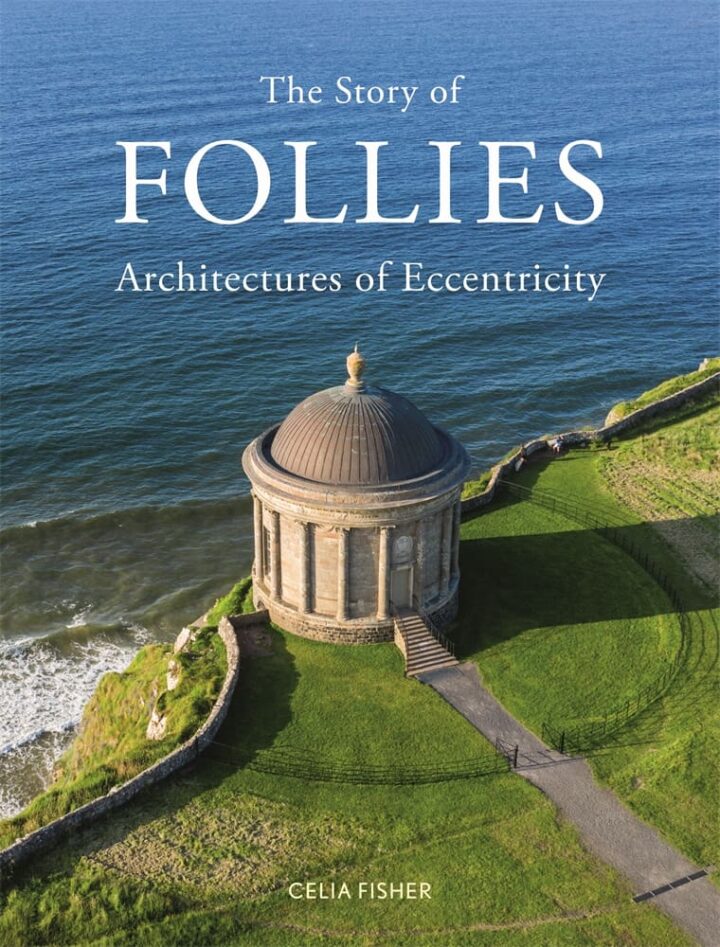
The Story of Follies
Architectures of Eccentricity
Celia FisherAn amusing, informative guide to a fanciful and charming building, the folly.
Are they frivolous or practical? Follies are buildings constructed primarily for decoration, but suggest another purpose through their appearance. In this superbly illustrated book Celia Fisher describes follies in their historical and architectural context, looks at their social and political significance and highlights their relevance today. She explores follies built in protest, follies in oriental and gothic styles, animal-related follies, waterside follies and grottoes, and, finally, follies in glass and steel.
Featuring many fine illustrations, from historical paintings to contemporary photographs and prints, and taking in follies from Great Britain, Ireland and throughout Europe and beyond, this is an amusing and informative guide to fanciful, charming buildings.
An amusing, informative guide to a fanciful and charming building, the folly.
Are they frivolous or practical? Follies are buildings constructed primarily for decoration, but suggest another purpose through their appearance. In this superbly illustrated book Celia Fisher describes follies in their historical and architectural context, looks at their social and political significance and highlights their relevance today. She explores follies built in protest, follies in oriental and gothic styles, animal-related follies, waterside follies and grottoes, and, finally, follies in glass and steel.
Featuring many fine illustrations, from historical paintings to contemporary photographs and prints, and taking in follies from Great Britain, Ireland and throughout Europe and beyond, this is an amusing and informative guide to fanciful, charming buildings.
-
'
Originating from the French word for madness – also translating to extravagance or stupidity – defining follies is, according to art historian Celia Fisher, ‘almost as tricky as defining art’. She explores their wonder in this beautifully illustrated and captivating book.
'The Daily Mail
-
'
This book is delicious. I love Fisher’s account of Beachborough Manor, which we know from a painting by Edward Haytley.
'The Oldie
-
'
This is a scholarly, sumptuously illustrated book, with extensive references, a further reading list and an index, which perfectly shows how human folly of all kinds is etched into our landscape.
'Fortean Times
-
'
A guide to these fanciful buildings in Britain, Ireland and beyond, placing them in their historical, social and architectural context, and examining their relevance for today.
'Gardens Illustrated
-
'
Fisher, a historian of gardens and plants, examines follies in a breezy narrative that abounds with intriguing examples . . . [and] excellent (mostly color) illustrations, primarily of exteriors. This is an enjoyable overview of an intriguing architectural and cultural phenomenon.
'Choice
-
'
Engagingly written and handsomely illustrated, Celia Fisher's book is a must for anyone interested in idiosyncratic architecture or simply in the curious and bizarre.
'Steven Parissien, cultural historian, University of Oxford
-
'
A delight: a visual and historical smorgasbord of frivolous, fanciful and fantastic buildings, and the fascinating people who conceived them.
'Anna Keay OBE, director of the Landmark Trust
-
'
Celia Fisher draws on numerous sources to show her erudition in a feature of architecture, gardens and landscape design which she reveals in a series of fascinating stories linked to the world’s artistic and cultural development.
'Jonathan Holt, editor of Follies magazine and author of several books on the follies of the West Country
-
'
An entertaining ramble through the countryside to discover follies and recount the stories they tell of their builders’ eccentricities. Fisher’s prose is as lively as the quirky follies themselves, which include everything from banqueting houses to gothic towers.
'Kerry Dean Carso, Professor of Art History, SUNY New Paltz, and author of 'Follies in America'
-
'
Is this the book all folly lovers have been waiting for? I think so. Among its many qualities, it takes the appreciation of and learning about this branch of architecture and landscape design up to a new level. The book takes a multi-disciplinary approach by positioning the building of follies in the social, political and artistic movements of their time . . . this is not a gazetteer but a dense treatise on a subject whose pedigree is elevated by some fairly convincing arguments. Very literate with numerous allusions to classical antiquity and citations from living authors, and very well researched with a substantial range of sources.
'Follies
Celia Fisher has lectured and written widely on the history of plants and gardens in art. Her books include Flower: Paintings by 40 Great Artists (2012) and Tulip (Reaktion, 2017).