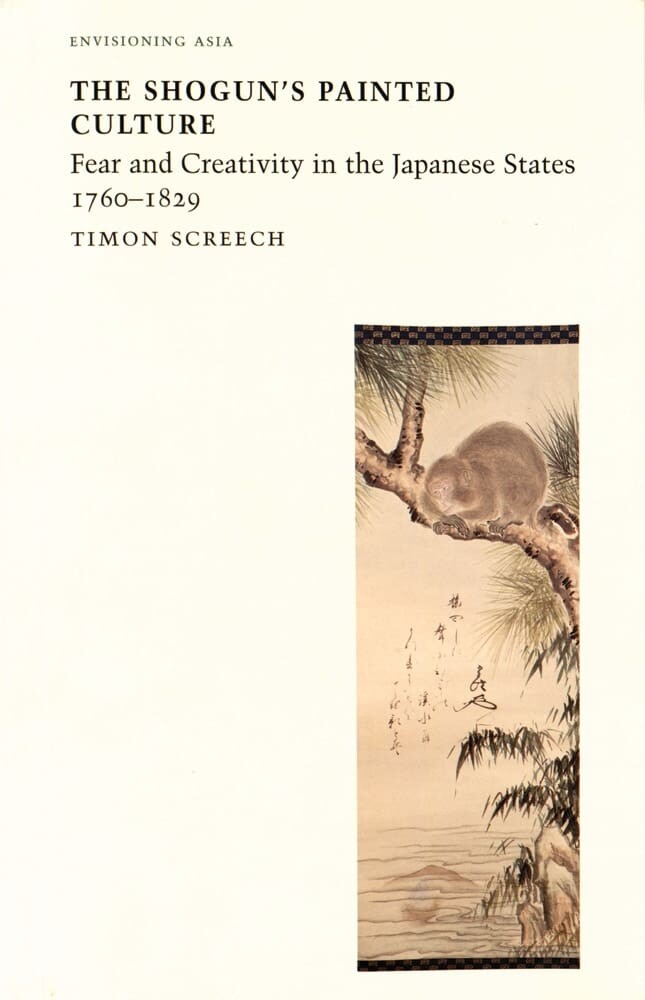
The Shogun’s Painted Culture
Fear and Creativity in the Japanese States 1760–1829
Timon ScreechAn analysis of a little-explored area of Japanese cultural history that reassesses the career of the chief minister Matsudaira Sadanobu, who played a key role in defining what we think of as Japanese culture.
In this penetrating analysis of a little-explored area of Japanese cultural history, Timon Screech reassesses the career of the chief minister Matsudaira Sadanobu, who played a key role in defining what we think of as Japanese culture today. Aware of how visual representations could support or undermine regimes, Sadanobu promoted painting to advance his own political aims and improve the shogunate's image. As an antidote to the hedonistic ukiyo-e, or floating world, tradition, which he opposed, Sadanobu supported attempts to construct a new approach to painting modern life. At the same time, he sought to revive historical and literary painting, favouring such artists as the flamboyant, innovative Maruyama Okyo. After the city of Kyoto was destroyed by fire in 1788, its reconstruction provided the stage for the renewal of Japan's iconography of power, the consummation of the 'shogun's painted culture'.
An analysis of a little-explored area of Japanese cultural history that reassesses the career of the chief minister Matsudaira Sadanobu, who played a key role in defining what we think of as Japanese culture.
In this penetrating analysis of a little-explored area of Japanese cultural history, Timon Screech reassesses the career of the chief minister Matsudaira Sadanobu, who played a key role in defining what we think of as Japanese culture today. Aware of how visual representations could support or undermine regimes, Sadanobu promoted painting to advance his own political aims and improve the shogunate's image. As an antidote to the hedonistic ukiyo-e, or floating world, tradition, which he opposed, Sadanobu supported attempts to construct a new approach to painting modern life. At the same time, he sought to revive historical and literary painting, favouring such artists as the flamboyant, innovative Maruyama Okyo. After the city of Kyoto was destroyed by fire in 1788, its reconstruction provided the stage for the renewal of Japan's iconography of power, the consummation of the 'shogun's painted culture'.
-
'
Screechs ideas are fascinating, often brilliant, and well grounded . . . presents a thorough analysis of aspects of the early modern Japanese world rarely observed in such detail and never before treated to such an eloquent handling in the English language.'
'CAA Reviews
-
'
[a] stylishly written and provocative cultural history.
'Monumenta Nipponica
Acknowledgements
Chronology
Introduction
1. Matsudaira Sadanobu and the Domestic Dilemma
2. Sugita Genpaku and the Dismemberment of the Present
3. Image Management for Royal Power
4. Okyo's 'New Concept'
5. Boundaries for a Centre
References
Select Bibliography
Photographic Acknowledgements
Index
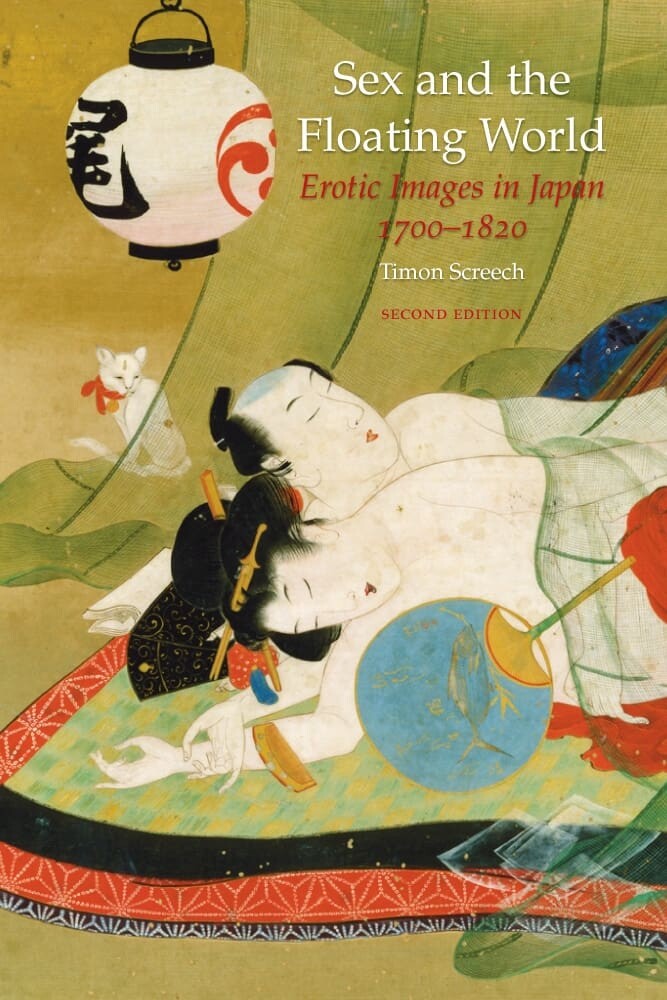
Timon Screech is Professor at the International Research Center for Japanese Studies (Nichibunken) in Kyoto, and a Fellow of the British Academy. He is the author of many books, including Sex and the Floating World: Erotic Images in Japan, 1700–1820 (2nd edn, Reaktion, 2009).