


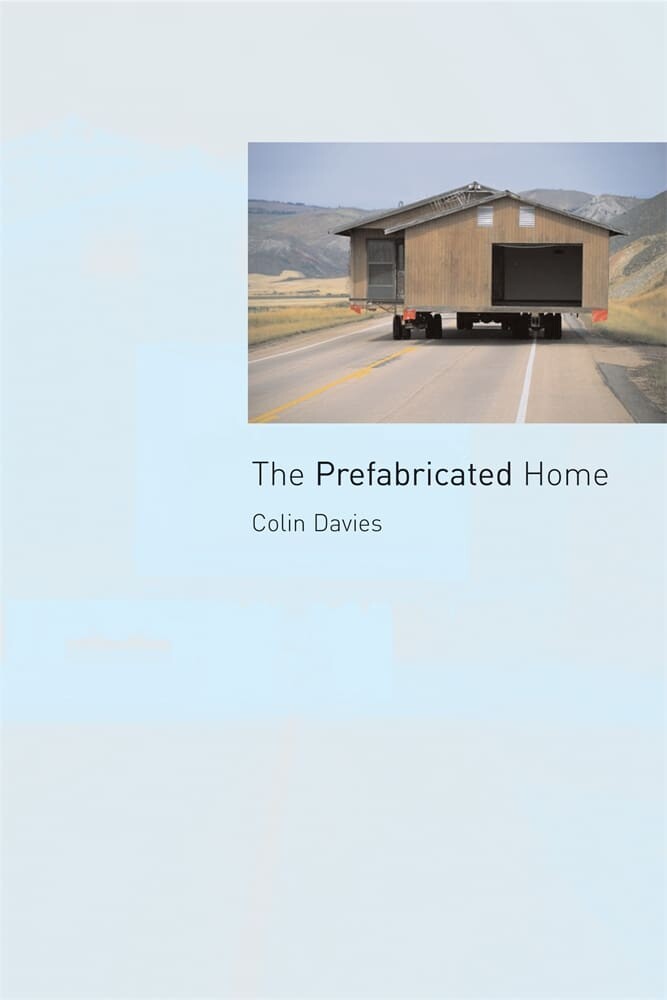
The Prefabricated Home
Colin DaviesExamines how the relationship between architecture and industrialized building has become an urgent issue for architects. This work traces the history of prefabricated buildings from small-scale 'prefabs' to the precast concrete mass housing of the 1960s to the present-day revival of interest in 'volumetric' modular buildings.
Prefabrication cannot be ignored, for it challenges the most traditional values of architecture. Architects may have neglected this area of practical construction, but they have much to learn from pattern-book houses, modular structures, Portakabins and mobile homes.
The Prefabricated Home examines how the relationship between architecture and industrialized building has now become an urgent issue for architects.Colin Davies traces the history of prefabricated buildings from small-scale ‘prefabs’ to the precast concrete mass housing of the 1960s to the present-day revival of interest in ‘volumetric’ modular buildings, and assesses their architectural implications. He looks at what is happening today in factories and on building sites worldwide, and contrasts the aesthetic concerns of architects with the economic ones of industrialized building manufacturers. He argues that the involvement of architects in industrialized building can produce an exciting new type of architecture that is humane, liberating and environmentally friendly.
The Prefabricated Home is a revealing and instructive book that will appeal to anyone interested in architecture and concerned with the future of housing.
Examines how the relationship between architecture and industrialized building has become an urgent issue for architects. This work traces the history of prefabricated buildings from small-scale 'prefabs' to the precast concrete mass housing of the 1960s to the present-day revival of interest in 'volumetric' modular buildings.
Prefabrication cannot be ignored, for it challenges the most traditional values of architecture. Architects may have neglected this area of practical construction, but they have much to learn from pattern-book houses, modular structures, Portakabins and mobile homes.
The Prefabricated Home examines how the relationship between architecture and industrialized building has now become an urgent issue for architects.Colin Davies traces the history of prefabricated buildings from small-scale ‘prefabs’ to the precast concrete mass housing of the 1960s to the present-day revival of interest in ‘volumetric’ modular buildings, and assesses their architectural implications. He looks at what is happening today in factories and on building sites worldwide, and contrasts the aesthetic concerns of architects with the economic ones of industrialized building manufacturers. He argues that the involvement of architects in industrialized building can produce an exciting new type of architecture that is humane, liberating and environmentally friendly.
The Prefabricated Home is a revealing and instructive book that will appeal to anyone interested in architecture and concerned with the future of housing.
-
'
easy-to-read and provocative . . . valuable to a wide and diverse audience of general readers, design students, practitioners, and academics . . . Davies achieves such broad appeal by cleverly packaging two narratives into one book. His polemic on modern architecture is embedded inside of a competent short history of western architects experimentations with prefabricated single family homes.
'Design Issues
-
'
The Prefabricated Home is a rare thing indeed – an academic but accessible architectural history thats crystal clear about where architects should be paying more attention if they are to continue to be central to building design and offsite methods. . . a revealing, jargon-free and instructive book
'Offsite Construction magazine
Introduction
Part I: Histories
1. An architectural history
2. A non-architectural history
3. House of the century: the mobile home
Part II: Theories
4. The question of authorship
5. Professionalism and pattern books
6. Down with the system
Part III: Practices
7. Ideal homes
8. Little boxes
9. The robot and the carpenter
Conclusion
References
Select Bibliography
Acknowledgements
Photographic Acknowledgements
Index
Colin Davies is Professor in the Department of Architecture at London Metropolitan University. He is the author of numerous architectural publications including High-tech Architecture (1990).