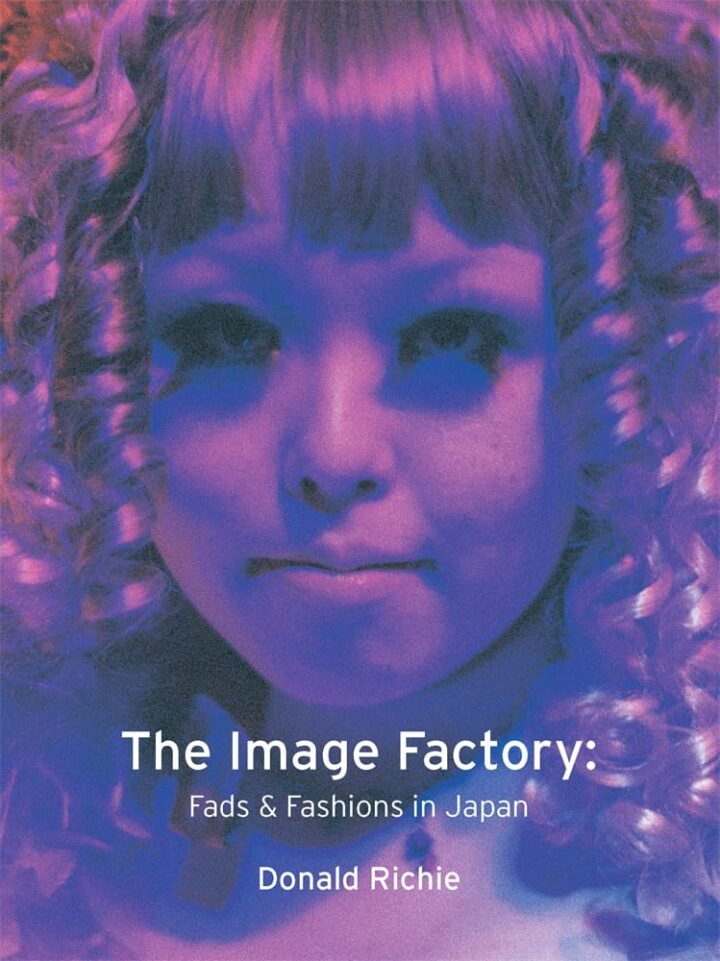
The Image Factory
Fads and Fashions in Japan
Donald RichieJust as a person contrives a style, the purpose of which is integration and the effect of which is presentation, so a nation collectively projects an appearance, a national' style. This title provides both a social distraction and a sense of cohesion, indicating not only foreign importation but also native adaptation.
Just as a person contrives a style, the purpose of which is integration and the effect of which is presentation, so a nation collectively projects an appearance, a ‘national’ style. Such styles are made of many layers. The deepest layer is composed of the immutable and the traditional. Nearer the surface floats fashion, changeable but sometimes more abiding. And frothing on the surface is fad.
By definition a fad is novel and appears from outside. Fads must have instant appeal and do not have a long shelf life. In Japan, an assortment of islands, the outside is often the quality that defines the inside.
Japan has a history of chasing fads and fashion. Since the nineteenth century, foreign products have been welcomed in, from the cult for ‘squeaky shoes’ in the mid-nineteenth century to the current fad for virtual reality girlfriends. Japan’s mandate was that, having been opened late, it had to hurry to catch up. Fads provide both a social distraction and a sense of cohesion, indicating not only foreign importation but also native adaptation.
The Image Factory is both an investigation into fads, fashions and style - such as US Army surplus uniforms, ‘pachinko’, mutating hair colours - and an appreciation of their inherent meanings. The Japanese have seized upon fads and fashion as an arm of enterprise to a much greater extent than elsewhere in the world. Ephemerality has been put to work, the transient has become industrialized, and the results are highly conspicuous.
-
'
He approaches [Japanese culture] with a sharp clarity and wit. Richies many colorful tangents – whether pursuing a detached observation or crossing into critical mode – always lead back to the subject at hand.
'Tokyo Weekender
-
'
In Donald Richies The Image Factory: Fads & Fashions in Japan we have the pleasure of seeing how the best writer on things Japanese offers his response . . . Richies work has not received the recognition it should have garnered. Unlike fashions and fads, though, quality lasts. That being the case, one is certain that Richie will sooner, one hopes, rather than later receive the attention and accolades that are his due.
'The Japan Times
-
'
Anything by Donald Richie demands to be read by those with an interest in contemporary Japan, and this thoughtful deconstruction of Japans culture of images is an essential aid to understanding for those who live amid its proliferating messages and codes.
'The Daily Yomiuri
-
'
The Image Factory is a thoughtful book full of interesting ideas from an author who has looked deeply into the meanings behind the images created and constantly re-created in Japan.
'The Asahi Shimbun
Foreword
The Image Industry
Fashion's Tongues
Kawaii – Kingdom of the Cute
The Sex Bazaar
Leisure Options
Manga Culture
Pachinko
The Convenience Phone
Kosupure
Fake Foreigners
Afterword
Sources
Donald Richie was born in Ohio and has lived in Tokyo for over 50 years. He is the author of many books including the travel book The Inland Sea and Tokyo: A View of the City (Reaktion, 1999) and The Image Factory: Fads and Fashions in Japan (Reaktion, 2003).