


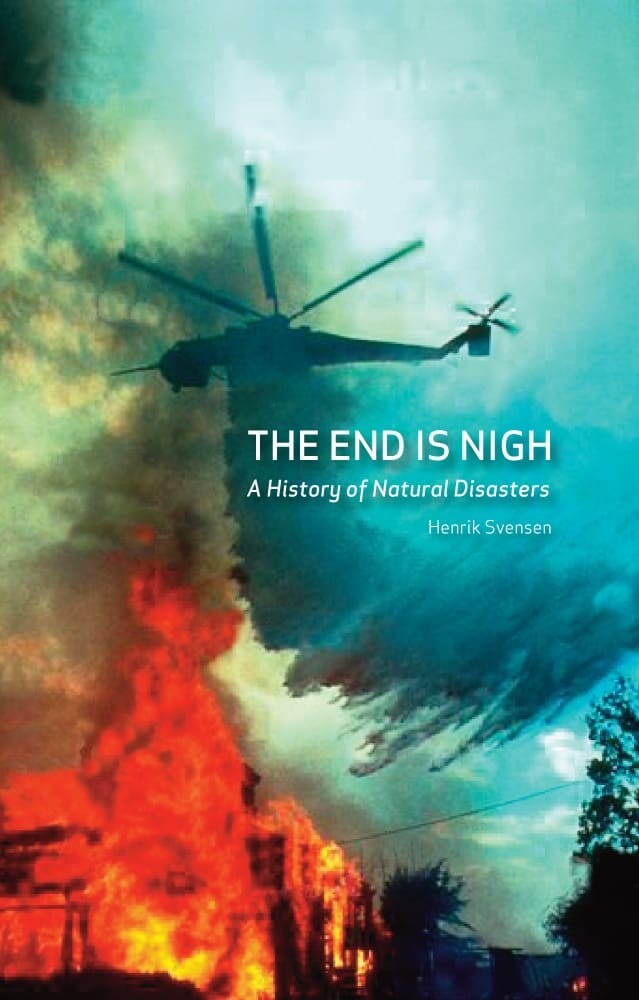
The End is Nigh
A History of Natural Disasters
Henrik SvensenPresenting results from many scientific disciplines, including geology, anthropology and sociology, The End is Nigh explores the global history of natural disasters whilst investigating how these tragedies have changed us, the way that we live and how we think.
Spanning more than 2,000 years and many continents, this history of natural disasters includes the Lisbon earthquake of 1755; the San Francisco earthquake of 1906; the South Asian tsunami of 2004; hurricane Katrina, which devastated New Orleans in 2005; and explores many more. This book is no mere catalogue of the world's calamities, instead, Henrik Svensen has selected incidents that have in some way or other changed the course of history or the way that we view such tragedies: the Lisbon earthquake of 1755, for instance, is a fine example of how earthquake management became a part of new city planning.
Svensen also relates gripping eyewitness accounts and individual destinies, investigating how these tragedies have changed us, the way that we live and how we think. When disaster strikes do we react differently today from how people did hundreds of years ago? Svensen shows that victims always seem to ask the same questions: why did this happen to us, and not to someone else? Does the cause lie in unruly natural forces, or are we being punished by God for our sins? Or are disasters perhaps caused by our abuse of the environment?
Presenting results from many scientific disciplines, including geology, anthropology and sociology, while at the same time revealing the personal stories of the victims of natural disasters, The End is Nigh is as instructive as it is affecting, and will appeal to a wide general audience.
Presenting results from many scientific disciplines, including geology, anthropology and sociology, The End is Nigh explores the global history of natural disasters whilst investigating how these tragedies have changed us, the way that we live and how we think.
Spanning more than 2,000 years and many continents, this history of natural disasters includes the Lisbon earthquake of 1755; the San Francisco earthquake of 1906; the South Asian tsunami of 2004; hurricane Katrina, which devastated New Orleans in 2005; and explores many more. This book is no mere catalogue of the world's calamities, instead, Henrik Svensen has selected incidents that have in some way or other changed the course of history or the way that we view such tragedies: the Lisbon earthquake of 1755, for instance, is a fine example of how earthquake management became a part of new city planning.
Svensen also relates gripping eyewitness accounts and individual destinies, investigating how these tragedies have changed us, the way that we live and how we think. When disaster strikes do we react differently today from how people did hundreds of years ago? Svensen shows that victims always seem to ask the same questions: why did this happen to us, and not to someone else? Does the cause lie in unruly natural forces, or are we being punished by God for our sins? Or are disasters perhaps caused by our abuse of the environment?
Presenting results from many scientific disciplines, including geology, anthropology and sociology, while at the same time revealing the personal stories of the victims of natural disasters, The End is Nigh is as instructive as it is affecting, and will appeal to a wide general audience.
Presenting results from many scientific disciplines, including geology, anthropology and sociology, The End is Nigh explores the global history of natural disasters whilst investigating how these tragedies have changed us, the way that we live and how we think.
Spanning more than 2,000 years and many continents, this history of natural disasters includes the Lisbon earthquake of 1755; the San Francisco earthquake of 1906; the South Asian tsunami of 2004; hurricane Katrina, which devastated New Orleans in 2005; and explores many more. This book is no mere catalogue of the world's calamities, instead, Henrik Svensen has selected incidents that have in some way or other changed the course of history or the way that we view such tragedies: the Lisbon earthquake of 1755, for instance, is a fine example of how earthquake management became a part of new city planning.
Svensen also relates gripping eyewitness accounts and individual destinies, investigating how these tragedies have changed us, the way that we live and how we think. When disaster strikes do we react differently today from how people did hundreds of years ago? Svensen shows that victims always seem to ask the same questions: why did this happen to us, and not to someone else? Does the cause lie in unruly natural forces, or are we being punished by God for our sins? Or are disasters perhaps caused by our abuse of the environment?
Presenting results from many scientific disciplines, including geology, anthropology and sociology, while at the same time revealing the personal stories of the victims of natural disasters, The End is Nigh is as instructive as it is affecting, and will appeal to a wide general audience.
-
'
Faced with its catalogue of plagues, fires, earthquakes and tsunamis, one can only hope that The End is Nigh proves an inaccurate title. But Henrik Svensens fascinating book is more than a catalogue of catastrophes. When crops failed in Sweden 1,000 years ago, the solution, tempting to us republicans, was a human sacrifice of the king.
'The Independent
-
'
Not so much The end is nigh, more The end has been nigh many times. Henrik Svensen tackles the topic of how natural disasters shape human society. Understandably, the interplay between religion and science is a prominent theme . . .The books strength is its wealth of examples, some as recent as hurricane Katrina . . . The most gripping parts are when geologist Svensen relates his own experience finding spontaneous subterranean fires in Mali.
'New Scientist
-
'
an extended essay on the complex relationships among destructive Earth processes, religion, poverty, economics, politics, and popular culture . . . The books most important lesson is that natural disasters are deadliest to those people forced by economic and social circumstances to be the least prepared. Recommended.
'Choice
-
'
if Schadenfreude is your schtick this is for you: earthquakes, volcanoes, tsunamis, typhoons, droughts and death tolls. And lots of them. In fact, one comes away with an acute sense of just how lucky we all are to be here.
'Choice
-
'
a multi-faceted and scientifically vivid history of a phenomenon that is shaping our civilization more than we realize.
'Aftenposten, Norway
Preface: When Climate Becomes Disaster
Introduction: On the Edge of the Sahara
1. Mythologies
2. The Day of the Dead
3. California: Earthquake and Culture
4. Natural Disasters in Metropolis
5. Among the High Mountains and Deep Fjords
6. Problem Children
7. The Politics of Disasters
8. Climatic Disasters
9. The Tsunami
10. Perilous Nature
Epilogue: Where the Devil Lives in the Ground
Major Natural Disasters
References
Bibliography
Acknowledgments
Photo Acknowledgments
Index
Henrik Svensen is a senior researcher at the Physics of Geological Processes Centre, University of Oslo, Norway.