The End
Artists’ Late and Last Works
Carel BlotkampA highly original and wide-ranging study of ‘the end’ in art.
When is a work of art finished? Can it be complete in a mental sense? And who decides? In this highly original and wide-ranging study, Carel Blotkamp explores the concept and manifestations of ‘the end’ in art.
From the idea of a mortal end to the notion of completeness, Blotkamp describes a fascinating array of historical facts and myths as well as novels on art and artists. He examines the value of the last works of artists, considering how a particular end came about and how that might affect our perception of the work; the difference in the styles of artists in old age; unfinished last works and those completed by another's hand; and the mythology inherent in the reception of last works, taking the last works of Raphael and Mondrian as prime examples. For students, artists and art enthusiasts looking for a new perspective on modern art, The End is the perfect place to start.
-
'
International Association of Art Critics Award (Dutch section) 2021
'Winner
-
'
Late style may be the visual expression of what it feels like to face the end – or it may be nothing more than a critic’s fantasy, a by-product of our hunger for hidden meanings, narrative closure, and valedictory statements. More likely, it is both at once: the subjective expression of an artist, viewed subjectively. That’s why lateness means something, if it means anything at all, only in our time-bound experience of late works. There is a specificity – a fragility – to lateness.
'Max Norman, The New Yorker
-
'
In The End, Carel Blotkamp tells us that the last works of visual artists often have a mythology attached to them. Often this is read into the works retrospectively; we can perceive in last works the summary of a career, and the perfection of a style, such as Mark Rothko’s last paintings, which seem to be an endpoint of abstraction and meditative calm . . . Blotkamp suggests that unfinished paintings – and last works are often and inevitably unfinished – show a more human side to artists, especially, like Raphael, those who are lauded as godlike in their abilities.
'Insights Magazine, Australia
Introduction
One Death and the Artist
Two The Case of Raphael: The Transfiguration
Three Last Works, Late Works
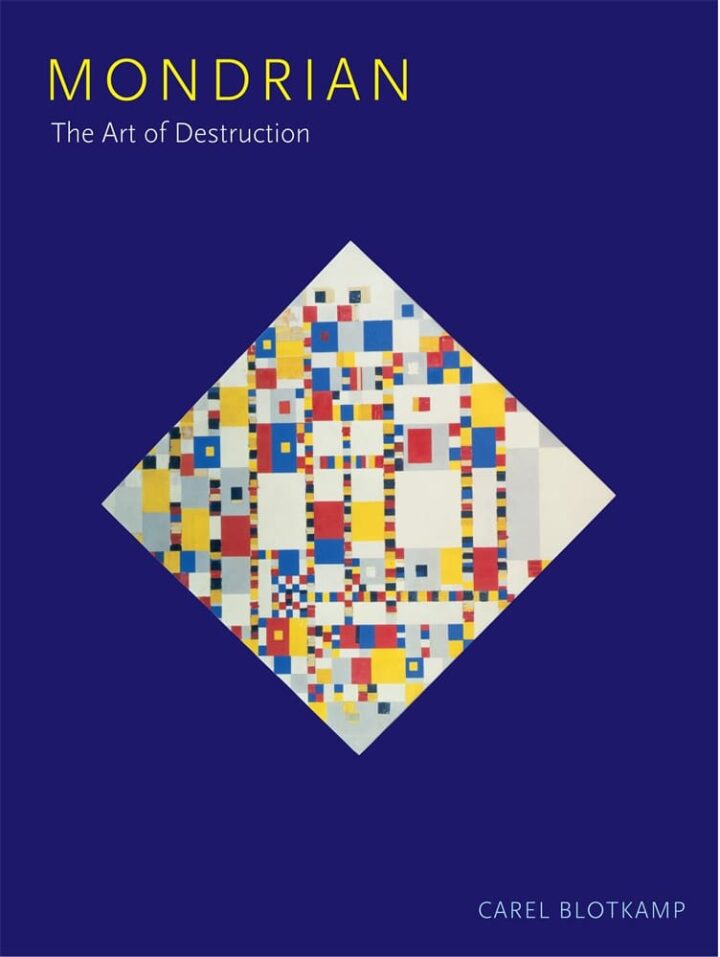
Four The Case of Mondrian: Victory Boogie-Woogie
Postscript
Bibliography
Acknowledgements
List of Illustrations
Index
Carel Blotkamp is Professor Emeritus of the History of Modern Art at Vrije Universiteit, Amsterdam and a well-known authority on Mondrian and De Stijl. He is the author of Mondrian: The Art of Destruction (Reaktion, 2001).