


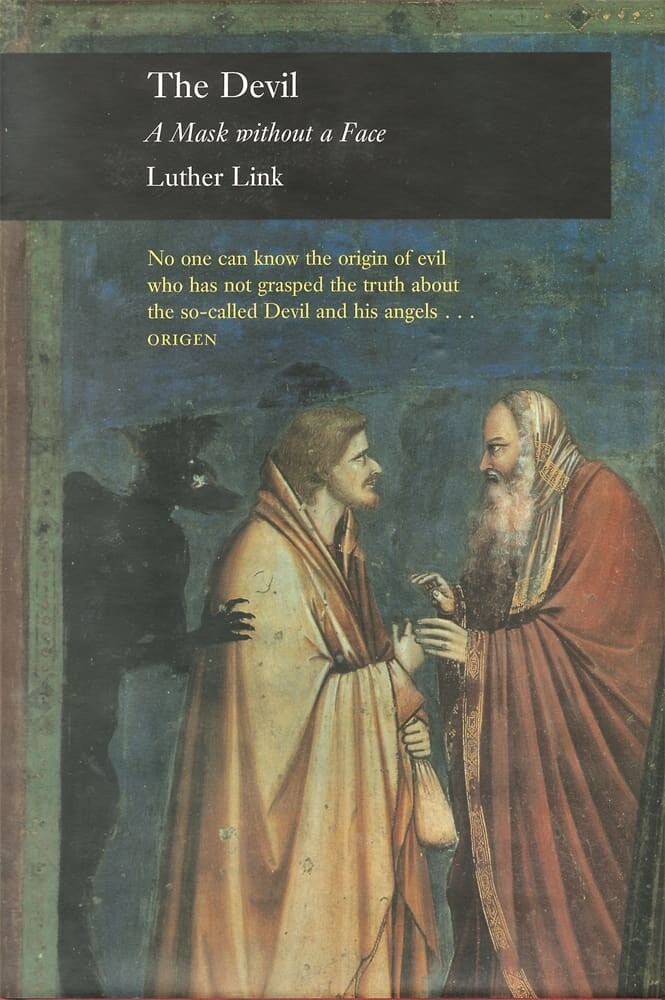
The Devil
A Mask Without A Face
Luther LinkToday we imagine the Devil with horns, tail and pitchfork, but medieval and early Renaissance artists saw him very differently. In illuminated manuscripts, mosaics, frescoes, and carved capitals he is to be found in a bewildering variety of forms and guises. The lack of a stable pictorial model, misreadings of Mesopotamian and classical figures, and the Church’s own shifting response to heresies, have all helped determine how the Devil was represented. Who he really was and why he looks the way he does can only be understood by probing the political and theological controversies of the times.
Why is the Devil never shown suffering in Hell? How is it that he sometimes appears to be doing God’s work? What is the origin of his characteristic flaming hair, and where did those instruments of torture, wielded by his cruel assistants, come from?
This book, which covers the sixth to the sixteenth centuries, draws on original sources, including colorful accounts in the Apocrypha of the Devil’s origins and his true first crime, the writings of St Augustine and other Church Fathers, and reports of the intrigues of popes and emperors. Luther Link offers us unexpected insights into a wide range of artworks, from the carved capitals in the Romanesque church of St Benoît and Giotto’s famous Arena Chapel frescoes to Michelangelo’s Last Judgment in Rome. The result, the first comprehensive account of the arch-fiend in art, is a fascinating study in the history of visual representation.
Today we imagine the Devil with horns, tail and pitchfork, but medieval and early Renaissance artists saw him very differently. In illuminated manuscripts, mosaics, frescoes, and carved capitals he is to be found in a bewildering variety of forms and guises. The lack of a stable pictorial model, misreadings of Mesopotamian and classical figures, and the Church’s own shifting response to heresies, have all helped determine how the Devil was represented. Who he really was and why he looks the way he does can only be understood by probing the political and theological controversies of the times.
Why is the Devil never shown suffering in Hell? How is it that he sometimes appears to be doing God’s work? What is the origin of his characteristic flaming hair, and where did those instruments of torture, wielded by his cruel assistants, come from?
This book, which covers the sixth to the sixteenth centuries, draws on original sources, including colorful accounts in the Apocrypha of the Devil’s origins and his true first crime, the writings of St Augustine and other Church Fathers, and reports of the intrigues of popes and emperors. Luther Link offers us unexpected insights into a wide range of artworks, from the carved capitals in the Romanesque church of St Benoît and Giotto’s famous Arena Chapel frescoes to Michelangelo’s Last Judgment in Rome. The result, the first comprehensive account of the arch-fiend in art, is a fascinating study in the history of visual representation.
-
'
highly entertaining and informative. . . This is a book worth arguing with, written with verve, wit and passion. It is also lavishly illustrated. I enjoyed every minute of it.
'The Spectator
-
'
as comprehensive a guide as anyone could wish to the appearances of the Evil One in art and literature throughout the age.
'The Herald
Preface
Introduction
1. The Name of the Devil
2. What the Devil Looks Like
3. Heresy and Hell
4. Gislebertus, Giotto, and the Eroticism of Hell
5. The Devil as Rebel Angel
Epilogue
References
Select Bibliography
Photographic Acknowledgements
Index
Luther Link is Professor in the Department of Literature, Aoyama Gakuin University, Tokyo.