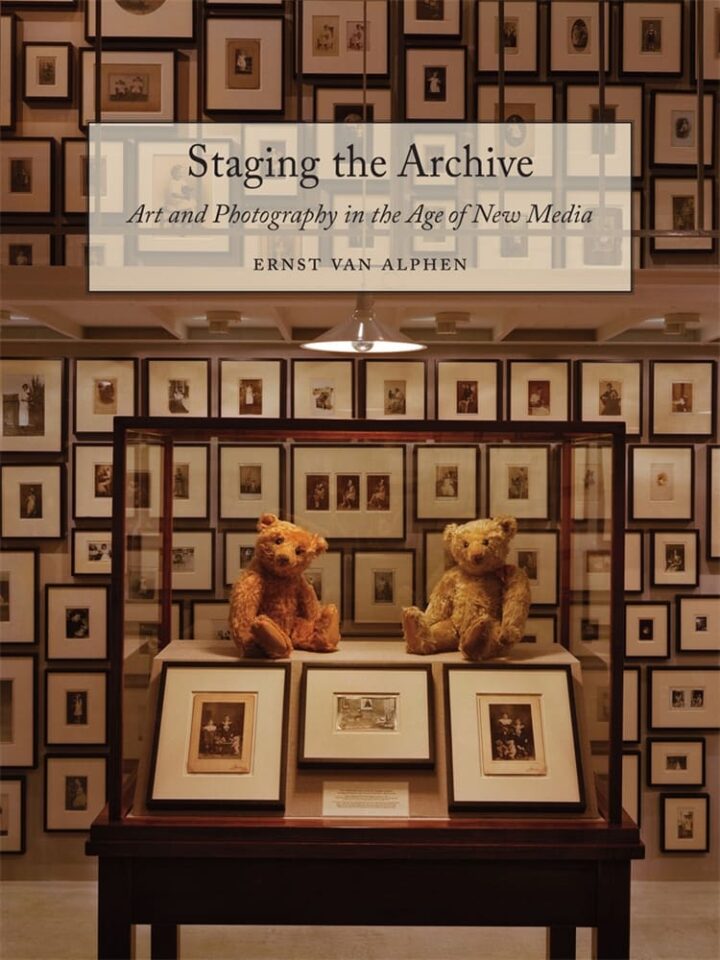
Staging the Archive
Art and Photography in the Age of New Media
Ernst van AlphenDedicated to art practices that mobilize the model of the archive, Staging the Archive demonstrates the ways in which such ‘archival artworks’ probe the possibilities of what art is and what it can do. Through a variety of media, methodologies and perspectives, the artists surveyed here also challenge the principles on which the notions of organization, evidence and documentation are built. The book shows how artists read the concept of the archive against the grain, questioning not only what the archive is and can be but what materials, images or ideas can be archived.
In this book Ernst van Alphen examines these archival artists and artworks in detail, setting them within their social, political and aesthetic contexts. Exploring the work of Marcel Duchamp, Marcel Broodthaers, Christian Boltanski, Annette Messager, Fiona Tan and Sophie Calle, among others, this book reveals how modern and contemporary artists have used and contested the notion of the archive to establish new relationships to history, information and data.
Dedicated to art practices that mobilize the model of the archive, this book demonstrates the ways in which such ‘archival artworks’ probe the possibilities of what art is and what it can do. Through a variety of media, methodologies and perspectives, the artists surveyed here also challenge the principles on which the notions of organization, evidence and documentation are built.
The earliest examples of the modern archival artwork were made in the 1930s, but it is since the 1960s that archival principles have increasingly been used by artists to inform, structure and shape their works. This includes practices that consist of archive construction, archaeological investigation, record keeping or the use of archived materials; however, they also interrogate the principles, claims and effects of the archive. Staging the Archive shows how artists read the concept of the archive against the grain, questioning not only what the archive is and can be but what materials, images or ideas can be archived.
In this book Ernst van Alphen examines these archival artists and artworks in detail, setting them within their social, political and aesthetic contexts. Exploring the work of Marcel Duchamp, Marcel Broodthaers, Christian Boltanski, Annette Messager, Fiona Tan and Sophie Calle, among others, this book reveals how modern and contemporary artists have used and contested the notion of the archive to establish new relationships to history, information and data.
Dedicated to art practices that mobilize the model of the archive, Staging the Archive demonstrates the ways in which such ‘archival artworks’ probe the possibilities of what art is and what it can do. Through a variety of media, methodologies and perspectives, the artists surveyed here also challenge the principles on which the notions of organization, evidence and documentation are built. The book shows how artists read the concept of the archive against the grain, questioning not only what the archive is and can be but what materials, images or ideas can be archived.
In this book Ernst van Alphen examines these archival artists and artworks in detail, setting them within their social, political and aesthetic contexts. Exploring the work of Marcel Duchamp, Marcel Broodthaers, Christian Boltanski, Annette Messager, Fiona Tan and Sophie Calle, among others, this book reveals how modern and contemporary artists have used and contested the notion of the archive to establish new relationships to history, information and data.
Dedicated to art practices that mobilize the model of the archive, this book demonstrates the ways in which such ‘archival artworks’ probe the possibilities of what art is and what it can do. Through a variety of media, methodologies and perspectives, the artists surveyed here also challenge the principles on which the notions of organization, evidence and documentation are built.
The earliest examples of the modern archival artwork were made in the 1930s, but it is since the 1960s that archival principles have increasingly been used by artists to inform, structure and shape their works. This includes practices that consist of archive construction, archaeological investigation, record keeping or the use of archived materials; however, they also interrogate the principles, claims and effects of the archive. Staging the Archive shows how artists read the concept of the archive against the grain, questioning not only what the archive is and can be but what materials, images or ideas can be archived.
In this book Ernst van Alphen examines these archival artists and artworks in detail, setting them within their social, political and aesthetic contexts. Exploring the work of Marcel Duchamp, Marcel Broodthaers, Christian Boltanski, Annette Messager, Fiona Tan and Sophie Calle, among others, this book reveals how modern and contemporary artists have used and contested the notion of the archive to establish new relationships to history, information and data.
Introduction
1. Emergence
2. Storage
3. Listing
4. Classification
5. Administration
6. Depletion
7. Reanimation
References
Bibliography
Acknowledgements
List of Illustrations
Index
Ernst van Alphen is Professor of Literary Studies at Leiden University in The Netherlands. His previous publications include Francis Bacon and the Loss of Self (Reaktion, 1992), Art in Mind: How Contemporary Images Shape Thought (2005) and Caught by History: Holocaust Effects in Contemporary Art, Literature and Theory (1998).