Sport in the USSR
Physical Culture – Visual Culture
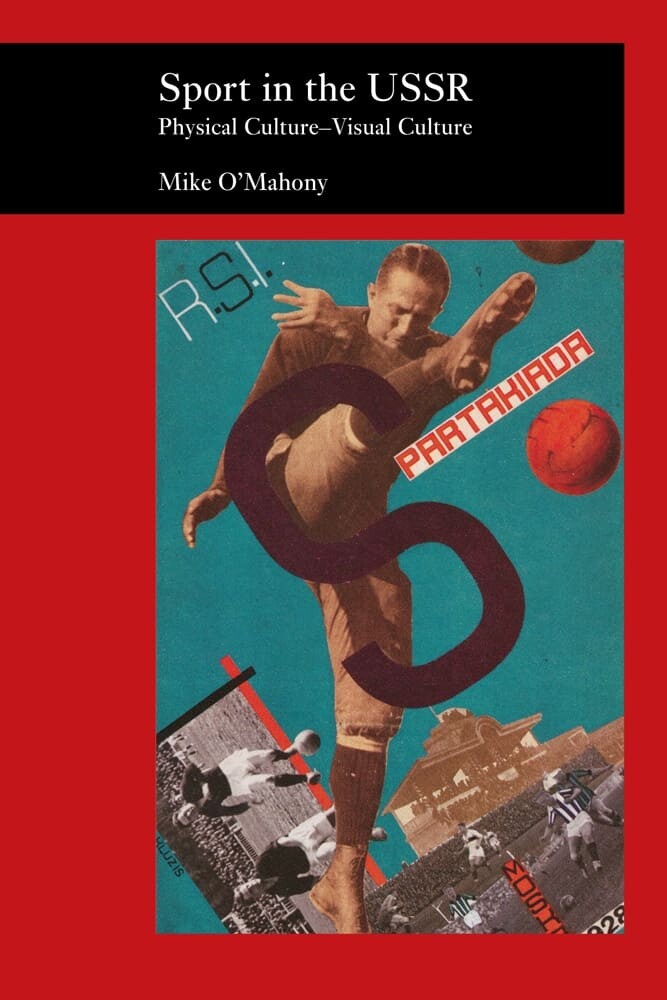
Mike O'MahonySport played a vital role within the social and cultural life of the former Soviet Union. From its very foundation to its final demise the Soviet state sponsored countless programmes promoting a whole gamut of sporting activities, and even generated a new term, fizkultura, derived from the Russian word for physical culture. The popular image of fizkultura, however, was as dependent upon its presentation in the cultural arena as it was upon its actual practice. Soviet sportsmen and women made frequent appearance in literature, film and popular song; on stamps, plates and teapots; and on the badges and medals of various societies. Further, sport became a central feature in the pageantry of the Soviet parade. Public exhibitions and popular journals were crowded with photographs, paintings and prints representing youthful Soviet sportsmen and women, whilst sculptural monuments to the Soviet passion for sport adorned sports centres and public parks. Several major artists even forged entire careers based upon representations of sport.
Sport in the USSR looks at physical culture within a wide range of Soviet cultural practices, paying special attention to visual culture. In particular it explores the role that physical culture played in the formulation of the Soviet New Person. Here, visual culture was deployed not only to promote the existence of this notional new being, but also to articulate the very process of transformation that brought him or her into existence. Images of sportsmen and women were also widely produced to conflate the leisurely nature of sports practice with the civic duty of voluntary labour, especially during the industrialization drives, and the military defence of the nation. Also examined are such issues as sports spectatorship and participation; the development of the sports parade; the role of fizkultura during military conflict; the deployment of fizkultura as a weapon during the Cold War; and the collapse of the Soviet sports machine.
Sport played a vital role within the social and cultural life of the former Soviet Union. From its very foundation to its final demise the Soviet state sponsored countless programmes promoting a whole gamut of sporting activities, and even generated a new term, fizkultura, derived from the Russian word for physical culture. The popular image of fizkultura, however, was as dependent upon its presentation in the cultural arena as it was upon its actual practice. Soviet sportsmen and women made frequent appearance in literature, film and popular song; on stamps, plates and teapots; and on the badges and medals of various societies. Further, sport became a central feature in the pageantry of the Soviet parade. Public exhibitions and popular journals were crowded with photographs, paintings and prints representing youthful Soviet sportsmen and women, whilst sculptural monuments to the Soviet passion for sport adorned sports centres and public parks. Several major artists even forged entire careers based upon representations of sport.
Sport in the USSR looks at physical culture within a wide range of Soviet cultural practices, paying special attention to visual culture. In particular it explores the role that physical culture played in the formulation of the Soviet New Person. Here, visual culture was deployed not only to promote the existence of this notional new being, but also to articulate the very process of transformation that brought him or her into existence. Images of sportsmen and women were also widely produced to conflate the leisurely nature of sports practice with the civic duty of voluntary labour, especially during the industrialization drives, and the military defence of the nation. Also examined are such issues as sports spectatorship and participation; the development of the sports parade; the role of fizkultura during military conflict; the deployment of fizkultura as a weapon during the Cold War; and the collapse of the Soviet sports machine.
-
'
The very topic of this unusual publication can give pleasure to most scholars in Slavic studies and beyond . . . a stimulating study full of valuable information and insightful observations . . .
'The Russian Review
-
'
an excellent study whose value extends far beyond its modest title . . . It is as relevant to cultural anthropologists as to social historians, historians of art, literary scholars, urban planners and (forgive the word) jocks.
'Slavic and East European Journal
-
'
Mike OMahoney is a brave man. He has written an original and intelligent book on the theme of sport and physical culture in the visual arts during the Soviet period. In doing so, he has run the risk that lovers of art will be obtuse on matters of sport and lovers of sport will be obtuse on matters of art. Yet, this is a work that commands readers attention because it goes to the heart of the contradictions within the Soviet prooject. . . worthy of the attention of all students of the Soviet experience.
'Slavic Review
Introduction
1. Visualizing Fizkultura
2. Sporting Icons
3. Participants and Spectators
4. Going Underground
5. The Last Line of Defense
6. Aiming for World Supremacy
7. Towards the Bitter End
References
Select Bibliography
Acknowledgements
Photographic Acknowledgements
Index
Mike O’Mahony is Professor of History of Art and Visual Culture at the University of Bristol. He is the author of Sport in the USSR (2006), Sergei Eisenstein (2008) and Olympic Visions (2012), all published by Reaktion Books.