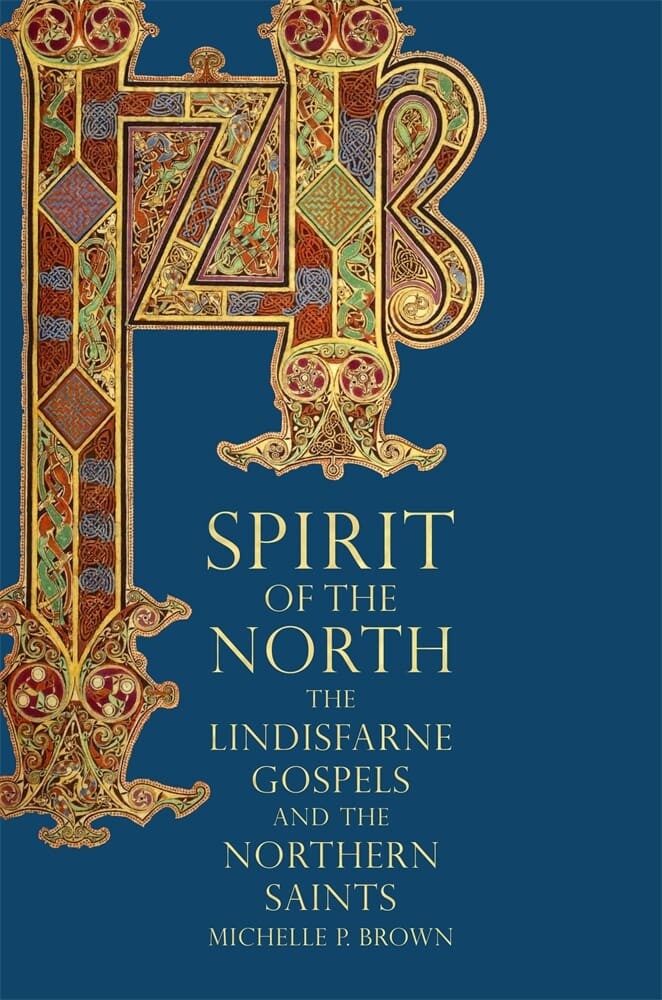
Spirit of the North
The Lindisfarne Gospels and the Northern Saints
Michelle P. BrownFaith, saints and the Lindisfarne Gospels
Why does the North of England possess such a distinctive identity, and why does a manuscript created on a small island over 1,300 years ago still speak so powerfully today? Written by a leading authority and former curator of the Lindisfarne Gospels, Spirit of the North traces the origins of the Old North and Northumbria in the turbulent centuries after the fall of Roman Britain. It brings to life the saints and communities who helped shape the region, including Cuthbert, Aidan, Hild and Bede. At its heart is a fresh interpretation of the Lindisfarne Gospels, a masterpiece of art, faith and cultural exchange whose imagery sought to reconcile diverse peoples and traditions. Richly illustrated and deeply informed, this is a story of creativity, belief and identity whose legacy continues to resonate across Britain and beyond.
Prologue
Introduction: The Early Medieval North: Crucible of Faith
Part 1: A Tapestry of Peoples and Traditions
i. The North Is Distinctive
1 Roman Britain and the Introduction of Christianity
2 The Aftermath of Empire
3 Continuity and Change
4 St Ninian
5 St Patrick
6 St Bridget
7 St Finnian of Movilla and St Columba
8 Abbot Adomnán of Iona
ii. Landscapes of Peoples, Power and Faith
9 The Old North and Its Kingdoms
10 Caledonia
11 Pictland
12 Cumbria
13 Rheged
14 Strathclyde
15 Dál Riada
16 The Isle of Man
17 The Diocese of the Isles
18 Elmet
19 The Gododdin and Catterick
20 Lindsey
21 The Impact of the Anglo-Saxons
Part 2: Northumbria
22 The Creation of Anglo-Saxon Northumbria
23 The Roman Mission to Northumbria: St Paulinus, St Æthelberga of Kent and St Edwin, King and Martyr
24 The Columban Mission to Northumbria: St Aidan and St Oswald, King and Martyr
25 St Aidan and Lindisfarne
26 St Hild, the Beacon in the Bay
27 St Boisil and Old Melrose
28 Bishop Ecgberht, Willibrord and the Overseas Missions
29 The Boys from Holy Island: Sts Cedd, Chad, Cælin and Cynbil
30 St Wilfrid of York
31 The Synod of Whitby
32 The Aftermath of the Synod of Whitby
33 St Etheldreda of Ely
34 Benedict Biscop, Ceolfrith, Bede and Monkwearmouth-Jarrow
35 Bede’s Life in Context
36 The Vernacular Tradition
37 The Northumbrian Renaissance
Part 3: St Cuthbert, Bishop Eadfrith and Bede: The Making of the Cuthbertine Cult and of the Lindisfarne Gospels
38 St Cuthbert
39 The Lindisfarne Gospels
40 The Components of the Lindisfarne Gospels
41 The Fourfold Harmony as an Underlying Structure
42 Agreeing to Agree: The Quest for Ecumenical Harmony
43 Making All Creation Whole
Epilogue: St Cuthbert, His Cult and Community, the Northmen and the English
Appendix i: Bede’s List of Works from His Autobiographical Note at the end of the Historia Ecclesiastica and His Death Song
Appendix ii: A Litany of Northern Saints
References
Bibliography
Acknowledgements
Photo Acknowledgements
Index
Michelle P. Brown is Professor Emerita of Medieval Manuscript Studies at the School of Advanced Study, University of London, and was formerly Curator of Illuminated Manuscripts at the British Library. Her books include Bede and the Theory of Everything (2023) and Illumino (2025), both published by Reaktion Books.