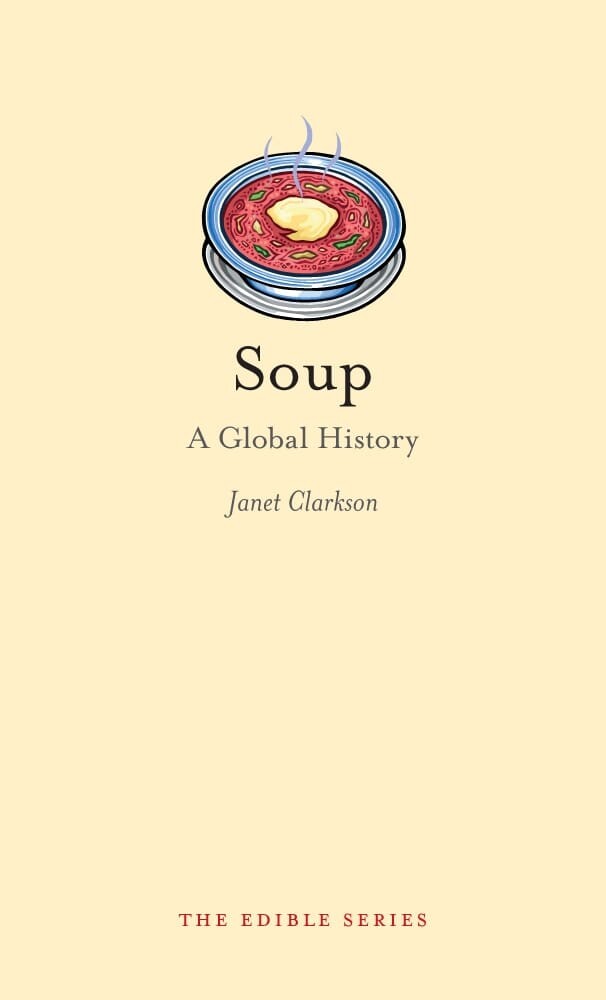
Soup
A Global History
Janet ClarksonSoup: A Global History is a concise, tasty history of the oldest dish in the world. Soup features many images of and recipes for classic and unusual soups, taken from seven hundred years of global culinary history.
From the restorative powers of chicken soup on a sick day to the warmth of a bowl of chowder on a wintry night, there is no food quite as comforting and emblematic of home as soup. Soup, as Janet Clarkson tells us, is the first true culinary creation of humanity, and it has made a long journey from the prehistoric cave to the kitchen table and the white linens of Michelin-starred restaurants.
Tracing its myriad reinventions through history and across the globe, Clarkson argues in Soup that it is the only truly universal dish. Every culture in the world makes soup, and it is widely valued as a dish adaptable to any situation and available ingredients: from the swill of the workhouse to soldiers’ rations on the battlefield or the most delicately crafted consommé, and from meat and vegetables to vipers, blood or precious stones. Clarkson explores how soup got its name and describes the different roles of soup in Eastern and Western cuisine. Featuring the national soups of many countries and including an assortment of anecdotes and recipes taken from seven centuries of culinary history, Soup paints an absorbing picture of this most fundamental food.
Soup: A Global History is a concise, tasty history of the oldest dish in the world. Soup features many images of and recipes for classic and unusual soups, taken from seven hundred years of global culinary history.
From the restorative powers of chicken soup on a sick day to the warmth of a bowl of chowder on a wintry night, there is no food quite as comforting and emblematic of home as soup. Soup, as Janet Clarkson tells us, is the first true culinary creation of humanity, and it has made a long journey from the prehistoric cave to the kitchen table and the white linens of Michelin-starred restaurants.
Tracing its myriad reinventions through history and across the globe, Clarkson argues in Soup that it is the only truly universal dish. Every culture in the world makes soup, and it is widely valued as a dish adaptable to any situation and available ingredients: from the swill of the workhouse to soldiers’ rations on the battlefield or the most delicately crafted consommé, and from meat and vegetables to vipers, blood or precious stones. Clarkson explores how soup got its name and describes the different roles of soup in Eastern and Western cuisine. Featuring the national soups of many countries and including an assortment of anecdotes and recipes taken from seven centuries of culinary history, Soup paints an absorbing picture of this most fundamental food.
-
'
Helped by tasty colour reproductions of old soup adverts, Clarkson investigates soups as comfort (chicken), medicine (lentils or, believe it or not, vipers) and weapon (Arsenic-laced soup was the method of choice of the serial killer Hélène Jégado (1801-52).
'Steven Poole, The Guardian
-
'
The Edible series of books, with titles such as Tea, Sandwich, Soup and others, are full of fascinating facts but are almost small enough to squeeze into a Christmas stocking.
'Delicious
-
'
as with all books in the series, this is a bright and wonderful read.
'InMamasKitchen
Prologue
1 Early Soup
2 Medicinal Soup
3 Charitable Soup
4 Portable Soup
5 Global Soup
6 Noteworthy Soup
Recipes
Select Bibliography
Websites and Associations
Acknowledgements
Photo Acknowledgements
Index
Janet Clarkson writes regularly on culinary history and is also the author of Pie: A Global History (Reaktion, 2008), Soup: A Global History (Reaktion, 2010). She lives in Queensland, Australia.