


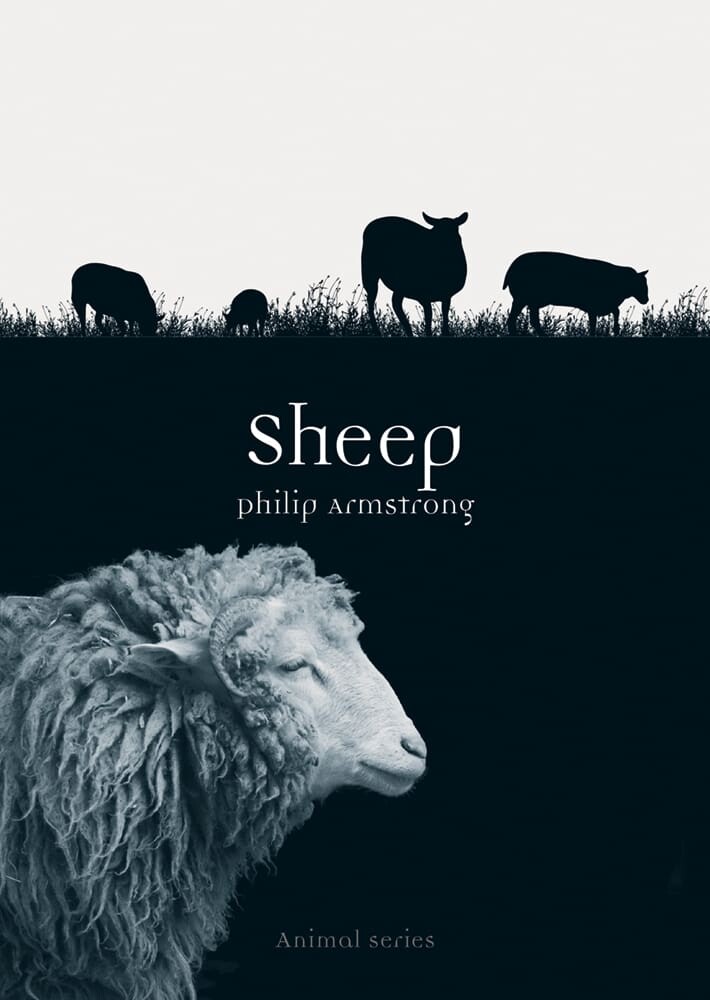
Sheep
Philip ArmstrongA unique exploration of the biology and history of sheep, as well as their place in literature and the other creative arts.
The Egyptians worshipped them, the Romans dressed them in fitted coats, early Christians made the shepherd synonymous with their divine saviour. In Sheep, Philip Armstrong traces the natural and cultural history of both the wild and domestic species of Ovis: from the Old World mouflon to the corkscrew-horned flocks of the Egyptians, to the ‘Trojan sheep’ of Homer’s Odyssey, to the vast migratory mobs of Spanish merinos – all the way to Dolly the cloned ewe and the sheep-human hybrids of Haruki Murakami. Above all else, Sheep demonstrates that sometimes the most mundane animals turn out to be the most surprising.
Listen to Philip Armstrong discuss some astonishing facts about sheep in this interview with Radio New Zealand.
A unique exploration of the biology and history of sheep, as well as their place in literature and the other creative arts.
The Egyptians worshipped them, the Romans dressed them in fitted coats, early Christians made the shepherd synonymous with their divine saviour. In Sheep, Philip Armstrong traces the natural and cultural history of both the wild and domestic species of Ovis: from the Old World mouflon to the corkscrew-horned flocks of the Egyptians, to the ‘Trojan sheep’ of Homer’s Odyssey, to the vast migratory mobs of Spanish merinos – all the way to Dolly the cloned ewe and the sheep-human hybrids of Haruki Murakami. Above all else, Sheep demonstrates that sometimes the most mundane animals turn out to be the most surprising.
Listen to Philip Armstrong discuss some astonishing facts about sheep in this interview with Radio New Zealand.
-
'
In Sheep, a superb volume that more than meets the high bar set in the Reaktion Books Animal Series, the animal-studies scholar Philip Armstrong notes that no other domestic animal fades from view, even as we use it, quite as completely as the sheep before setting this situation to rights. In six chapters with titles such as Sheepishness and A Sheep-shaped World, each graced with gorgeous illustrations in natural and cultural history ranging from The exuberantly polycerate Jacob Sheep that can have up to six horns to Don Quixotes ovine delusion, Armstrong produces a sheep manifesto thats both delightful and disturbing.
'TLS
1 Sheepishness
2 How Sheep Became
3 Ancient Yarns
4 A Sheep-shaped World
5 Little Lamb, Who Made Thee?
6 Sheepliness
Timeline
References
Select Bibliography
Associations and Websites
Acknowledgements
Photo Acknowledgements
Index
Philip Armstrong is Co-Director of the New Zealand Centre for Human-Animal Studies. His books include What Animals Mean (2008).