


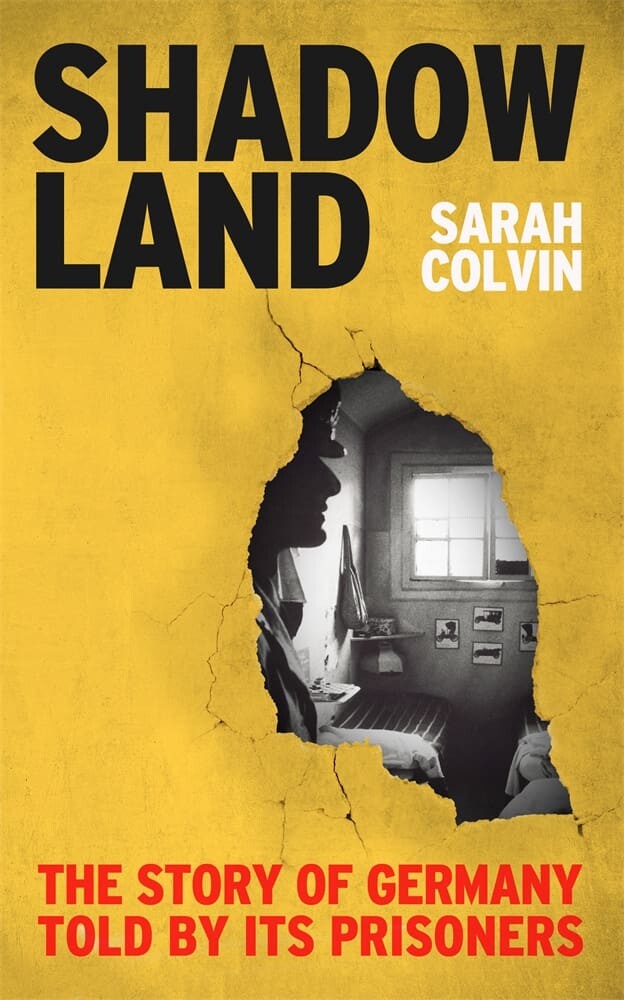
Shadowland
The Story of Germany Told by Its Prisoners
Sarah ColvinThe inspiring, painful stories of German prisoners, which shines new light onto Germany itself.
A nation, in the words of Nelson Mandela, ‘should not be judged by how it treats its highest citizens, but its lowest ones’. Shadowland tells the sometimes inspiring, often painful stories of Germany’s prisoners, and thereby shines new light on Germany itself. The story begins at the end of the Second World War, in a defeated country on the edge of collapse, in which orphaned and lost children are forced to live rough, scavenging and stealing to stay alive, often laying the foundations of a ‘criminal career’. While East Germany developed detention facilities for its secret police, West Germany passed prison reform laws, which erected, in the words of a prisoner, ‘little asbestos walls in Hell’. When the Wall fell in 1989 there was the promise of a new start, but how strongly did the wind of change really blow on the inside?
Shadowland is Germany as seen through the lives, experiences, triumphs and tragedies of its lowest citizens.
The inspiring, painful stories of German prisoners, which shines new light onto Germany itself.
A nation, in the words of Nelson Mandela, ‘should not be judged by how it treats its highest citizens, but its lowest ones’. Shadowland tells the sometimes inspiring, often painful stories of Germany’s prisoners, and thereby shines new light on Germany itself. The story begins at the end of the Second World War, in a defeated country on the edge of collapse, in which orphaned and lost children are forced to live rough, scavenging and stealing to stay alive, often laying the foundations of a ‘criminal career’. While East Germany developed detention facilities for its secret police, West Germany passed prison reform laws, which erected, in the words of a prisoner, ‘little asbestos walls in Hell’. When the Wall fell in 1989 there was the promise of a new start, but how strongly did the wind of change really blow on the inside?
Shadowland is Germany as seen through the lives, experiences, triumphs and tragedies of its lowest citizens.
-
'
Incisive and humane, Sarah Colvin’s engrossing study of the German prison system since 1945 allows the voices of prisoners to illuminate the differences between penal practice in West and East before 1989 and developments since reunification. The book both offers a unique perspective on modern German history and raises questions of wider relevance concerning punishments and incarceration.
'Joachim Whaley, Emeritus Professor of German History and Thought, University of Cambridge
-
'
Prisons are not only an expression of a society’s understanding of justice but a measure of its good sense and humanity. Sarah Colvin‘s remarkable and knowledgeable study offers both a very valuable contribution to the critical analysis of practices of imprisonment and a lively and much-needed perspective on us all as social beings.
'Thomas Galli, former prison governor, lawyer and author
Sarah Colvin is the Schröder Professor of German at the University of Cambridge. She has participated in prison-based arts and education projects, and is an Advisory Group member for the National Criminal Justice Arts Alliance. She has authored and edited a number of books, including the Routledge Handbook of German Politics and Culture (2015).