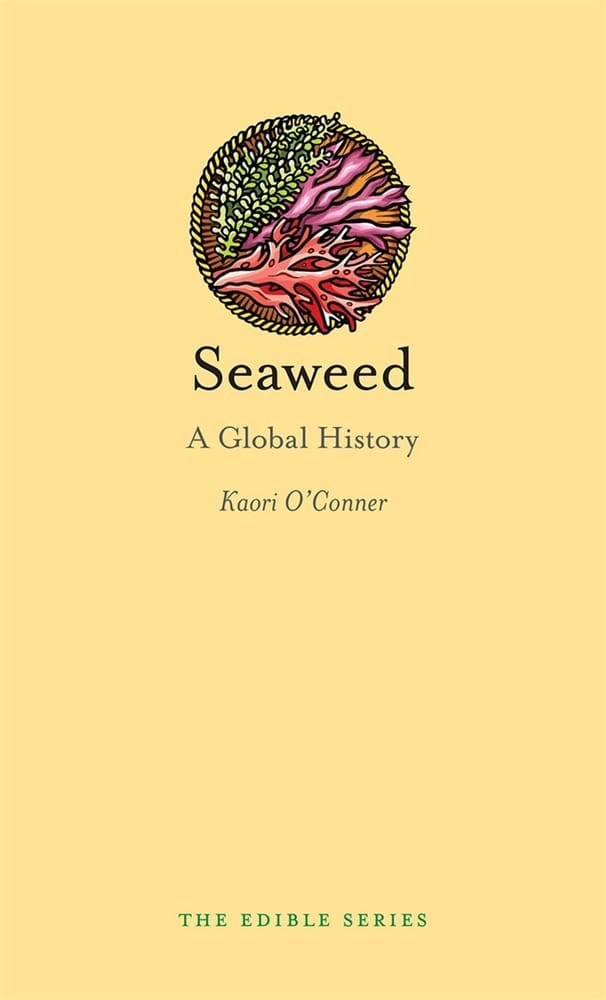
Seaweed
A Global History
Kaori O'ConnorThis is a culinary history of seaweed, combining lore and legend with a selection of recipes, covering traditional cuisine and new discoveries such as seaweeds that are twice as nutritious as kale and taste just like bacon.
Seaweed is both the world’s oldest and newest superfood. As a food, seaweeds are now more associated with the East than with the West, yet they have long been eaten in many parts of the world, including Europe and the Americas. Mistakenly thought of today as a forage food for the poor, in ancient times seaweed was highly prized, a delicacy reserved for royalty in Japan, China, Korea and the Pacific Islands. Driven by the growing limitations of land resources, the search for new sustainable foods, pharmaceuticals and other products is turning to seaweeds – the world’s last great renewable natural resource and a culinary treasure ready for rediscovery.
This is a culinary history of seaweed, combining lore and legend with a selection of recipes, covering traditional cuisine and new discoveries such as seaweeds that are twice as nutritious as kale and taste just like bacon.
Seaweed is both the world’s oldest and newest superfood. As a food, seaweeds are now more associated with the East than with the West, yet they have long been eaten in many parts of the world, including Europe and the Americas. Mistakenly thought of today as a forage food for the poor, in ancient times seaweed was highly prized, a delicacy reserved for royalty in Japan, China, Korea and the Pacific Islands. Driven by the growing limitations of land resources, the search for new sustainable foods, pharmaceuticals and other products is turning to seaweeds – the world’s last great renewable natural resource and a culinary treasure ready for rediscovery.
Kaori O' Connor was an anthropologist at University College London, author of The English Breakfast (2013) and winner of the Sophie Coe Prize for Food History (2009).