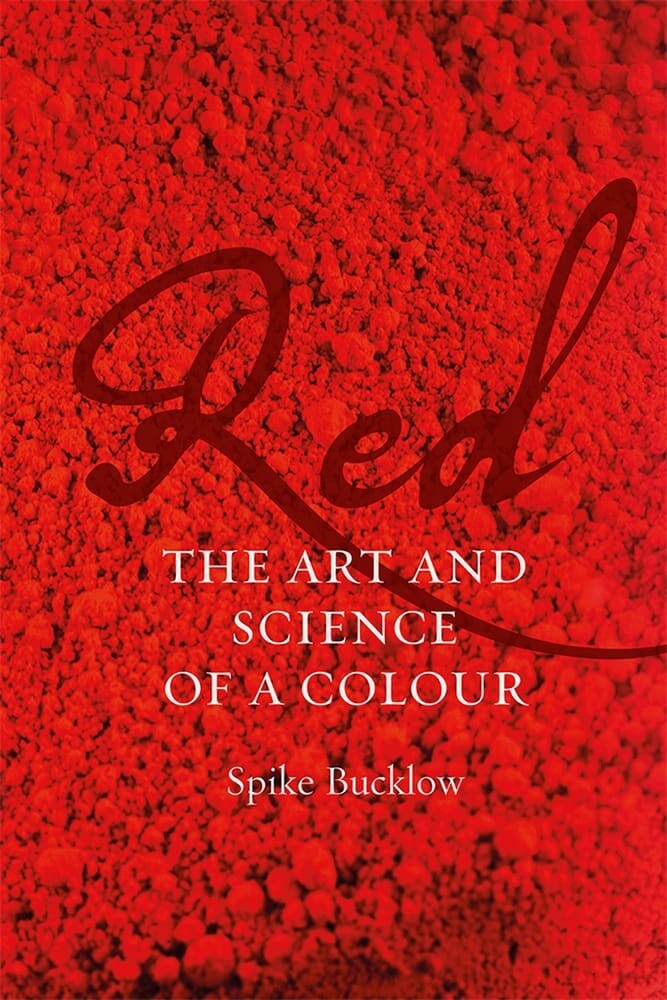
Red
The Art and Science of a Colour
Spike BucklowPart material history, part cultural inquiry, Red traces the origins, applications and influences of the colour red.
Red grabs your attention. Today we associate red with danger, sex, anger and more, yet the colour was once so significant that things which have a profound impact upon our lives were widely called red, even though they are often not red at all.
Spike Bucklow takes us from a 34,000-year-old shaman burial dress to the iPhone screen, exploring the myriad of purposes we have put red to as well as the materials from which it comes. The pursuit of the colour drove medieval alchemy and modern chemistry alike, and red has been found in insects, tree resins, tar, earths and excitable gases. It is associated with earth, blood and fire, with the holy, with national flags and powerful ideologies.
Red is a material and cultural history that makes one see this colour afresh, a crucial part of the human visual world.
Part material history, part cultural inquiry, Red traces the origins, applications and influences of the colour red.
Red grabs your attention. Today we associate red with danger, sex, anger and more, yet the colour was once so significant that things which have a profound impact upon our lives were widely called red, even though they are often not red at all.
Spike Bucklow takes us from a 34,000-year-old shaman burial dress to the iPhone screen, exploring the myriad of purposes we have put red to as well as the materials from which it comes. The pursuit of the colour drove medieval alchemy and modern chemistry alike, and red has been found in insects, tree resins, tar, earths and excitable gases. It is associated with earth, blood and fire, with the holy, with national flags and powerful ideologies.
Red is a material and cultural history that makes one see this colour afresh, a crucial part of the human visual world.
-
'
[an] excellent and protean biography of a colour . . . the book follows a red thread through human history, whose twin strands are material extraction the animal, vegetable and mineral lives of red and the extraction of meanings from redness itself . . . Red summarises the search for redness, condensing a vast field of inquiry into a lucid narrative . . . Bucklows book restores many lost meanings. Starting from materials, from colour speaking through matter, it ends as a poetics of red: charting the deeds and sufferings of a light that has passed through darkness through the veil of matter to reach us and become visible in the form of a red sky at night.
'The Spectator
-
'
Written by a research scientist but with the flair of a biographer, Spike Bucklow’s Red: The Art and Science of a Colour charts the many sources, uses and meanings of the colour red through history . . . In his episodic history of red, Bucklow ably explains the many different facets of this ubiquitous but temperamental colour. Part historical epic, part scientific treatise, part social history, Red introduces us to humankind’s enduring quest to find meaning in the materials and the colours around us.
'Burlington Magazine
-
'
an examination of the various origins of the colour animals, vegetables, minerals and synthetics and an exercise in cultural history that follows the red thread through Western and Eastern societies. [Bucklow] starts in ancient Iraq and Egypt, cultures that prized red cosmetics as necessary in the journey to the afterworld, goes to the Middle Ages and prized red hair such as that of Queen Elizabeth I, the 1940s in which red signified patriotism and the scarlet lady to whom loose lips divulged secrets, to present day talk of red alerts.
'Sydney Morning Herald
-
'
The many reds that we employ and enjoy come from some strange places: from dark brown earth and from black coal tar, from the bellies of tiny insects and from the resins of certain trees, from mythical dragonsblood and from excitable gases. Part material history, part cultural inquiry, Spike Bucklows fine book traces the origins and applications of the reds that have surrounded us since humans first sought to apply the colour to their habitats and their bodies. Above all it reminds us that red is never a simple matter. Red is mysterious and it is fugitive: often difficult to make and to make fast, it is equally slippery in the human imagination. From red mists to red herrings by way of red lines and red rags, it is perhaps the most unquiet and unsettling colour of all.
'David Batchelor
Introduction
One
Animal Reds
Two
Eastern Trees
Three
Fruits of the Earth
Four
Mysterious Reds
Five
Reds for a Better Life
Six
Brave New Reds
Seven
Crossing the Red Line
Eight
Red Meanings
Nine
Red Earth
Ten
Red Blood
Eleven
Red Fire
Twelve
Red Passions
References
Bibliography
Acknowledgements
Photo Acknowledgements
Index
Spike Bucklow is Professor of Material Culture and Conservation Scientist at the Hamilton Kerr Institute, University of Cambridge. He is the author of numerous books on artists’ materials and methods, including The Anatomy of Riches: Sir Robert Paston’s Treasure (Reaktion, 2018).