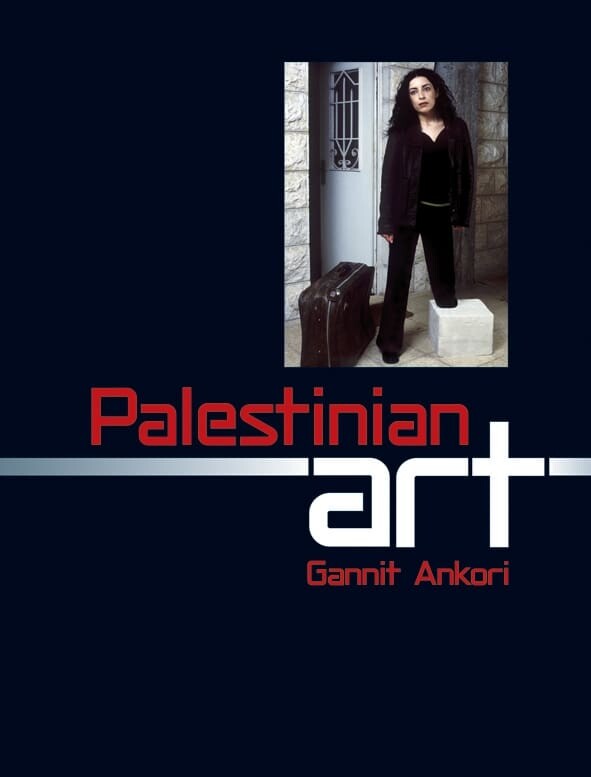
Palestinian Art
Gannit AnkoriOffers an overview of the history and development of Palestinian art. The author examines the oeuvre of contemporary Palestinian artists both prominent and lesser-known, working in the Palestinian territories, in Israel and in exile. She also provides detailed interpretations of the meaning and significance of works of art.
This book offers an unprecedented and original overview of the history and development of Palestinian art. Experiences of trauma, loss and dispersal have had a profound impact on the lives of Palestinians for many decades. Despite the turmoil, Palestinian artists have continued to create powerful works of art that reflect and transcend contemporary realities even as they tap into the rich and layered sources of Palestinian heritage. They produce distinct and diverse works of art that dismantle the East-West dichotomy, reconfigure national identity and generate an alternative ‘Third Space’ of creativity.
Based on almost two decades of intensive research, countless studio visits and numerous interviews, the author examines the œuvre of contemporary Palestinian artists both prominent and lesser-known, working in the Palestinian territories, in Israel and in exile. She provides detailed interpretations of the meaning and significance of works of art, as well as a thorough analysis of the complex historical, geographical, political and cultural contexts within which they were created. The book navigates between the personal and biographical dimensions of specific artworks and the collective identity components embedded within them. Questions of gender, exile, colonialism, nationalism, post-colonialism, Orientalism and what Ankori calls ‘Dis-Orientalism’ are integral to the author’s investigation. She also probes the influence and thematic dominance of issues such as rootedness, displacement, fragmentation and hybridity in contemporary Palestinian art.
Palestinian Art is a fascinating introduction to a little-known visual culture often subsumed under the torrent of political turmoil. A groundbreaking and essential work of art scholarship, it illuminates new and unique facets of Palestinian cultural identity.
Offers an overview of the history and development of Palestinian art. The author examines the oeuvre of contemporary Palestinian artists both prominent and lesser-known, working in the Palestinian territories, in Israel and in exile. She also provides detailed interpretations of the meaning and significance of works of art.
This book offers an unprecedented and original overview of the history and development of Palestinian art. Experiences of trauma, loss and dispersal have had a profound impact on the lives of Palestinians for many decades. Despite the turmoil, Palestinian artists have continued to create powerful works of art that reflect and transcend contemporary realities even as they tap into the rich and layered sources of Palestinian heritage. They produce distinct and diverse works of art that dismantle the East-West dichotomy, reconfigure national identity and generate an alternative ‘Third Space’ of creativity.
Based on almost two decades of intensive research, countless studio visits and numerous interviews, the author examines the œuvre of contemporary Palestinian artists both prominent and lesser-known, working in the Palestinian territories, in Israel and in exile. She provides detailed interpretations of the meaning and significance of works of art, as well as a thorough analysis of the complex historical, geographical, political and cultural contexts within which they were created. The book navigates between the personal and biographical dimensions of specific artworks and the collective identity components embedded within them. Questions of gender, exile, colonialism, nationalism, post-colonialism, Orientalism and what Ankori calls ‘Dis-Orientalism’ are integral to the author’s investigation. She also probes the influence and thematic dominance of issues such as rootedness, displacement, fragmentation and hybridity in contemporary Palestinian art.
Palestinian Art is a fascinating introduction to a little-known visual culture often subsumed under the torrent of political turmoil. A groundbreaking and essential work of art scholarship, it illuminates new and unique facets of Palestinian cultural identity.
-
'
Winner of the Polonsky Prize for Creativity and Originality in the Humanistic Disciplines 2007
'Award
-
'
The excellent Reaktion Books has scored another coup with Palestinian Art – the only work in English on this theme.
'The Independent
-
'
Whats wonderful about Palestinian Art is that it brings to our attention so many very good artists, and that through both the color plates and Ankoris incisive commentary and analysis, we learn that they have so much more on their minds than the conflict.
'The Boston Globe
-
'
Ankori guides us fluently through the largely uncharted territory of modern Palestinian art.
'Contemporary
-
'
Gannit Ankoris book Palestinian Art, a prime model of art historical research, deviates from the narrow confines of the discipline and must be read as a cultural document . . . and as an expression of an ethical position espoused by a scholar in times of continued occupation . . . The analysis of the diverse artworks is rich and fascinating because it interweaves the visual with the theoretical and the biographical.
'Afterimage
-
'
Gannit Ankori provides a scholarly yet personal window into the subject of Palestinian art. This engaging study is the first substantial English-language publication to cover the topic . . . Ankori writes in a style that is authoritative yet accessible . . . This book holds a unique place in the literature and is highly recommended for collections that are strong in contemporary art as well as for large art collections with a particular interest in this subject.
'ARLIS
-
'
Ankoris vision suggests an inclusive method of looking at art. It is a blueprint for writers and readers to study on how writing the cultural history of a nation is possible.
'Al Jadid
Preface
PART I: FOUNDATIONS
1. Introduction: Broken Narratives and 'Dis-Orientalism'
2. The Shadow of the Nakba: Art before 1948
3. Exile and Memories: Art after 1948
PART II: EARTH AND SKY
4. Earth: Sliman Mansour and the Poetics of Sumud
5. Sky: Kamal Boullata and the Quest for Light
PART III: BODY AND HOME
6. Mona Hatoum: Nomadic Bodies, Exilic Spaces
7. Khalil Rabah's Split Self: Black Skin / White Masks
PART IV: BEING ARAB IN ISRAEL
8. Visual Voices from 'the Interior'
Postscript
References
Bibliography
Acknowledgements
Photo and Copyright Acknowledgements
Index
Gannit Ankori is Professor of Art History and Theory at the departments of Fine Arts, Women, Gender and Sexuality Studies and the Schusterman Center at Brandeis University. She is the author of Imaging her Selves: Frida Kahlo's Poetics of Identity and Fragmentation (2002), Frida Kahlo: Art, Life, Diary (2003) and Palestinian Art (Reaktion, 2006). She is the interim Director and Chief Curator of the Rose Art Museum, Brandeis University.