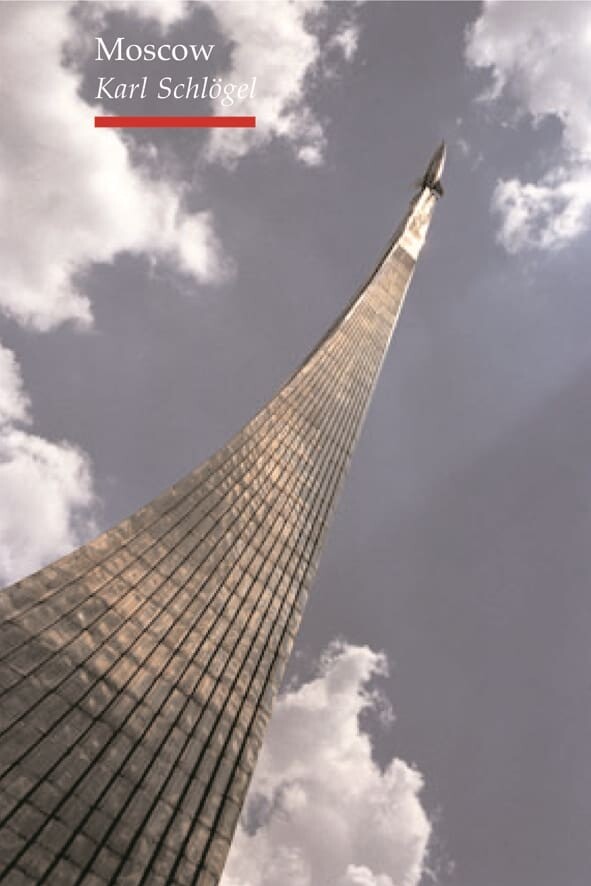
Moscow
Karl SchlögelNo European city has undergone as much upheaval over the years as Moscow. The stage for the fall of a world empire and the rebirth of a globally connected Russia, Moscow has transformed from a monochrome capital city to a new Babylon iridescent with neon lights. This book offers a portrait of this international metropolis in transformation.
No European city has undergone as much upheaval in the last fifteen years as Moscow. The stage for the fall of a world empire and the rebirth of a globally connected Russia, Moscow has transformed from a monochrome capital city to a new Babylon iridescent with neon lights. Karl Schlögel’s Moscow offers a fascinating and engaging portrait of this international metropolis in transformation.
First published in German in 1984, and now rapidly attaining the status of a classic work, this debut English edition of Moscow has been updated with a new introduction and conclusion covering the post-Soviet period. Schlögel describes the modern history of Moscow from various aspects, as he explores the city’s streets and unearths the rich histories of its buildings, monuments and parks. He traverses Moscow’s streets like a flâneur, unravelling the meanings and stories of monasteries and cemeteries, railway stations, barracks, Jugendstil villas, underground stations and more.
Moscow is a city where the past and future continually clash, and it struggles to define its global role in the twenty-first century. Karl Schlögel’s insightful observations provide a valuable window into the complex and resilient character of the ever-evolving capital and its citizens.
-
'
In Moscow – the new, first-ever translation of his 1984 book Moscow Lesen, regarded as a classic in art and architecture circles – German historian Karl Schlögel draws a portrait of a city that hides its past, where information that is publicly ignored or suppressed is a matter of private excitement. Colorful anecdotes illustrate his point.
'The Moscow Times
-
'
an entertaining and insightful study of Moscow, one that prompts the reader to explore the city further.
'Russian Review
Introduction
Prologue: The eye of the beholder
1. Starting with the surface
2. High-rise buildings
3. Strata
4. A rampant boom
5. A note on Shekhtel
6. Buildings that were never built
7. The shadow of an imaginary tower
8. A mise-en-scene for the moment
9. Let reason reign!
10. VDNKh
11. Classicism and Romanticism
12. On the edge of an era
13. Railway stations
14. Second-hand bookshops
15. The strong man and the hero
16. Vsya Moskva
17. Red forum
18. Proximity and distance
19. Inscriptions on the black background
20. The Conservatory
21. Proletarian stronghold
22. Museums
23. An Excursus on excursions
24. Intermediate worlds
25. Gathering evidence
26. Zamoskvoreche
27. Metro
28. Illustration
29. Monasteries and cemeteries
30. Knowing and seeing
31. In the footsteps of Walter Benjamin
Conclusion
In lieu of a bibliography
Photographic Acknowledgements
Karl Schlögel is a historian and essayist and Professor Emeritus of the European University Viadrina in Frankfurt (Oder), Germany. His many books include histories of Moscow, Berlin and St Petersburg, and he won the European Charles Veillon essay prize in 1990 and the prize of the Historisches Kolleg Munich in 2016. in 2025 he was awarded the Peace Prize of the German Book Trade.