


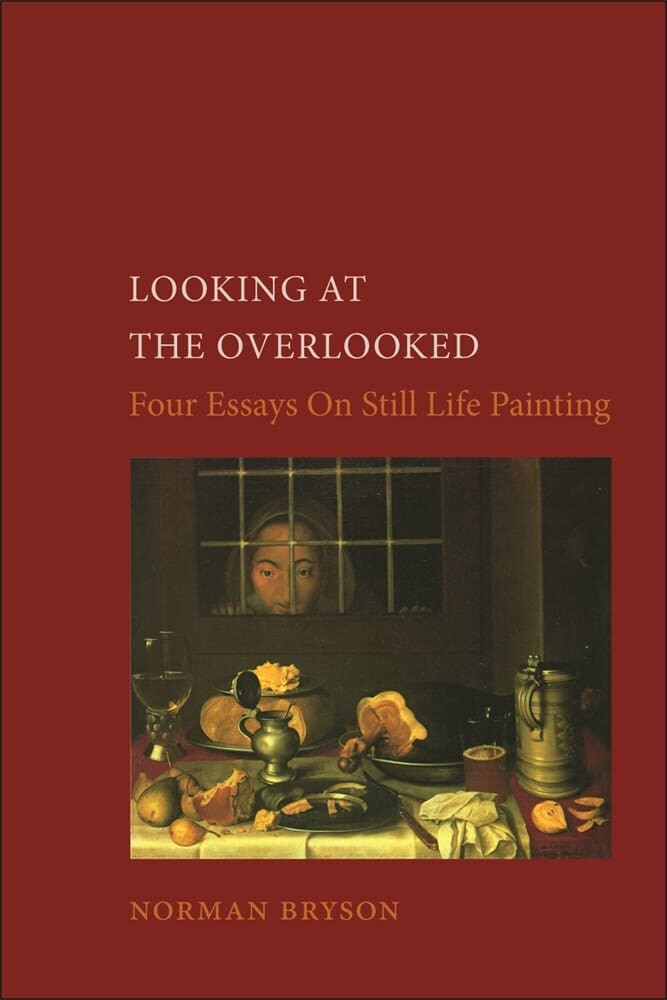
Looking at the Overlooked
Norman BrysonIn this, the only up-to-date critical work on still life painting in any language, Norman Bryson analyses the origins, history and logic of ‘still life’.
In this classic Reaktion title, Norman Bryson analyses the origins, history and logic of still-life, one of the most enduring forms of Western painting. From Roman wall-painting to Cubism, and from seventeenth-century Dutch still-life to Bryson’s conclusion that the persisting tendency to downgrade the genre of still-life is profoundly rooted in the historical oppression of women, Looking at the Overlooked is Norman Bryson is at his brilliant best.
In this, the only up-to-date critical work on still life painting in any language, Norman Bryson analyses the origins, history and logic of ‘still life’.
In this classic Reaktion title, Norman Bryson analyses the origins, history and logic of still-life, one of the most enduring forms of Western painting. From Roman wall-painting to Cubism, and from seventeenth-century Dutch still-life to Bryson’s conclusion that the persisting tendency to downgrade the genre of still-life is profoundly rooted in the historical oppression of women, Looking at the Overlooked is Norman Bryson is at his brilliant best.
In this, the only up-to-date critical work on still life painting in any language, Norman Bryson analyses the origins, history and logic of ‘still life’.
In this classic Reaktion title, Norman Bryson analyses the origins, history and logic of still-life, one of the most enduring forms of Western painting. From Roman wall-painting to Cubism, and from seventeenth-century Dutch still-life to Bryson’s conclusion that the persisting tendency to downgrade the genre of still-life is profoundly rooted in the historical oppression of women, Looking at the Overlooked is Norman Bryson is at his brilliant best.
-
'
Few art-historians can unpeel images in the way that he does.
'Frances Spalding, The Independent
-
'
The still-life really comes to life in this book.
'Good Book Guide
-
'
Remarkable essays
'Lawrence Gowing, TLS
-
'
In four dazzling essays, [Bryson] breaks through the profound, enigmatic silences that have made still life resistant to interpretation for centuries . . . By including still life in the current discourse on gender and patriarchal modes of seeing, Bryson brings it up to date, arguing convincingly for its permanent relevance. For if he is correct, then still life will always offer painters a rich seam to mine.
'Nancy Grimes, ARTnews
-
'
There can be little doubt that Bryson has succeeded brilliantly in his aim of developing our critical discourse: novel interpretations can be found on every page of this book. Like all the best art critics, Bryson succeeds in extending the range of our response to the paintings he writes about: after reading his words on Zurbarán or Chardin their still lifes become tinged with his eloquence.
'Paul Taylor, Art History
-
'
In return I would like Norman Bryson's Looking at the Overlooked. I leant my copy to someone and never got it back. Of course I didn't. It's superb.
'Sarah Winman, The Observer 'Best Books to Give as Presents this Christmas'
Foreword
Xenia
Rhopography
Abundance
Still Life and 'Feminine' Space
References
List of Illustrations
Norman Bryson is Professor of Art History at the University of California, San Diego. He has written extensively on painting and critical theory.