


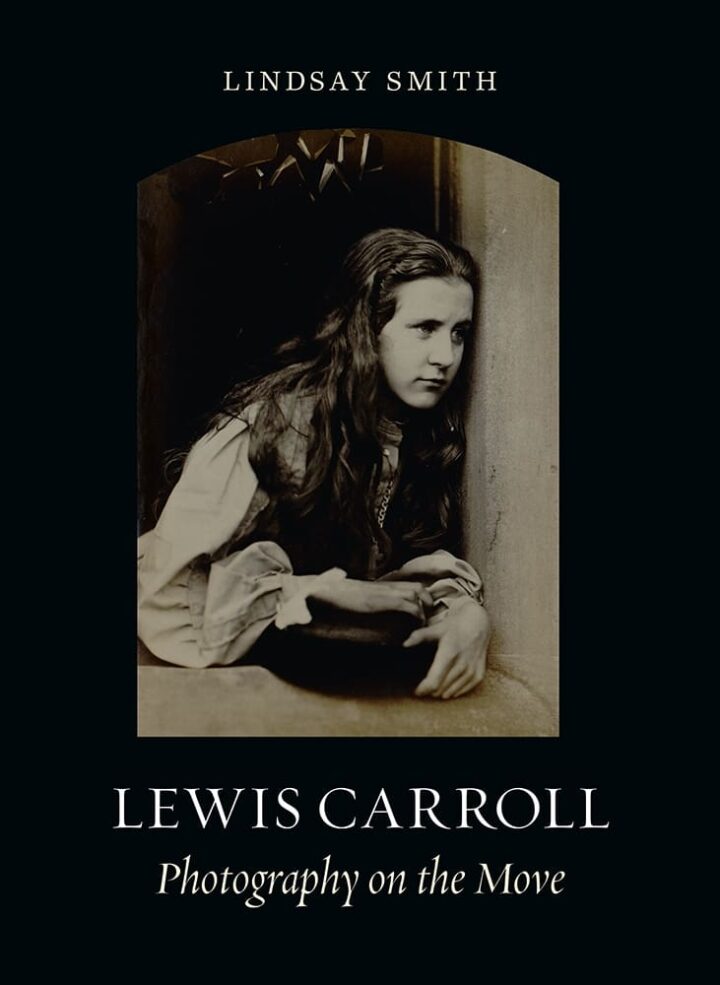
Lewis Carroll
Photography on the Move
Lindsay SmithLewis Carroll: Photography on the Move contains previously unpublished photographs from Carroll's collection and coincides with the 150th anniversary of the publication of Alice's Adventures in Wonderland. This book examines nineteenth-century visual and literary culture in accessible prose, giving a valuable and cogent account of Carroll’s visual and literary career.
Though he is now known primarily as the author of the Alice books, in his lifetime Lewis Carroll was interested at least as much in photography as in writing. Though he remains one of Victorian culture’s most prominent and compelling figures, few readers have had the chance to explore the extent of his passion for photography, a new technology that was gaining popularity during his lifetime. Lewis Carroll: Photography on the Move follows the journey of Carroll’s photography in tandem with his writing. Beginning in the glass studio Carroll had built above his college rooms at Christ Church, Oxford, this book traces his fascination for photographs through his visits to London theatres, his annual trips to the seaside town of Eastbourne and his extraordinary excursion to Russia in 1867. Many of the preoccupations that make Carroll’s writing so remarkable are also present in his photography, particularly his interest in the boundless imaginations of children. Carroll was also an avid collector of photographs and, on occasion, commissioned professional photographers to set up studio sittings.
This engaging and beautifully illustrated book uncovers in depth a lesser-known side of the renowned writer. It gives a valuable and cogent account of Carroll’s visual and literary career.
Lewis Carroll: Photography on the Move contains previously unpublished photographs from Carroll's collection and coincides with the 150th anniversary of the publication of Alice's Adventures in Wonderland. This book examines nineteenth-century visual and literary culture in accessible prose, giving a valuable and cogent account of Carroll’s visual and literary career.
Though he is now known primarily as the author of the Alice books, in his lifetime Lewis Carroll was interested at least as much in photography as in writing. Though he remains one of Victorian culture’s most prominent and compelling figures, few readers have had the chance to explore the extent of his passion for photography, a new technology that was gaining popularity during his lifetime. Lewis Carroll: Photography on the Move follows the journey of Carroll’s photography in tandem with his writing. Beginning in the glass studio Carroll had built above his college rooms at Christ Church, Oxford, this book traces his fascination for photographs through his visits to London theatres, his annual trips to the seaside town of Eastbourne and his extraordinary excursion to Russia in 1867. Many of the preoccupations that make Carroll’s writing so remarkable are also present in his photography, particularly his interest in the boundless imaginations of children. Carroll was also an avid collector of photographs and, on occasion, commissioned professional photographers to set up studio sittings.
This engaging and beautifully illustrated book uncovers in depth a lesser-known side of the renowned writer. It gives a valuable and cogent account of Carroll’s visual and literary career.
-
'
Carroll was a prolific amateur photographer and, as Smith is keen to emphasize, he was also an avid consumer of photographs, particularly in his later years when he is often said to have given up the hobby. Lewis Carroll: Photography on the Move demonstrates this through meticulous research, rooted in Carrolls own letters and diaries and, of course, his photographs, many of which are included as illustrations. Smith has searched out collections around the world, matching photographs mentioned in Carrolls letters to images now residing, for example, in Ohio and Philadelphia. She makes fascinating connections between Carrolls photography and the other leisure pursuits he enjoyed . . . The books documentation of Carrolls photography and its relation to other areas of his life is immaculate . . . the book has a lot to offer to those interested in Carroll or in early photography.
'TLS
-
'
That this is the first monograph on Carrolls photography would be reason enough for its scholarly importance but far beyond this, Smith, with characteristic eloquence and rigour, opens up a previously closeted area of Carroll studies, questioning what it means to think of Carroll as a photographer.
'Early Popular Visual Culture
-
'
Through Carroll and his photographs, Lindsay explores the man, the collector, and the outsider, forever trying to see, understand, and be part of his work. Its too easy to see Carrolls photographs as proof of modern opinion against him, and reading Lewis Carroll: Photography on the Move, you are reminded not only of the difference in how photographs of children were once viewed, but also how collecting may have been a greater passion than the subjects . . . informative, entertaining, and a joy to read. The photographs are reproduced in lovely quality and many of them are unfamiliar. It certainly does give a new and refreshingly unscandalised examination of this intriguing Victorian photographer.
'The Kissed Mouth
Introduction
1. ‘The [Glass] House’: Christ Church, Oxford
2. Carroll on the Train
3. The Play House: Carroll at the Theatre in London
4. Carroll in St Russia: Shopping for Photographs and Icons
5. Ore House, Hastings: Stammering, Speech Therapy and the Voice of Infancy
6. Lushington Road, Eastbourne
Postscript
References
Bibliography
Acknowledgements
Photo Acknowledgements
Index
Lindsay Smith is Professor of English at the University of Sussex and co-director of its Centre for the Visual. Her books include Pre-Raphaelitism: Poetry and Painting (2013), The Politics of Focus: Women, Children and Nineteenth-century Photography (1998) and Victorian Photography, Painting and Poetry (1995).