John Evelyn
A Life of Domesticity
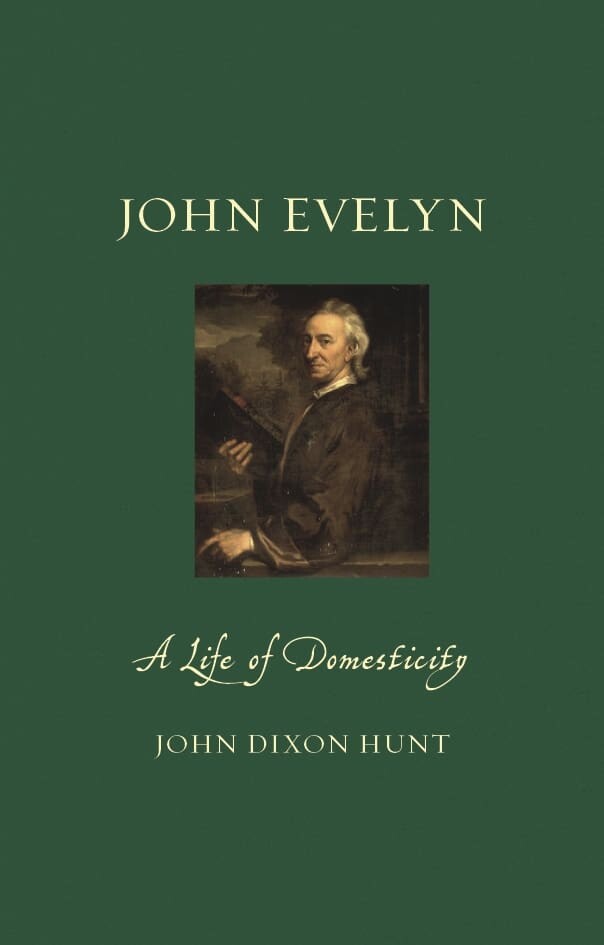
John Dixon HuntThe work of English writer, gardener and diarist John Evelyn is of great historical value. His most famous work, his Diary, which he kept throughout his life, is considered an invaluable source of information on more than fifty years of social, cultural, religious and political life in seventeenth-century England. But Evelyn’s work is often overshadowed by the literary contributions of his contemporary and friend Samuel Pepys.
John Dixon Hunt’s biography takes a fresh look at the life and work of one of England’s greatest diarists, focusing particularly on the seventeenth-century notion of ‘domesticity’. He explores Evelyn’s domestic life and, more importantly, the domestication of foreign ideas and practices in England. From his early, extensive European travels, Evelyn imbibed ideas above all on the management of estate design and developed an understanding of how to explore English topography. The book puts Evelyn’s great accomplishment – making European garden art available in the UK – into context alongside a range of social and ethical ideas. Illustrated with visual material from Evelyn’s time and often from his own pen, this is an ideal introduction to a seventeenth-century figure of huge importance in early modern Britain.
The work of English writer, gardener and diarist John Evelyn is of great historical value. His most famous work, his Diary, which he kept throughout his life, is considered an invaluable source of information on more than fifty years of social, cultural, religious and political life in seventeenth-century England. But Evelyn’s work is often overshadowed by the literary contributions of his contemporary and friend Samuel Pepys.
John Dixon Hunt’s biography takes a fresh look at the life and work of one of England’s greatest diarists, focusing particularly on the seventeenth-century notion of ‘domesticity’. He explores Evelyn’s domestic life and, more importantly, the domestication of foreign ideas and practices in England. From his early, extensive European travels, Evelyn imbibed ideas above all on the management of estate design and developed an understanding of how to explore English topography. The book puts Evelyn’s great accomplishment – making European garden art available in the UK – into context alongside a range of social and ethical ideas. Illustrated with visual material from Evelyn’s time and often from his own pen, this is an ideal introduction to a seventeenth-century figure of huge importance in early modern Britain.
-
'
In John Evelyn: A Life of Domesticity John Dixon Hunt plays with the concept of the “domestic” both in its sense of life in the home and the family, relationships and beliefs, and in the 17th century sense of “domesticating” (ie bringing home from abroad) ideas from elsewhere. Professor Hunt describes a man who combined a strict adherence to the scientific and empirical principles of Sir Francis Bacon with a most un-English openness to Continental advances in garden-making. Hunt is particularly interesting on the last decades of Evelyn’s life, a period largely ignored by other biographers.
'Historic Gardens Review
-
'
Evelyn’s diaries and correspondence provide a rich sourse of material, and these have been expertly distilled to provide insights into the seventeenth-century life of a landowner and scholar . . . Anyone interested in the development of garden design, particularly in the latter half of the seventeenth century, will find this book a rich source of ideas . . . Despite the existence of several earlier biographies it stands as a definitive account of domesticity in both senses: on the one hand, home life, and on the other, the process of assimilating new ideas into the national consciousness
'Garden History
-
'
John Dixon Hunt’s thoroughly illustrated book takes readers on a journey through John Evelyn’s efforts at domesticity . . . Hunt addresses, in a balanced way, key moments from Evelyn’s public and personal life, family, home, and interests. What emerges is a fresh portrait of the acclaimed seventeenth-century figure, one that paints him as a man intent upon employing his personal pursuits for the betterment of England . . . Hunt’s book is lucid, well-documented, and an informative read for those looking to explore John Evelyn as a keen gardener, an avid learner, and an instructor, both inside and outside of the family . . . this text [is] a most useful tool in pulling the curtain a little further back on the renowned gardener and intellectual.
'Renaissance and Reformation
-
'
In these books, even life in private is shown to be shot through with communal concern: the domestic garden as a global space, the cabinet as a public institution. Hunt’s study will appeal to scholars and students of garden history, in the academy and at large; Willes’s will appeal to students and others interested in Restoration culture. Taken together, however, the books signal an alternative trend in biography, treating the individual life not as an elusive object of interest but as the organizing figure for a cultural history.
'Isis Journal
-
'
A principal theme of his biography is his achievement in making European garden arts accessible to a British audience and in influencing estate design and management . . . Evelyn’s diaries and correspondence provide a rich source of material, and these have been expertly distilled to provide insights into the seventeenth century life of a landowner and scholar . . . Anyone interested in the development of garden design, particularly in the latter half of the seventeenth century, will find this book a rich source of ideas . . . Despite the existence of several earlier biographies it stands as a definitive account of a domesticity in both senses: on the one hand, home life; and on the other, the process of assimilating new ideas into the national consciousness.
'Bulletin of the Welsh Historic Gardens Trust
-
'
John Dixon Hunt’s John Evelyn A Life of Domesticity contains ten colour plates and forty halftones, is well produced and bound, and in short, remarkable value and inexpensive . . . [a] fine study.
'The Year's Work in English Studies
-
'
The book has a number of beautiful color images . . . Hunt declares the Character of England “great fun to read”; I declare John Evelyn: A Life of Domesticity great fun to read
'Studies in English Literature 1500–1900
-
'
John Dixon Hunt’s richly textured and highly readable account sheds new light on Evelyn . . . This is more than a biography. It is an invaluable insight into a world in intellectual ferment, on the brink of the modern age.
'Tom Williamson, Professor of Landscape History, University of East Anglia
John Dixon Hunt is Emeritus Professor of the History and Theory of Landscape at the University of Pennsylvania. His many books include Historical Ground (2014) and The Art of Ruskin and the Spirit of Place (Reaktion, 2020).