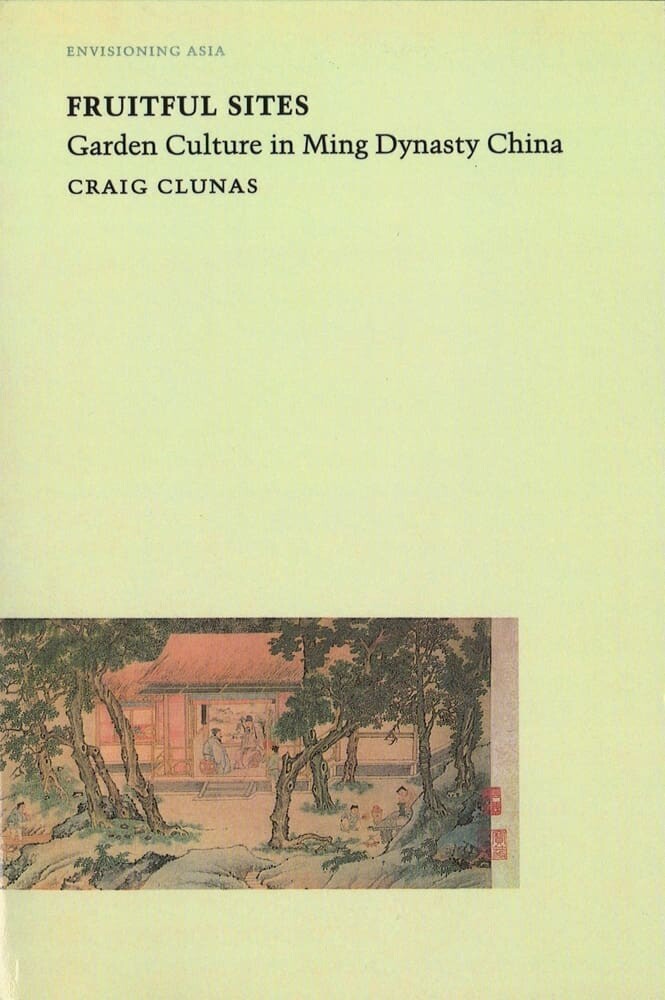
Fruitful Sites
Garden Culture in Ming Dynasty China
Craig ClunasGardens are sites that can be at one and the same time admired works of art and valuable pieces of real estate. Based on contemporary Chinese sources, this illustrated book grounds the practices of garden-making in Ming Dynasty China (1369-1644) in the social and cultural history of the day.
Gardens are sites that can be at one and the same time admired works of art and valuable pieces of real estate. As the first account in English to be wholly based on contemporary Chinese sources, this beautifully illustrated book grounds the practices of garden-making in Ming Dynasty China (1369-1644) firmly in the social and cultural history of the day.
Who owned gardens? Who visited them? How were they represented in words, in paintings and in visual culture generally, and what meanings did these representations hold at different levels of Chinese society? Drawing on a wide range of recent work in cultural theory, Craig Clunas provides for the first time a historical and materialist account of Chinese garden culture, and replaces broad generalizations and orientalist fantasy with a convincing picture of the garden’s role in social life.
Gardens are sites that can be at one and the same time admired works of art and valuable pieces of real estate. Based on contemporary Chinese sources, this illustrated book grounds the practices of garden-making in Ming Dynasty China (1369-1644) in the social and cultural history of the day.
Gardens are sites that can be at one and the same time admired works of art and valuable pieces of real estate. As the first account in English to be wholly based on contemporary Chinese sources, this beautifully illustrated book grounds the practices of garden-making in Ming Dynasty China (1369-1644) firmly in the social and cultural history of the day.
Who owned gardens? Who visited them? How were they represented in words, in paintings and in visual culture generally, and what meanings did these representations hold at different levels of Chinese society? Drawing on a wide range of recent work in cultural theory, Craig Clunas provides for the first time a historical and materialist account of Chinese garden culture, and replaces broad generalizations and orientalist fantasy with a convincing picture of the garden’s role in social life.
Gardens are sites that can be at one and the same time admired works of art and valuable pieces of real estate. Based on contemporary Chinese sources, this illustrated book grounds the practices of garden-making in Ming Dynasty China (1369-1644) in the social and cultural history of the day.
Gardens are sites that can be at one and the same time admired works of art and valuable pieces of real estate. As the first account in English to be wholly based on contemporary Chinese sources, this beautifully illustrated book grounds the practices of garden-making in Ming Dynasty China (1369-1644) firmly in the social and cultural history of the day.
Who owned gardens? Who visited them? How were they represented in words, in paintings and in visual culture generally, and what meanings did these representations hold at different levels of Chinese society? Drawing on a wide range of recent work in cultural theory, Craig Clunas provides for the first time a historical and materialist account of Chinese garden culture, and replaces broad generalizations and orientalist fantasy with a convincing picture of the garden’s role in social life.
-
'
Clunas is the be applauded for trying to bring modern theories of art into the discussion of Chinese art history.
'Harvard Journal of Asiatic Studies
Acknowledgements
Introduction
1. The Fruitful Garden
2. The Aesthetic Garden
3. The Gardens of the Wen Family
4. The Represented Garden
5. The Landscape of Number
Conclusion
References
Bibliography
Index
Craig Clunas is Professor Emeritus of the History of Art, University of Oxford, and a Fellow of the British Academy. His many books include Screen of Kings: Art and Power in Ming China (Reaktion, 2013).