


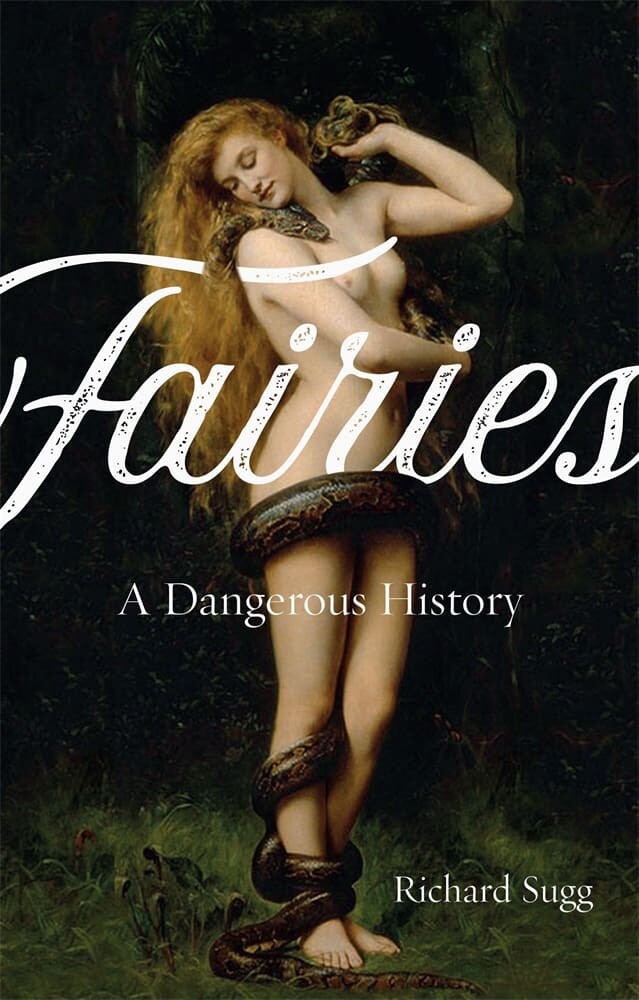
Fairies
A Dangerous History
Richard SuggRanging widely through history, myth, literature and art, this new account of the fairy shows the terror lurking behind Tinkerbell.
How dangerous were fairies? In the late seventeenth century, they could still scare people to death. Little wonder, as they were thought to be descended from fallen angels, and to have the power to destroy the world itself. Such beliefs, along with some remarkably detailed sightings, lingered on well into the twentieth century.
In literature and art fairies often retained this edge of danger. From the wild magic of A Midsummer Night’s Dream, through the dark glamour of Keats, to the improbably erotic poem ‘Goblin Market’ or the paintings inspired by opium dreams, the amoral otherness of the fairies ran side-by-side with the newly delicate or feminized creations of the Victorian world. In the past thirty years the enduring link between fairies and nature has been robustly exploited by eco-warriors and conservationists, from Ireland to Iceland. This book, now available in paperback, tells the story of the many fairy terrors that lay behind Titania or Tinkerbell.
Ranging widely through history, myth, literature and art, this new account of the fairy shows the terror lurking behind Tinkerbell.
How dangerous were fairies? In the late seventeenth century, they could still scare people to death. Little wonder, as they were thought to be descended from fallen angels, and to have the power to destroy the world itself. Such beliefs, along with some remarkably detailed sightings, lingered on well into the twentieth century.
In literature and art fairies often retained this edge of danger. From the wild magic of A Midsummer Night’s Dream, through the dark glamour of Keats, to the improbably erotic poem ‘Goblin Market’ or the paintings inspired by opium dreams, the amoral otherness of the fairies ran side-by-side with the newly delicate or feminized creations of the Victorian world. In the past thirty years the enduring link between fairies and nature has been robustly exploited by eco-warriors and conservationists, from Ireland to Iceland. This book, now available in paperback, tells the story of the many fairy terrors that lay behind Titania or Tinkerbell.
Ranging widely through history, myth, literature and art, this new account of the fairy shows the terror lurking behind Tinkerbell.
How dangerous were fairies? In the late seventeenth century, they could still scare people to death. Little wonder, as they were thought to be descended from fallen angels, and to have the power to destroy the world itself. Such beliefs, along with some remarkably detailed sightings, lingered on well into the twentieth century.
In literature and art fairies often retained this edge of danger. From the wild magic of A Midsummer Night’s Dream, through the dark glamour of Keats, to the improbably erotic poem ‘Goblin Market’ or the paintings inspired by opium dreams, the amoral otherness of the fairies ran side-by-side with the newly delicate or feminized creations of the Victorian world. In the past thirty years the enduring link between fairies and nature has been robustly exploited by eco-warriors and conservationists, from Ireland to Iceland. This book, now available in paperback, tells the story of the many fairy terrors that lay behind Titania or Tinkerbell.
-
'
[An] engrossing new book.
'Seattle Times
-
'
Richard Sugg, author of Mummies, Cannibals and Vampires, wants to disabuse you of any nonsense you may harbour about fairies being small, whimsical and affectionate. The fact is, for much of recorded history they were regarded as dangerous and malicious. Traditional fairy belief has it that they were the original fallen angels, who accompanied the Proud Angel to a realm between Heaven, Hell and Earth. Sugg writes well, and amusingly, about the evolution of fairies from Terror to Tinkerbell.
'Toronto Star
-
'
Sugg's book is in itself a kind of bewitchment, shimmering and eloquent, written with a certain ironic awareness and in the spirit of surrender to unknowing.
'The Australian
-
'
Far from the innocuous flutterings of Disney films, in the 16th and 17th centuries fairies were often regarded as dangerous creatures. Abduction, murder, being forced to dance to death: these were only a few of the fates they could hand out, and people lived in real fear of their otherworldly strangeness. This account of apparent “sightings”, and what they tell us about wider society, makes for compelling reading.
'History Revealed
-
'
Faeries. Fairies. The fae. However you spell it, nothing brings the warmer months to life like the mythical lore of fairies . . . Brilliantly researched and compellingly written, this book delves deeply into the darker side of fairy folklore. From fairy poltergeists to fallen angels, Sugg takes us on a journey through a haunted garden of mythical delights.
'Moody Moons
-
'
Both authors delve at length, and with admirable knowledge and insight, into contemporary media spins on their respective totems [The Dragon and Fairies] . . . these books are thoroughly researched and richly illustrated chronicles of the folkloric and literary pedigrees of their subject creatures. And they both come from Reaktion Books, a London-based independent publisher with a deep and wonderfully eclectic backlist . . . Sugg’s Fairies is a fun and informative read.
'Washington Independent Review of Books
-
'
Richard Sugg's Fairies: A Dangerous History reflects upon the nature of fairies, their representation within oral tradition and popular culture, and humans' relationship to the fantastic . . . a thought-provoking monograph that encourages readers to challenge their understanding of fairies and of people's relationship with nature, education, and the fantastic . . . as a creative writer, I found the stories presented in this volume inspiring.
'Children's Literature Association Quarterly
-
'
an intriguing book that makes you view nature’s unknown worlds very differently
'Yorkshire Gazette and Herald
-
'
An instant classic: one of our best books on the supernatural past and present.
'Simon Young, editor of Magical Folk: British and Irish Fairies 500AD to the Present
-
'
Richard Sugg provides both a richly entertaining introduction to the history of fairyland and a thoughtful exploration of the nature of belief. This book may not make you believe in fairies, but it will make you appreciate why such beliefs should be taken seriously.
'Darren Oldridge, Professor of Early Modern History, University of Worcester
-
'
a refreshing look at the fascinating, dark and dangerous folkloric fairy, . . . the book is a charming read for interested general readers and a timely scholarly update on the fairy problem . . . It is a very useful addition to the modern fairy enthusiast’s Cabinet des Fées.
'Gramarye
Introduction
One – Origins, Appearance, Locations
Two – Sightings, Meetings, Signs
Three – Fairy Dangers
Four – Literature and Art
Five – Fairy Magic: 1800 to the Present
Conclusion: The Green Mist
Sources and Further Reading
Acknowledgements
Photo Acknowledgements
Index
Richard Sugg is the author of 18 books, including Mummies, Cannibals and Vampires (3rd edn, 2020), The Real Vampires (2023), Talking Dirty: A History of Disgust from Jesus Christ to Boris Johnson (2023) and Dogsygen (2024). Impossible Journeys: How Dogs Reinvented Love, Family and Home is out with Harper Collins in May 2027. His work has appeared in The Guardian, Daily Telegraph, The Lancet, BBC History and Der Spiegel, and on international television and podcasts. His books have been translated into Turkish and Japanese. He previously lectured in English and History at Cardiff University and Durham University.