


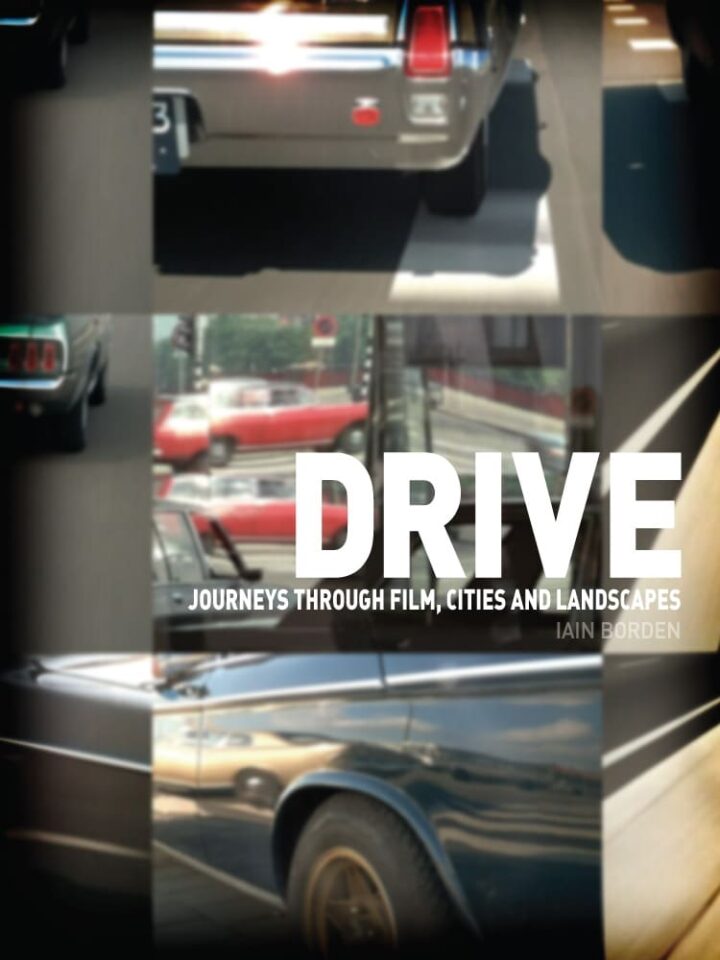
Drive
Journeys through Film, Cities and Landscapes
Iain BordenExplores the experience of driving cars as a way of encountering landscapes and cities around the world, illustrating cultural history, urban history, art, literature and music. This book is about dynamic journeys, experiences and speeds, rooted in specific places and roads, and expanded into the realm of cinema, art and video games.
This book explores the experience of driving cars as a way of encountering landscapes and cities around the world. A richly illustrated cultural history, drawing on social and urban history, art, literature and music, Drive explores in particular how car driving is portrayed in cinema and other moving images, from America to Europe and Asia, and from Hollywood to the avant-garde.
Drive is about dynamic journeys, experiences and speeds, rooted in specific places and roads, and expanded into the realm of cinema, art and video games. It moves from the gentle deserts of The Grapes of Wrath to the adventurous city streets of The Italian Job, from the aesthetic delights of Rain Man and Traffic to the existential musings of Two-Lane Blacktop, Thelma and Louise and Vanishing Point, from the contemplative freeway pleasures of Lift to the Scaffold, Radio On and London Orbital to the hallucinatory high-speed dangers of Crash, Bullitt, Death Proof and C’était un Rendezvous. It shows how various kinds of driving – with different speeds, cars, attitudes, roads and cities – provide experiences and values that we ignore at our peril. Written by a leading urban and cultural historian, Drive’s conclusion is a timely riposte to commonplace anti-car attitudes.
Explores the experience of driving cars as a way of encountering landscapes and cities around the world, illustrating cultural history, urban history, art, literature and music. This book is about dynamic journeys, experiences and speeds, rooted in specific places and roads, and expanded into the realm of cinema, art and video games.
This book explores the experience of driving cars as a way of encountering landscapes and cities around the world. A richly illustrated cultural history, drawing on social and urban history, art, literature and music, Drive explores in particular how car driving is portrayed in cinema and other moving images, from America to Europe and Asia, and from Hollywood to the avant-garde.
Drive is about dynamic journeys, experiences and speeds, rooted in specific places and roads, and expanded into the realm of cinema, art and video games. It moves from the gentle deserts of The Grapes of Wrath to the adventurous city streets of The Italian Job, from the aesthetic delights of Rain Man and Traffic to the existential musings of Two-Lane Blacktop, Thelma and Louise and Vanishing Point, from the contemplative freeway pleasures of Lift to the Scaffold, Radio On and London Orbital to the hallucinatory high-speed dangers of Crash, Bullitt, Death Proof and C’était un Rendezvous. It shows how various kinds of driving – with different speeds, cars, attitudes, roads and cities – provide experiences and values that we ignore at our peril. Written by a leading urban and cultural historian, Drive’s conclusion is a timely riposte to commonplace anti-car attitudes.
-
'
To pick up this book is to be taken on a smooth, fast drive. The journey starts in the city, moves out to the open road and then, as the pace quickens, heads up the motorway before a final high-speed dash that might attract flashing blue lights and penalty points . . . a remarkable examination of just why it is that so many people choose to drive . . . With this book Borden, like Frank Bullit, is seeking to turn the tables. Many of his readers will certainly find their preconceptions about private cars jolted by Bordens libertarian arrival in their mirror.
'Daily Telegraph
-
'
Youve seen the films, now read the book . . . cruises along at an exhilarating speed over scenic routes. This is one of the few books whose chapters are organised by speed limits
'The Independent
-
'
Every now and then a book comes along from an unexpected source that completely changes your perspective … [Drive] launches a substantial investigation into what it is about cars that we find so appealing, and how this manifests itself in cinema . . . Superb.
'Classic Cars
-
'
What emerges from Bordens account is not a straightforward picture of driving as pleasure, but of humanity simultaneously enthralled and trapped by the car and the world we have created for it both real and imaginary . . . Drive is a robust account of the history of driving in 20th-century cinema.
'Icon
-
'
Where would the movies go without the magic of the automobile and the open highway? From The Italian Job to Crash by way of Thelma and Louise, Bordens study makes engaging detours beyond the standard road movie theme.
'i (The Independent)
-
'
This isnt a conventional car book, nor is it a history of car films. Instead the author seeks to explore the sense of liberation associated with getting behind the wheel and how we view the unfolding landscape . . . it offers an interesting and thought-provoking slant on why we love driving . . . Well written and a pleasure to read.
'Octane
-
'
A tremendous amount of research has gone into the book and if nothing else, it is the best bibliography and filmography on the subject. To make sense of this vast catalgoue of information, it is organised by cruising speed. From steady urban driving, through Sunday speeds, to well past the legal limit its no fun unless youre doing a ton! . . . Being taken on Bordens joyride then, has been more a sublimation than an exploration he is the best car salesman I have never met.
'Building Design
-
'
a lavishly illustrated, well-written, and perceptive book, which should prove popular with readers interested in all aspects of automobility.
'Viewfinder
-
'
Drive [is an] accessible, well written and richly illustrated study that highlights the importance of investigating how automobility both reflects existing structures and precipitates changes in urban, industrialised societies, and provides ample stuff to fuel debates over the past, present and future role of the car in the city.
'Journal of Transport History
Introduction
1. Cities
2. Journeys
3. Motopia
4. Altered States
Conclusion
References
Select Bibliography
Acknowledgements
Index
Iain Borden is Professor of Architecture and Urban Culture at the Bartlett School of Architecture, University College London. He is the author and editor of many books, including Skateboarding, Space and the City: Architecture and the Body (2001).