


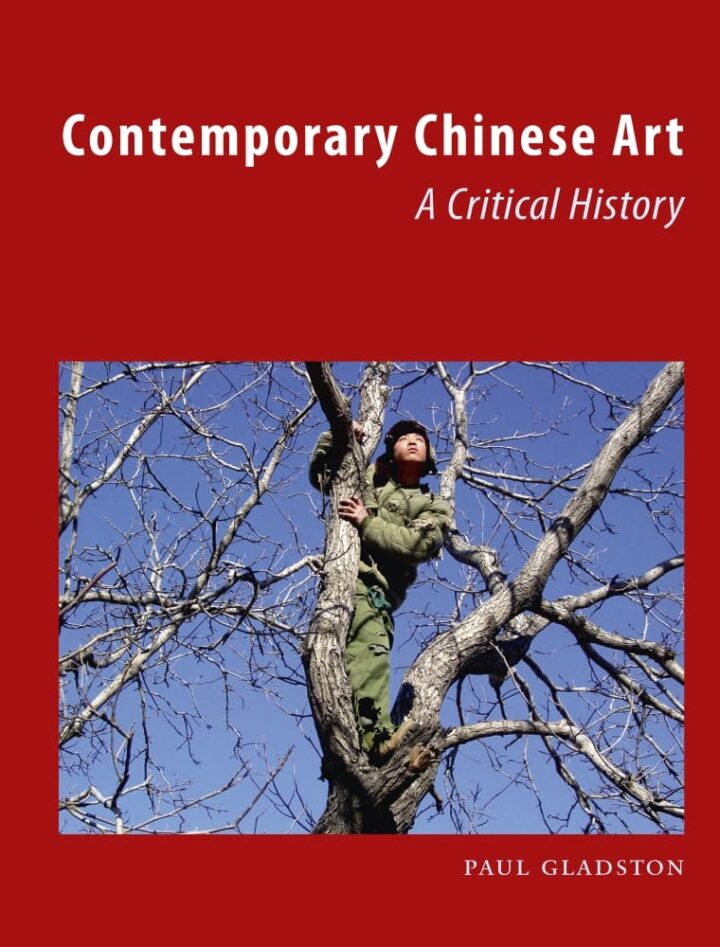
Contemporary Chinese Art
A Critical History
Paul GladstonContemporary Chinese Art examines China's thriving present-day cultural scene, from the country's issues of state control to its booming artistic marketplace.
The market for contemporary Chinese art is one of the fastest growing internationally, attracting buyers from all over the world, including, increasingly, within China itself. There are thriving artistic communities throughout China as well as an unprecedented proliferation of major art museums and districts, including Beijing’s now world famous 798 Art Zone. At the same time, the arrest and detention of artist Ai Weiwei in 2011 has focused international attention on China’s politics and issues of state control. This book sheds light on the development of Chinese art since the confirmation of Deng Xiaoping’s so-called policy of ‘Opening and Reform’ in 1978, putting the art into context both within China and internationally.
Paul Gladston provides a critical mapping of ideas and practices that have shaped contemporary Chinese art, showing how they bind the art – as a consequence of artistic complicity and/or resistance – to structures of power and state not just within but also outside China. While the principal focus is on art produced by artists from mainland China, the book also discusses contemporary art made by artists from Taiwan and Hong Kong-Macau, as well others belonging to diasporic Chinese communities.
Unravelling the complexities of politics, artistic practice and Chinese culture, Contemporary Chinese Art is an essential companion for readers interested in contemporary art or Chinese culture, history or politics.
Contemporary Chinese Art examines China's thriving present-day cultural scene, from the country's issues of state control to its booming artistic marketplace.
The market for contemporary Chinese art is one of the fastest growing internationally, attracting buyers from all over the world, including, increasingly, within China itself. There are thriving artistic communities throughout China as well as an unprecedented proliferation of major art museums and districts, including Beijing’s now world famous 798 Art Zone. At the same time, the arrest and detention of artist Ai Weiwei in 2011 has focused international attention on China’s politics and issues of state control. This book sheds light on the development of Chinese art since the confirmation of Deng Xiaoping’s so-called policy of ‘Opening and Reform’ in 1978, putting the art into context both within China and internationally.
Paul Gladston provides a critical mapping of ideas and practices that have shaped contemporary Chinese art, showing how they bind the art – as a consequence of artistic complicity and/or resistance – to structures of power and state not just within but also outside China. While the principal focus is on art produced by artists from mainland China, the book also discusses contemporary art made by artists from Taiwan and Hong Kong-Macau, as well others belonging to diasporic Chinese communities.
Unravelling the complexities of politics, artistic practice and Chinese culture, Contemporary Chinese Art is an essential companion for readers interested in contemporary art or Chinese culture, history or politics.
-
'
Winner Best Publication 9th annual Award of Art China (AAC), 2015
'Award
-
'
Rich in analytical content, Gladston provides a beefy account that will draw debate and heated arguments
'The Burlington Magazine
-
'
absorbing . . . Gladstons analysis of the post-1989 period, and the impact of the Tiananmen Square protest on art and culture, is particularly acute and astute
'The Art Newspaper
-
'
[an] admirable intellectual history
'Leap: the International Art Magazine of Contemporary China
-
'
Drawing on five years of research in China, Paul Gladston has penned a study of contemporary Chinese art that does far more than run through leading artists and their works. He discusses familiar figures such as Ai Weiwei, as well as lesser-known artists, in the context of Chinese and international politics, examining the sometimes fraught relationship between artists and the state since Opening and Reform in 1978.
'Apollo Magazine
-
'
Gladston's narrative is focused on tracing discursive formations that have shaped contemporary Chinese art. In doing so he offers interventions into and rigorous analysis of existing accounts.
'Revue Critique Dart
-
'
This is a vital book for future excursions in the field of contemporary Chinese art research.
'Wang Chunchen, associate professor Central Academy of Fine Arts, Beijing and curator of the China Pavilion at the 55th Venice Biennale, 2013
Introduction
1. Chinese Art in Context
Cultural Interaction and Exchange from Antiquity to the Mid-twentieth Century – Realist and Modernist Art in China,1911-1948 – Socialist-Realist and Revolutionary Art in the People’s Republic of China, 1949-1977
2. Modern (Contemporary) Chinese Art, 1976-1989
The Early Development of Modern (Contemporary) Chinese Art – Avant-garde Art in the People’s Republic of China – The Dissolution of the ’85 Movement
3. Contemporary Chinese Art, 1990-2001
Contemporary Chinese Art after Tiananmen – The Internationalization of Contemporary Chinese Art – Experimental Art and Social Transformation in the People’s Republic of China
4. Contemporary Chinese Art, 2002-2013
Contemporary Chinese Art on the Global Stage – Contemporary Chinese Art and Contemporaneity – The Political Recuperation of Contemporary Chinese Art
Glossary of Chinese Names
References
Select Bibliography
Acknowledgements
Photo Acknowledgements
Index
Paul Gladston is the inaugural Judith Neilson Chair Professor of Contemporary Art at the University of New South Wales, Sydney and a Distinguished Affiliate Fellow of the UK-China Humanities Alliance, Tsinghua University, Beijing. He was founding principal editor of the Journal of Contemporary Chinese Art. He has written extensively on contemporary Chinese art and culture and is the author of Contemporary Chinese Art, Aesthetic Modernity and Zhang Peili (2019), and co-editor of Visual Culture Wars at the Borders of Contemporary China (2021).